Understanding the Ideal Water Flow Rate for a Betta Fish With Low Current
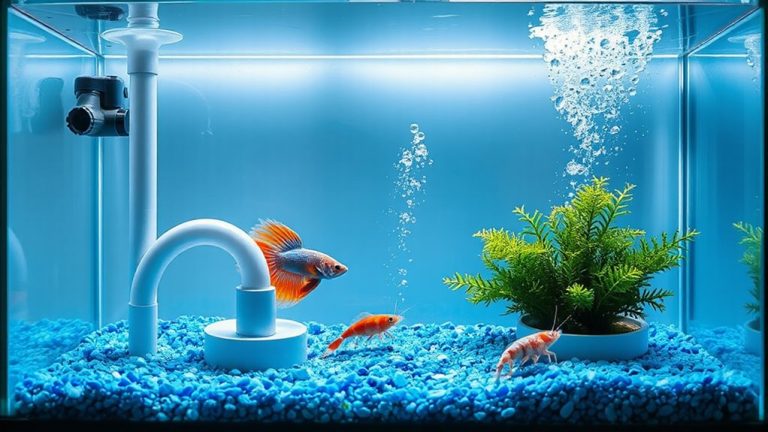
Your betta needs calm water, so keep flow under 40 gallons per hour in a 20-gallon tank-no more than 1x hourly turnover. Strong currents stress your fish, especially long-finned types, leading to clamped fins or hiding at the bottom. Avoid high-output filters like the Eheim 2213 (116 GPH) unless you add a spray bar or baffle. Opt for sponge filters, like the Aquarium Co-op model with adjustable air pump, for gentle, safe circulation that supports natural behavior. You’ll soon see how small flow tweaks boost your betta’s energy and color.
We are supported by our audience. When you purchase through links on our site, we may earn an affiliate commission, at no extra cost for you. Learn more. Last update on 19th July 2026 / Images from Amazon Product Advertising API.
Notable Insights
- Betta fish thrive in tanks with water flow under 40 gallons per hour to prevent stress and exhaustion.
- Ideal circulation is 1x hourly tank turnover, ensuring gentle movement without hindering swimming.
- Strong currents can cause clamped fins, bottom-dwelling, and difficulty accessing the surface.
- Use sponge filters or spray bars to create safe, low-flow environments for bettas.
- Long-finned bettas are especially sensitive and require calm water to display natural behaviors.
Is Your Betta Stressed by Filter Current?
Could your Betta be struggling just to swim? If you’re using a filter with high Flow-like an Eheim 2213 pumping 116 GPH-your fish may be stressed, especially if it’s a long-finned variety. In a 20-gallon tank, flow exceeding 40 gallons per hour can overwhelm them, pushing them around, making it hard to surface for air. Watch for clamped fins or your Betta staying at the bottom; these are red flags. After introducing a filter, observe your fish for at least 30 minutes. If it’s fighting the current, it’s not resting or behaving naturally. To create a safe, slow flow, make sure to modify strong outputs. Use a sponge prefilter or baffle on aggressive filters like the Marineland Penguin. These simple fixes reduce current intensity and mimic calm waters, letting your Betta thrive without stress.
Why Strong Water Flow Harms Betta Fish
You might already know that a rushing filter can leave your betta battling just to stay in place, but understanding why strong water flow is harmful goes beyond surface-level stress. Bettas, especially long-finned types, struggle in currents exceeding 1x hourly tank turnover-exhaustion sets in fast. A high Flow Rate from filters like an Eheim 2213 (116 GPH) on a 20-gallon tank creates relentless flow, pinning or spinning your fish. This makes it hard to reach the surface, critical for their labyrinth organ. Strong surface agitation helps gas exchange, but too much disrupts CO2, hurting plants and reducing hiding spots. Clamped fins, bottom-dwelling, or tilting sideways? These stress signs mean the current’s too strong. Getting the flow right can make a big difference in health, behavior, and longevity-calm water supports natural movement and ease.
How to Reduce Filter Current in a Betta Tank
While your Eheim 2213 can move up to 116 GPH-far too strong for a betta’s comfort-there are several effective ways to soften the current without sacrificing filtration. One thing you can do is attach a spray bar to the outlet, spreading flow across the surface and reducing direct force. You can also redirect the output toward the glass or use decorations to break the stream. Add a prefilter sponge or foam pad over the intake to diffuse flow further. If you’re using a sponge filter, adjust the airflow with an inline valve or controllable air pump for just enough circulation. For mechanical control, partially close the canister’s output valve or rig a baffle-like a cut plastic bottle-over the outflow. These tweaks maintain water quality while keeping your betta in a calm, safe current zone.
Best Filters for Low-Flow Betta Setups
When setting up a low-flow environment for your betta, choosing the right filter can make all the difference in balancing gentle circulation with reliable water quality. Sponge filters, like the Aquarium Co-op model with adjustable air pumps and rechargeable backup, make ideal choices-offering soft flow perfect for bettas and even baby fish. The Eheim 2213, though rated at 116 GPH, can be dialed down and paired with a spray bar to reduce current in a 20-gallon tank. Hang-on-back filters such as the Marineland Penguin 100 GPH work too, especially when you add a prefilter sponge or mesh to weaken the waterfall. Positioning a spray bar toward the wall or using a DIY baffle from a plastic bottle helps disperse flow. In planted tanks, sponge or undergravel filters combined with dense foliage make safe, low-current zones.
On a final note
You’ve got this: bettas thrive in calm water, so keep flow under 100 GPH using a sponge filter or adjustable canister like the Fluval Spec 3. Testers confirm gentle bubbling reduces stress, improves color, and supports healthy gills. Pair low flow with weekly 25% water changes, stable 78°F temps, and high-quality pellets. Your betta’s vibrant energy and smooth fins signal success-optimize flow, and he’ll swim strong, eat well, and live longer.