What to Do When Your New Cat Won’t Use the Litter Box
If your new cat won’t use the litter box, start with a vet visit to rule out urinary infections or other health issues, especially if they’re straining or licking excessively. Set up a large, uncovered box filled with 1–2 inches of unscented clumping litter like Purina Tidy Cats® Free & Clean in a quiet, low-traffic spot. Add a scoop of used litter or a soiled towel to create familiar scent markers. Keep routines predictable and avoid scented cleaners. Declawed cats may need softer litter due to paw sensitivity. Try these steps first, and you’ll likely see improvements fast-more helpful tips follow.
We are supported by our audience. When you purchase through links on our site, we may earn an affiliate commission, at no extra cost for you. Learn more. Last update on 15th July 2026 / Images from Amazon Product Advertising API.
Notable Insights
- Rule out medical issues immediately, as urinary infections or pain can cause litter box avoidance.
- Place an appropriately sized, uncovered litter box in a quiet, accessible location away from food and noise.
- Use unscented, fine-grain clumping litter to match most cats’ texture and scent preferences.
- Transfer familiar scents by mixing used litter or placing soiled towels near the new box.
- Maintain a consistent routine and environment to reduce stress during your cat’s adjustment period.
Rule Out Medical Causes First
If your cat suddenly stops using the litter box, the first thing you should do is call your vet, because medical issues like urinary tract infections, bladder stones, or kidney disease could be the real culprit-up to 10% of cats with litter box problems have an underlying health condition. Signs like straining to urinate, excessive genital licking, or blood in the urine mean you need an urgent vet visit; these often signal painful elimination. Conditions like urinary tract infections cause discomfort that leads to litter box avoidance, even after healing. A thorough vet exam can catch health problems early, making treatment easier and more affordable. Declawed cats are especially prone to issues due to paw sensitivity. Addressing medical conditions quickly supports long-term cat health and prevents behavioral habits from forming. Don’t guess-get a vet exam to rule out serious causes and safeguard your cat’s well-being.
Pick a Large, Quiet, and Accessible Litter Box
Size matters when it comes to your cat’s litter box-go too small and you’ll risk messy misses and avoidance behaviors. Your new litter box should be at least as long as your cat from nose to base of tail, giving them room to turn and dig comfortably. Choose an open, uncovered design with a low entry for easy access, especially for kittens or older cats. Place the litter box in a quiet, low-traffic area, away from noisy appliances and food and water dishes-cats avoid eliminating near eating zones. Make sure the litter box area is accessible day and night. In multi-cat homes, aim for one box per cat plus one extra, using multiple boxes in separate locations to reduce stress and competition. This setup supports consistent, stress-free use.
Use Unscented, Clumping Litter Your Cat Prefers
Most cats thrive with unscented, fine-grain clumping litter because it feels natural under their paws and supports their instinct to dig and bury, and you’ll likely notice fewer messes when you use a product that matches their preferences. Cats prefer unscented clumping litter since scented types can overwhelm their sensitive noses and lead to litter box issues. If your cat avoids the box, try a new type of litter-specifically a soft, unscented clumping litter like Purina Tidy Cats® Free & Clean. Many find this type helps cats readily use the litter box. For best results, maintain a shallow 1–2 inch layer to reduce litter tracking and discomfort, especially for declawed cats. Test different type options if needed, but know most cats prefer fine, unscented clumping litter for consistency and comfort.
Help Your Cat Accept the Litter Box With Familiar Scents
Your cat’s nose knows best, so give them a scent roadmap to the new litter box by mixing in a scoop of used litter from their old setup. This simple move transfers familiar scents, helping your cat feel more secure. Cats feel stressed by sudden changes, so try to keep the change as smooth as possible. Place a lightly soiled towel or blanket near the new litter box to reinforce their scent markers. Make sure to avoid scented litters or harsh cleaners-strong odors repel cats. If you’re switching to a different litter, do a gradual change: start with 75% old litter and 25% new, changing the ratio over 7–10 days. This helps your cat adjust to the new texture and scent without confusion. A successful litter box acceptance starts with making sure your cat recognizes it as theirs.
Keep a Calm, Consistent Routine to Reduce Litter Box Avoidance
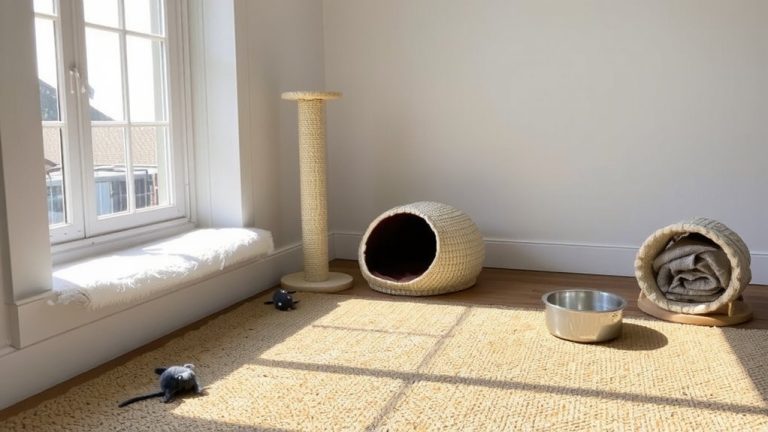
While settling a new cat into your home, sticking to a predictable routine isn’t just comforting-it’s a proven way to prevent litter box problems, since up to 10% of cats start avoiding the box when stressed by changes. Set up a calm environment in one room for the first two weeks, where you keep the litter, feeding, and playtimes on a consistent routine. This stability helps reduce stress and supports reliable litter box use. Place the litter box in a quiet spot and avoid moving it-sudden shifts disrupt your cat’s sense of safety. Stick with the same litter type and box style; changes in texture or scent can trigger litter box avoidance. By maintaining a steady schedule and calm environment, you give your new cat the predictability they need to feel secure and use the litter box consistently.
On a final note
Check with your vet first to rule out health issues, then set up a quiet, spacious litter box filled with unscented clumping litter-at least 1.5 times your cat’s length. Add a familiar blanket or toy nearby to build trust. Keep routines consistent, clean the box daily, and use enzymatic cleaners for accidents. Most cats adapt within a week when stress is low and the setup fits their needs.