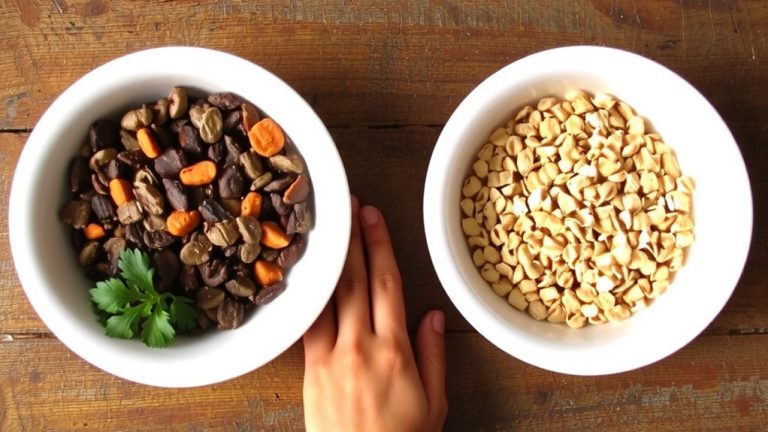
Omega-3:Omega-6 Ratio in Dog Food: Ideal Range is 2.6:1 to 10:1
You need to balance omega-6 and omega-3 fatty acids in your dog’s diet because ratios above 10:1 fuel chronic inflammation, weaken immunity, and raise risks for arthritis, allergies, and obesity. Opt for foods with salmon oil, grass-fed beef (2.5:1 ratio), and minimal corn or soy to hit the ideal 2.6:1 to 10:1 range. Marine-based EPA and DHA beat flaxseed’s poorly converted ALA. Add fish oil gelcaps daily if needed-many owners see shinier coats and better joint mobility within weeks. There’s more to optimizing your dog’s fatty acid intake than labels suggest.
We are supported by our audience. When you purchase through links on our site, we may earn an affiliate commission, at no extra cost for you. Learn more. Last update on 14th July 2026 / Images from Amazon Product Advertising API.
Notable Insights
- Omega-3 and omega-6 fatty acids are essential for dogs and must be obtained through diet for proper cell function and health.
- An imbalanced omega-6 to omega-3 ratio above 10:1 promotes chronic inflammation and increases disease risk in dogs.
- Many commercial dog foods exceed a 12:1 ratio due to high corn and soy content, contributing to health issues.
- A ratio under 5:1 helps reduce inflammation and supports better outcomes in dogs with arthritis or skin conditions.
- Using marine-based omega-3 sources like salmon oil and avoiding high omega-6 ingredients helps achieve a healthier fatty acid balance.
What Are Omega-3 and Omega-6 Fatty Acids?
Why do omega-3 and omega-6 fatty acids matter so much in your dog’s diet? Because they’re essential fatty acids-your dog can’t make them, so they must come from food. Omega-3 fatty acids, especially EPA and DHA from fish oil, are anti-inflammatory polyunsaturated fatty acids that support brain and joint health. Omega-6 fatty acids, like linoleic acid in chicken fat and plant oils, maintain skin integrity and a shiny coat. Both are critical building blocks for cell function and metabolism. You won’t get best results if one outweighs the other-your dog needs a balanced ratio. Neither is superior; both types are essential. Skipping either means missing key nutrients. Look for diets combining marine-based omega-3s and quality omega-6 sources to deliver thorough support. A well-formulated recipe includes both polyunsaturated fatty acids to promote long-term wellness.
How Omega-6/Omega-3 Ratios Affect Dog Health
You already know both omega-3 and omega-6 fatty acids play key roles in your dog’s health, from skin and coat condition to brain function and inflammation control, but the real difference shows up in the balance between them. An imbalanced omega-6 to omega-3 ratio-especially above 30:1, as allowed in some commercial pet foods-can fuel chronic inflammation, weakening the immune system and worsening conditions like arthritis and atopic dermatitis. Many common dog foods, high in corn or soy, hover near 12:1, promoting inflammation instead of skin health. But studies show ratios under 10:1 reduce pro-inflammatory compounds, and those under 5:1 improve outcomes in dogs with chronic inflammation. Grass-fed beef, at 2.5:1, offers better balance than grain-fed options. Adding fish oils can help lower the ratio, supporting long-term wellness and healthier inflammatory responses.
Best Dog Food Sources of Omega-3 and Omega-6
When it comes to supporting your dog’s skin, coat, and overall cellular health, high-quality fat sources make all the difference. For Omega-3 fatty acids, de-boned salmon and salmon oil are top choices-they deliver direct, bioavailable EPA and DHA your dog can actually use. Flaxseed offers plant-based omega-3 in the form of ALA, but dogs convert it poorly, so it’s less effective. On the omega-6 side, chicken fat and eggs provide essential linoleic acid that supports a strong skin barrier and shiny coat. Many dog foods rely on corn or soy, which flood the diet with omega-6 and skew the omega-6 to omega-3 ratio. Grass-fed beef is a smarter protein choice, with a favorable ratio of 2.5:1 compared to grain-fed beef’s 12:1. Prioritize balanced fatty acids by selecting formulas rich in marine and quality animal fats.
Health Risks of High Omega-6 to Omega-3 Ratios
Isn’t it surprising how something as small as a fatty acid ratio could quietly impact your dog’s long-term health? A high omega-6 to omega-3 ratio-especially above 10:1-fuels chronic inflammation and spikes pro-inflammatory mediators like leukotriene B. Many commercial pet foods rely on corn and soy, pushing ratios up to 30:1, far exceeding AAFCO’s limits and raising health risks. This imbalance is linked to serious issues like heart disease, arthritis, obesity, and atopic dermatitis. Without enough omega-3s to counteract omega-6s, your dog’s body stays in a state primed for inflammatory conditions.
| Condition | Associated Risk | Common in Diets With Ratio Above |
|---|---|---|
| Chronic inflammation | High | 10:1 |
| Arthritis | Increased | 26:1 |
| Atopic dermatitis | Elevated | 30:1 |
| Obesity complications | Moderate | 12:1 |
How to Find a Healthy Omega Ratio in Dog Food
Where do you even start when trying to nail down a balanced omega ratio in your dog’s food? First, check the label: the ratio of omega-6 fatty** acids to omega-3s should be below 30:1, per AAFCO, but aim for 2.6:1 to 26:1, the range NRC links to optimal health. Omega-3 and omega-6 fatty acids play critical roles, so fatty acids must be balanced, not just present. Look for marine-based omega-3 sources like salmon oil or de-boned salmon-they deliver usable EPA and DHA directly. Avoid corn, soy, and grain-fed meat byproducts; these spike omega-6 and skew the omega-6 to omega-3 fatty ratio. Essential fatty acids support skin, coat, and joints, so prioritize foods with fish, not fillers. Premium, grain-free, or raw formulas often hit 5:1 to 10:1, thanks to smart sourcing. Read labels closely**-your dog’s long-term wellness depends on it.
Omega-3 Supplements: Fixing Imbalanced Ratios Safely
Though your dog’s food may list omega-3s on the label, chances are the ratio still leans too far toward omega-6 due to common ingredients like corn and soy, so adding a high-quality fish oil supplement can safely restore balance-aim for 2 teaspoons daily for a 30 lb dog. Omega-3 supplements, especially marine-based supplements rich in EPA and DHA, are far more effective than plant-based alpha-linolenic acid (ALA), which dogs convert poorly. Look for fish oil supplements in gelcaps-they protect against oxidative spoilage and guarantee consistent delivery of EPA and DHA, helping maintain healthy omega-6 to omega-3 ratios below 10:1. Always store liquid fish oil in the fridge; refrigerating fish oil prevents lipid peroxidation, which can harm cells. Consistent use of quality omega-3 supplements supports skin, coat, joint, and immune health without risk when handled properly.
On a final note
You’re giving your dog the best care when you balance omega-6 and omega-3 fatty acids, ideally between 2.5:1 and 10:1, favoring lower ratios, with fish oil supplements adding 300–500 mg EPA/DHA daily, real salmon or flaxseed listed early in ingredients, and AAFCO testing met, so coat shine, joint mobility, and reduced inflammation improve noticeably in 6–8 weeks, according to vet nutritionists and owner feedback alike-simple tweaks, measurable results.