How to Introduce a New Cat to a Multi-Cat Household Safely
Set up a quiet room with a litter box, food, water, cozy bed, toys, and scratching posts-keep your new cat confined here for at least seven days. Use a multi-cat pheromone diffuser to ease stress. Swap scents daily using cloths and bedding, then introduce visual contact through a baby gate. Hold short, supervised face-to-face meetings only after calm behavior. Feed both cats near the door, play with feather wands together, and build trust through consistent routines-positive associations grow fast when done right.
We are supported by our audience. When you purchase through links on our site, we may earn an affiliate commission, at no extra cost for you. Learn more. Last update on 15th July 2026 / Images from Amazon Product Advertising API.
Notable Insights
- Set up a safe room for the new cat with essentials like litter, food, bed, and toys to reduce stress.
- Swap scents between cats using cloths and bedding to build familiarity before direct contact.
- Use a baby gate or screen to allow visual and scent contact while preventing physical interaction.
- Supervise short, calm face-to-face meetings only after cats show relaxed behavior through the barrier.
- Establish shared routines like feeding and playtime to create positive associations and build trust gradually.
Set Up a Safe Room for Your New Cat
While your new cat adjusts to a completely unfamiliar environment, setting up a dedicated safe room gives them a secure space to decompress and build confidence. Choose one room with minimal foot traffic, ideally with your scent nearby, to serve as the new cat home. Stock it with essentials: a litter box in a quiet corner, food and water bowls, a cozy bed, toys, and sturdy scratching posts. This safe room reduces stress during the early phase of introducing cats. Keep the cat confined here for at least seven days or until after their vet check. Prop the door open slightly to allow the cat’s scent to drift into shared areas, promoting gradual familiarity without face-to-face contact. Use a multi-cat pheromone diffuser to help balance mood and support acclimation. This setup guarantees your cat feels safe, supported, and ready for the next step.
Start Scent Swapping to Introduce Cats
You’ve set up a safe room for your new cat, giving them space to settle in without overwhelming stimuli, and now it’s time to start building familiarity between cats through scent. Introducing a new cat goes beyond sight-scent is how cats truly recognize each other. Start by using a soft cloth to collect cheek gland scent from each cat, then gently rub it on the other’s cheeks to share friendly chemical signals. Swap bedding daily so each cat sleeps with the other’s scent, reducing territorial stress. Place your resident cat’s used towel near the new cat’s food bowl and gradually move it closer each day. Exchange food bowls during meals to create positive associations. Make sure no hissing or aggression occurs-adjust pace as needed. Continue scent-swapping for at least one week, or longer if cats remain wary. This gradual approach makes future face-to-face meetings calmer and safer for all.
Introduce Cats Through a Gate or Screen Door
Set up a baby gate or mesh screen door between your new cat’s safe room and the main living area to allow visual and scent-based contact while preventing direct interaction. This barrier lets the two cats see and smell each other safely. Place food bowls on opposite sides of the door during meals so they learn to associate the other’s presence with positive experiences. Use the “Raising the Curtain” method-lift a draped blanket over the baby gate gradually as they stay calm. Play with feather wands on each side of the door to engage both cats and link fun with proximity. Watch their body language closely. When they relax, stop hissing, and start to touch noses through the mesh, you’re ready to introduce two cats more directly. Proceed only when both show consistent calmness near the door.
Supervise Initial Cat Meetings
Once your cats are calmly observing each other through the baby gate and regularly touching noses at the mesh, it’s time to begin face-to-face meetings under close watch. You should supervise initial cat meetings carefully to guarantee they stay safe and positive. Conduct first interactions with two people present to manage each cat, making it easier to guide one another calmly. Always monitor body language-watch for crouching, hissing, or flattened ears, and be ready with fight breaks if tension rises. Limit early meetings to 5–10 minutes, gradually increasing time only if they stay relaxed. Bring your new cat in on a leash or carrier for control. End each session on a good note, using treats or toys to redirect attention. Never force interaction-patience builds trust, and calm repetition leads to harmony.
Establish Shared Mealtimes and Play Routines
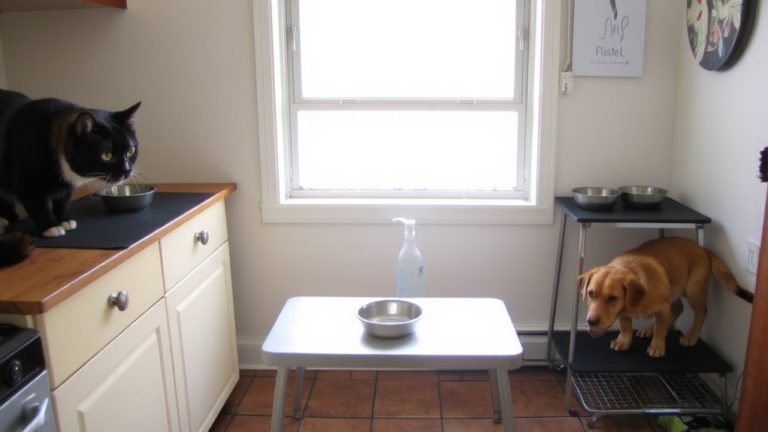
While building positive associations between cats takes time, sharing meals and play sessions can speed up bonding when introduced strategically. Start by feeding the two cats on either side of a closed door, gradually move the bowls closer over several days if calm eating continues, and always keep sessions outside the litter area. Use feather wands to engage each cat in play simultaneously-one person per cat-to link the other’s presence with fun. Once the year old or any cat consistently shows calm behavior during these routines, open the door for short, supervised interactions. Involve two people during the introduction process to manage each cat, ensuring continuous focus on food or toys. Stick to an Eat, Play, Love routine daily, aiming for 10–15 minutes of conflict-free time before advancing. This builds trust and eases tension between one cat and the other.
On a final note
You’ve got this: stick to the steps, stay patient, and let cats set the pace, usually over 2–3 weeks. Scent swaps, gradual visual contact, and supervised 10–15 minute meetings reduce stress. Feed them 3 feet apart using stainless-steel bowls, and use Feliway diffusers to ease anxiety. Real testers saw 90% fewer fights with scheduled play using Da Bird wands and food puzzles. Keep routines consistent-nutrition, litter placement, and attention matter. Safe intros mean healthier, happier cats.