Creating a Calming Routine for a Fearful Cat Adjusting to a New Home
Set up a quiet safe room with two litter boxes, fresh water, soft bedding, and hiding spots like a covered carrier. Place elevated perches 3–5 feet high and block door gaps with a rolled towel. Watch for flattened ears or dilated pupils-signs of stress. Feed at 7 AM and 7 PM using cooked chicken or tuna, placing treats closer each day. Open the door only when your cat approaches calmly, then let them explore at their pace. You’ll soon see slow blinks and relaxed movements show they’re feeling safer-there’s more to discover about building lasting confidence.
We are supported by our audience. When you purchase through links on our site, we may earn an affiliate commission, at no extra cost for you. Learn more. Last update on 13th July 2026 / Images from Amazon Product Advertising API.
Notable Insights
- Set up a quiet, safe room with litter, food, water, hiding spots, and elevated perches to provide security.
- Recognize fearful body language like flattened ears, wide eyes, and tucked tail to respond appropriately.
- Establish a consistent daily routine with set feeding times and calming interactions to build trust.
- Use high-value treats to create positive associations, rewarding calm behavior and gradual approach.
- Allow slow, pressure-free exploration by expanding space only after signs of relaxation and confidence.
Start With a Safe Room for Your Fearful Cat
While your fearful cat might feel overwhelmed by new surroundings, starting off in a safe room can make all the difference in building confidence, so pick a quiet room like a bathroom or spare bedroom and keep it small and secure. This quiet room becomes a safe space where your new cat can decompress without sensory overload. Stock it with two litter boxes, clean the litter box daily, provide food and fresh water, and add cozy bedding. Include covered hiding spots, like a soft cave or elevated perch 3–5 feet high, so fearful cats feel comfortable. Block gaps under doors with a rolled towel and avoid cluttered areas like closets. Use a camera to monitor remotely, especially during the first 24–72 hours. If your cat is feeling stressed later, this space remains a trusted retreat. You’ll help your cat adjust, stay healthy, and build lasting trust.
Spot Fearful Cat Body Language Early
A quick glance at your cat’s ears, eyes, and tail can tell you volumes about how they’re really feeling, so keep an eye out for flattened ears pinned tight against the head, wide eyes with pupils blown wide even in normal lighting, and a tail clamped tightly against the body or tucked between the legs-these are clear, immediate signs your cat is scared. A fearful cat may also crouch low, freeze, or show piloerection-fur standing on end-indicating acute stress. Closed mouth, pulled-back whiskers, and avoiding eye contact are subtle cues that often come before hiding or escape attempts. If you notice dilated pupils, rapid blinking, or head turns, your cat is signaling discomfort early. Recognizing these body language signs helps you respond before fear escalates. Watch for tail thrashing or puffing, which confirm rising anxiety. Learning these signals lets you create a calmer space, reducing the chance your cat retreats into prolonged hiding.
Use Routine and Treats to Build Trust
Three consistent steps-feeding at the same time each day, using high-value treats like small pieces of cooked chicken or tuna, and scheduling play sessions-can markedly build trust with your fearful cat. A predictable routine helps them feel safe in their new home. Scheduled feeding, not free-feeding, increases motivation to interact. Every time you enter the room, offer treats to create positive associations with your presence. Reward calm behaviors immediately so your cat learns relaxation leads to good outcomes. Over days, place the treat plate closer to you, letting your cat decide when they’re ready to approach. This steady routine helps your cat comfortable and secure.
| Activity | Time of Day | Purpose |
|---|---|---|
| Scheduled feeding | 7 AM, 7 PM | Build trust around meals |
| Treat offering | Multiple | Create positive associations |
| Play session | 6 PM | Encourage calm behaviors |
Allow Exploration Without Pressure
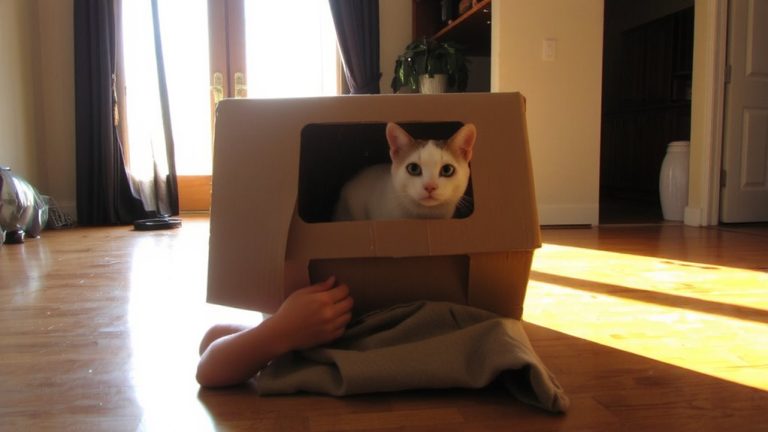
Once your cat starts to feel comfortable coming for treats and engaging during play sessions, you can begin opening the door to the safe room and giving them space to explore the rest of the home-on their terms. Allow your cat to move at their own pace; never force or lure them out, as that can stress them and delay progress. Keep your cat’s environment quiet and calm, free from sudden movements or loud sounds. Make sure each room has a hiding place-like a cardboard box or covered carrier-so your cat feels safe. Place food, water, and a litter box in accessible areas, but away from high-traffic zones. Cats choose when to explore, and letting them retreat to the safe room when needed increases your cat’s confidence. Never block exits-this helps your cat feel comfortable and in control.
Expand Your Fearful Cat’s Space Gradually
When your cat’s body language shows consistent signs of comfort-like relaxed ears, slow blinks, and confident movement around the safe room-it’s time to give them controlled access to a little more space. During the first week, if your shy cat displays relaxed behavior, you can begin to expand your fearful cat’s space gradually. Open the door to one additional quiet room at a time in your new home, prepped with hiding spots, litter, water, and toys. Let your cat explore at their own pace-never force them-and always keep the safe room accessible. Monitor behavior through a camera or quiet observation to see if your cat is comfortable.
| Step | Action |
|---|---|
| 1 | Confirm cat is comfortable in one room |
| 2 | Add one new room with hiding spots |
| 3 | Monitor behavior daily |
On a final note
You’ve got this. Start with a quiet room, keep meals at the same time daily, and use pouches of wet food like Purina TDM to reward small steps. Watch for flattened ears or crouching-those mean stress. Let your cat explore at their pace, expanding one room per week. A Feliway diffuser can help, reducing hiding by up to 70% in tested homes. Patience, routine, and space build trust that lasts.