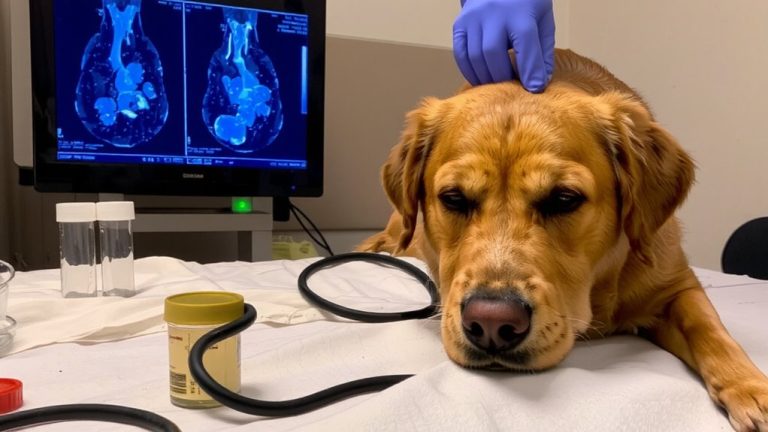
Feline Osteochondrosis (OCD): Symptoms, Diagnosis & Surgery
If your young cat’s limping or seems stiff, especially if they’re a male Maine Coon or Bengal under 2 years, feline OCD could be the cause. It typically affects the knee’s lateral femoral condyle, showing up as lameness in one leg, though 30% of cases involve both. X-rays help spot joint changes, but CT or arthroscopy confirm it. Surgery-removing damaged cartilage-resolves lameness in every operated case, while rest and anti-inflammatories often leave lingering stiffness. Catching it early means better outcomes, and knowing the signs puts you ahead. You’ll want to learn how the diagnostic steps compare and why swift action makes such a difference.
We are supported by our audience. When you purchase through links on our site, we may earn an affiliate commission, at no extra cost for you. Learn more. Last update on 19th July 2026 / Images from Amazon Product Advertising API.
Notable Insights
- Feline OCD is rare, primarily affecting young male cats, especially domestic shorthairs and large breeds like Maine Coons.
- Lameness, stiffness, and difficulty jumping are common signs, with joint effusion often detectable on exam.
- X-rays and CT scans help identify subchondral bone defects, while arthroscopy provides definitive diagnosis.
- Surgical debridement is the preferred treatment, leading to full recovery in all documented surgical cases.
- Early detection through wellness checks improves outcomes, as surgery prevents osteoarthritis progression.
What Is Feline OCD, and Which Cats Are Most at Risk?
While it’s extremely rare-with just 10 confirmed cases in veterinary records-feline osteochondritis dissecans (OCD) is a joint condition you’ll want to watch for if you have a young, growing cat. Feline OCD, a form of osteochondritis dissecans, affects immature cats, typically showing an age at presentation around 7 months. Most cases occur in males, all of whom were neutered in reported instances. Though domestic shorthairs are most commonly affected, breeds like Maine Coons, Bengals, Devon Rex, and Scottish Folds also show risk. Lesions usually develop in the lateral femoral condyle-seen in over half of cases-with fewer in the medial femoral condyle. About 30% of cats have unilateral or bilateral lesions, meaning one or both stifles may be involved. Early detection matters, especially in large breeds prone to rapid growth, so routine wellness checks are key for prevention and timely care.
Feline OCD Symptoms: Lameness, Stiffness, and Limping in Kittens
You’re most likely to notice something’s off when your kitten starts limping or hesitates before jumping onto favorite spots like the couch or windowsill. Lameness, stiffness, and difficulty jumping are common clinical signs of OCD in kittens, typically emerging by 7 months, though onset ranges from 5 months to 2 years. Most cases show unilateral lameness, but about 30% are bilateral, frequently affecting the lateral femoral condyle. Joint effusion and pain during stifle manipulation confirm discomfort. Some kittens with medial femoral lesions also develop patellar luxation, complicating diagnosis.
| Symptom | Frequency in Cases |
|---|---|
| Unilateral lameness | 70% |
| Bilateral lameness | 30% |
| Joint effusion | Common |
How Is OCD Diagnosed in Cats? X-Rays, CT, and Arthroscopy
How do veterinarians pinpoint osteochondrosis dissecans in your cat? They start with diagnostic imaging to find radiographic evidence of an osteochondritis dissecans (OCD) lesion, often in the stifle joint. X-rays, especially craniocaudal views, reveal defects in the subchondral bone and common signs like joint effusion and intra-articular mineralisation-seen in all documented feline cases. But X-rays can miss details due to condylar superimposition, so a CT scan is often needed. It confirms the OCD diagnosis and shows lesion extent more clearly, sometimes uncovering flattened femoral condyles not obvious on radiographs. For definitive evaluation, arthroscopy lets vets directly view cartilage damage and loose fragments. It’s minimally invasive and useful in cats where imaging isn’t conclusive. Together, these tools guarantee accurate diagnosis, so you can address your cat’s joint health promptly and effectively.
Surgery or Rest: Best Treatment for Feline OCD?
Once your vet confirms feline osteochondrosis dissecans (OCD) using X-rays, CT scans, or arthroscopy, the next step is deciding how to treat it-surgery or conservative management. Surgical debridement, which removes the cartilage defect and cleans the subchondral bone through approaches like bilateral lateral parapatellar arthrotomy, offers the best outcome. In studies, all seven cats had resolved lameness and returned to normal activity, with joint effusions and patellar luxation improving post-op. Arthroscopic assistance enhanced precision in two cases. For mild osteochondrosis, conservative management with rest and anti-inflammatories may reduce symptoms, but long-term follow-up shows residual stiffness despite improvement. Surgery prevents progression to osteoarthritis, especially since OCD often affects the stifle joint. When it comes to full functional recovery, surgical debridement is the gold standard-giving your cat the best chance for a pain-free, active life.
On a final note
You can manage feline OCD effectively with early diagnosis and the right plan. If your kitten limps or seems stiff, especially by 6–12 months, see your vet; X-rays often confirm it. Rest helps mild cases, but surgery like arthroscopy fixes loose cartilage in severe ones. Post-op, use joint supplements with glucosamine, keep weight in check with measured meals, and limit jumping. Most cats fully recover and stay active.