Why Long-Haired Breeds Need Moisturizing Rinses After Bathing
You need a moisturizing rinse after every bath to protect your long-haired dog’s coat from drying out due to increased water exposure, shampoo stripping, and prolonged moisture retention in drop coats like Shih Tzus and Havanese. A humectant-rich, pH-balanced cream rinse restores hydration, reduces friction, and prevents painful mats and chewing. Use a detangling formula like Cindra Moisture Plus, diluted and rinsed for 10–15 minutes, to keep the skin barrier healthy and the coat resilient-especially during the 9-month blow coat phase. You’ll soon discover how the right routine transforms coat health.
We are supported by our audience. When you purchase through links on our site, we may earn an affiliate commission, at no extra cost for you. Learn more. Last update on 19th July 2026 / Images from Amazon Product Advertising API.
Notable Insights
- Long-haired coats lose natural oils during bathing, requiring moisturizing rinses to restore hydration and prevent dryness.
- Moisturizing rinses seal the hair cuticle, reducing friction that leads to painful matting in long, drop coats.
- Humectants like glycerin and aloe vera in conditioners help retain moisture and support the skin’s protective barrier.
- Proper conditioning eases detangling, minimizing grooming discomfort that can contribute to stress-related chewing behaviors.
- Rinse-out conditioners formulated for dogs maintain optimal pH and prevent irritation from residue or inappropriate ingredients.
Why Bathing Dries Out Long Dog Coats
While your long-haired dog’s coat might look luxurious, it’s especially prone to drying out during baths because that extra length means more exposure to water, shampoo, and scrubbing-each of which strips away essential natural oils. Every time you lather, that shampoo removes dirt but also disrupts the skin’s pH and lipid barrier, especially if it contains harsh surfactants. Your dog’s coat, particularly in breeds like Shih Tzus or Havanese with drop coats, holds moisture longer, increasing cuticle damage and dehydration risk. Frequent bathing-say, weekly or more-can worsen dryness without hydrating formulas. Without a follow-up rinse rich in humectants, the coat loses resilience, slip, and protection. You’ll notice frizz, breakage, or a rough texture post-dry. Protect your dog’s coat by choosing sulfate-free shampoos and always supporting with a moisturizing solution. It’s not just about clean-it’s about maintaining long-term coat health with every wash.
Stop Matting and Chewing With the Right Conditioner
You just bathed your long-haired dog with a gentle, sulfate-free shampoo to protect their skin’s natural oils, but the work isn’t over-what you do next directly impacts coat condition and behavior. Following up with a moisturizing rinse like Cindra Moisture Plus Conditioner seals the hair cuticle, reduces friction, and prevents painful matting, especially in breeds like Havanese and Shih Tzu. Properly conditioned coat tangles less, making grooming sessions easier and less painful. This reduces stress-related chewing caused by discomfort. Be sure to rinse thoroughly-any leftover residue can irritate your dog’s skin within hours, triggering chewing. During the 9-month blow coat phase, consistent conditioning supports shedding management and coat resilience. A well-moisturized coat means fewer mats, less irritation, and calmer behavior. Smart grooming isn’t just about looks-it’s key to your dog’s comfort and long-term coat health.
Pick the Best Conditioner for Long, Sensitive Coats
Your long-haired dog’s coat thrives when treated with a conditioner tailored to its unique needs, and picking the right one makes all the difference. Look for a cream rinse with humectants like glycerin or aloe vera to lock in moisture and support the skin barrier, especially for sensitive coats. Choose a dog-formulated product with a pH between 6.2 and 7.5 to avoid irritation. For long-haired breeds, detangling agents like oatmeal or silk proteins reduce friction during brushing and prevent breakage. A rinse-out formula like Cindra Moisture Plus Conditioner is ideal-it’s made specifically for long-haired breeds to restore hydration after shampooing. Avoid human conditioners and heavy silicones, which can clog pores and leave residue, leading to skin issues. This targeted approach keeps coats soft, tangle-free, and healthy with every use.
How to Apply Conditioner and Rinse Completely
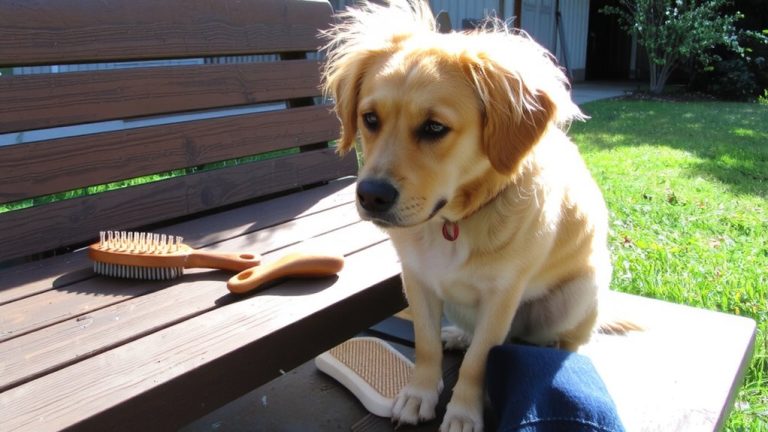
After shampooing, apply the conditioner-like Cindra Moisture Plus-midway down the coat to the tips, where long-haired breeds need the most hydration and protection from breakage. Start with a slicker brush to detangle before adding product, so you don’t tug or cause discomfort. Dilute the conditioner with water to help it spread evenly through thick fur, ensuring full coverage without waste. Smooth it in thoroughly, focusing on trouble zones like behind the ears and under the legs, then let it sit for 3–5 minutes. Rinse with warm water for at least 10–15 minutes-longer after heavy conditioning-to remove every trace. Check near the skin with a fine comb; if it still feels slippery, keep rinsing. Residue from dog shampoo or conditioner can irritate skin and trigger licking or rashes. A complete rinse is non-negotiable in your grooming routine.
How Often to Condition Without Causing Irritation
Conditioning keeps long-haired coats soft and tangle-free, but frequency matters just as much as technique-especially when working with breeds prone to skin sensitivity. Knowing how often to condition helps your dog stay healthy without irritating their skin. For most long-haired breeds, 1–2 times per week is safe, especially with a gentle, pH-balanced formula like Cindra Moisture Plus Conditioner. But if your dog has sensitive skin or allergies, stick to once weekly to avoid disrupting their skin barrier. During blow coat phases around 9 months-common in Havanese or Shih Tzus-weekly conditioning supports coat health, but reduce frequency if you notice redness or chewing.
| Breed Type | How Often to Condition |
|---|---|
| Normal skin | 1–2 times/week |
| Sensitive skin | Once/week |
| During blow coat | Once/week |
| Signs of irritation | Cut back immediately |
How to Know If You’ve Rinsed Enough
How clear is the water running off your dog’s coat-crystal, or still a bit cloudy? Make sure it’s totally clear and slick, with no slippery residue, especially near the skin where shampoo and conditioner hide. Run your fingers deep through the fur while rinsing; if it still feels slick, keep going. Some pet owners, like Danielle and Toni, spend over 30 minutes rinsing even after regular baths, yet still find leftover product. That’s common with long-haired breeds. Residual moisture treatments can cause irritation, so if your dog starts chewing or scratching hours after a bath, incomplete rinsing is likely the culprit. A pitcher often doesn’t cut it-it can’t deliver enough water volume or pressure. Stick with a steady shower stream to fully flush out conditioner from thick, dense coats. Thorough rinsing isn’t just helpful-it’s essential for skin health.
On a final note
You’ve bathed and conditioned your long-haired dog, now keep that coat healthy with a moisturizing rinse every 4–6 weeks, or whenever fur feels dry. Use a sulfate-free, pH-balanced formula like Earthbath Oatmeal & Aloe to prevent tangles, lock in moisture, and reduce itching. Testers saw less shedding and zero residue when rinsing for 2+ minutes with lukewarm water. Fully rinsed coats dry smoother, resist mats, and stay chew-free.