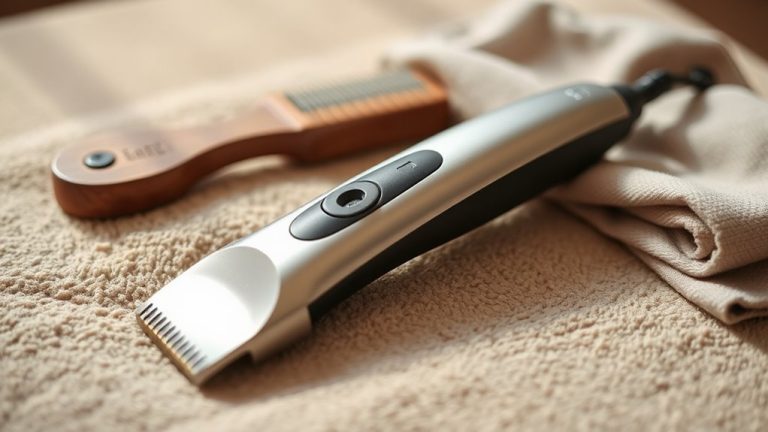
Why Professional Groomers Use Multiple Blade Sizes for Different Breeds
You use different blade sizes because your dog’s coat type and breed needs dictate the ideal cut, from a close #10 (1.6 mm) for smooth-coated Boxers to a longer #3F (13 mm) for a Golden Retriever’s insulating fur. Thick double coats need wide-tooth blades to avoid overheating and undercoat damage, while curly coats like a Poodle’s require #5F or #7F to preserve curl integrity. Seasonal changes matter too-shorter blades in summer help prevent overheating, but you’ll want longer lengths in winter to maintain natural insulation. Right blade choice means safer, more comfortable grooming that supports skin health and coat function. You’ll discover how blade width and tooth spacing fine-tune results based on fur density and texture.
We are supported by our audience. When you purchase through links on our site, we may earn an affiliate commission, at no extra cost for you. Learn more. Last update on 19th July 2026 / Images from Amazon Product Advertising API.
Notable Insights
- Different blade sizes preserve coat integrity and skin safety by matching the dog’s fur type and thickness.
- Wide-tooth blades prevent undercoat damage in double-coated breeds like Huskies and Golden Retrievers.
- Short blades like #10 provide close cuts ideal for smooth-coated breeds in warm seasons.
- Blade length affects insulation; longer cuts (#3F, #4F) retain warmth in winter for cold-weather breeds.
- Using breed-specific blades ensures efficient grooming, reduces heat buildup, and maintains curl patterns in poodles.
How Blade Length Impacts Your Dog’s Grooming
While choosing the right clipper blade might seem like a small detail, it actually plays a key role in your dog’s comfort, coat health, and overall grooming success. Blade length directly affects appearance and grooming comfort-shorter blade sizes like #10 give a close cut, ideal for sanitary trims or summer grooming on short-coated breeds, while longer cuts from #3F or #4F blades preserve insulation in thick coats and double coats. If you’ve got a Golden Retriever, a #3F leaves 1/2 inch of protective fur, whereas Huskies risk undercoat damage with too short a blade. Curly coats, like a Poodle’s, maintain texture and avoid irritation with #4F or #5F blades. Using the right blade length for your dog’s coat type guarantees a smooth finish, supports thermoregulation, and prevents discomfort, making each grooming session safer and more effective.
Choose the Right Blade for Your Dog’s Coat Type
When you’re prepping your dog for a grooming session, picking the right blade isn’t just about how short you want the cut-it’s about matching the blade’s size and tooth design to your dog’s specific coat type. For thick coats and double-coated breeds like Huskies or Golden Retrievers, wide-tooth blades in #3 to #7 sizes work best, reducing heat buildup and preventing undercoat damage. If you’re grooming curly coats such as a Poodle’s, use wide-tooth blades to reduce tugging and preserve curl integrity. For smooth, short-haired dogs, fine-tooth blades (#7 to #10) deliver a clean, close finish. Your choice affects comfort, efficiency, and coat health-so always choose the right blade. Whether using a grooming clipper or full dog grooming blades set, blade length and tooth spacing must align with coat type to guarantee a safe, effective trim.
Best Clipper Blade Sizes by Dog Breed
If you’re trimming a breed with a thick, double-layered coat like a Golden Retriever or Newfoundland, you’ll want to reach for a #3F or #4F blade-these sizes leave 13 mm or 9.5 mm of fur, respectively, which is enough to protect the skin, maintain natural insulation, and preserve the coat’s classic texture. For Huskies and German Shepherds, a #5F or #7F blade works best, balancing undercoat removal with topcoat safety. Curly-coated dogs like Poodles and Bichon Frises need a #5F or #7F wide tooth to prevent snagging while maintaining curl pattern. Short-coated Boxers and Beagles look sharp with a #10 blade, giving a 1.6 mm finish. For sanitary trims, use a #10 for general cleanup or a #15 blade for closer, more precise work, especially in sensitive areas. Always match blade length to coat type-doing so keeps your dog comfortable, healthy, and looking their best.
Wide vs Standard Blades: Which Coat Types Need Them?
Since you’re handling a dog with a long, thick, or double coat-think Golden Retrievers, Huskies, or Newfoundlands-you’ll want a wide blade to power through dense fur efficiently, as its broader cutting surface covers more area per pass, reduces grooming time, and delivers even pressure that minimizes track marks, and plus, wide-tooth versions help maintain the curl in breeds like Poodles by preventing tug and snag during clipping. Wide blades excel on double coats and dense undercoats, making them a go-to for professional groomers managing high-volume work. Standard blades, with finer teeth, are better for precision cutting on short, smooth coat types like Boxers or Beagles. Your blade selection directly impacts coat health and finish quality-choosing wisely guarantees comfort and efficiency. Wide blades save time on long thick coats, while standard blades offer control for detailing. Matching blade style to curly coats or fine fur guarantees satisfactory results.
Adjust Blade Lengths for Summer and Winter Grooming
Though your dog’s coat might look like just another grooming detail, adjusting blade lengths for seasonal changes actually supports their natural ability to stay comfortable year-round. For summer grooming, using a #10 blade (1.6 mm) removes excess undercoat and helps prevent overheating, especially in double-coated breeds. In winter, switch to a #3F blade (13 mm) to maintain coat length that supports thermoregulation and protects against cold. Seasonal adjustments aren’t just about style-they’re key to health. Shaving too short in winter with a 10 blade can damage insulation, while neglecting undercoat removal in summer risks overheating. Double-coated breeds need special attention to balance comfort and protection.
| Season | Recommended Blade |
|---|---|
| Summer | #10 blade |
| Winter | #3F blade |
Always match blade length to climate and coat type for best results.
Pick Tooth Spacing for Curly, Thick, or Fine Fur
A wide range of dog coat types means you’ll need to match your clipper blade’s tooth spacing to your pet’s specific fur-getting it right makes grooming smoother, safer, and more effective. If your dog has curly or thick fur, like a Poodle or Doodle, wide-tooth blades (#3 to #5) help prevent snagging and matting while maintaining curl pattern. These Clipper Blades glide through dense coats without clogging. For fine or smooth coats-think Boxers or Beagles-fine-tooth blades (#7 to #10) deliver a close, even finish at a shorter length. Skip-tooth Blades are ideal for matted or coarse fur, allowing heat release and reducing drag. Different dogs need different tooth spacing based on coat type, so always choose your Clipper blade wisely-you’ll save time, reduce stress, and keep grooming efficient.
Keep Blades Sharp for Clean, Safe Cuts
When your clippers start tugging instead of cutting smoothly, it’s a clear sign the blade’s lost its edge-dull blades don’t just slow you down, they pull at the coat and can irritate your dog’s skin, especially on sensitive areas like the belly or paws. Sharp blades guarantee clean cuts and safe grooming, especially with a #10 blade that leaves just 1.6 mm of hair for sanitary trims. Dull blades increase discomfort and grooming time, but proper maintenance changes that. Apply blade oil after every session to reduce friction and prevent overheating. Cleaning and oiling daily helps maintain sharpness and prevents corrosion. Professional groomers stick to routine sharpening or replacement so they always deliver smooth, precise results. With sharp blades and consistent care, you’ll protect your dog’s coat, reduce stress, and keep every session efficient. It’s simple: proper maintenance means better performance, cleaner cuts, and healthier skin.
On a final note
You’ll get smoother, safer trims by matching blade sizes to your dog’s breed and coat, like using a #10 for thin fur or a #4F for thick double coats. Wider blades cover more area on large dogs, while fine-tooth blades prevent pulling on curly hair. Adjust lengths seasonally-shorter in summer, longer in winter. Keep blades sharp, as dull ones tug and irritate skin. Regular cleaning and oiling extend blade life and guarantee consistent, close cuts every time.