Understanding Feline Eosinophilic Lip Ulcer (Rodent Ulcer)
You’re seeing a feline eosinophilic lip ulcer when a firm, flat sore appears on your cat’s upper lip, often from flea, food, or mosquito allergies. It’s not contagious, typically lasts weeks, and shows raised borders with crusting. Diagnosis involves vet exams, cytology, or biopsy to rule out cancer. Treat with vet-prescribed prednisolone (1–2 mg/kg/day), flea control like Bravecto or Revolution, and hypoallergenic diets such as Hill’s z/d over 8–12 weeks-next steps reveal how to manage flare-ups effectively.
We are supported by our audience. When you purchase through links on our site, we may earn an affiliate commission, at no extra cost for you. Learn more. Last update on 16th July 2026 / Images from Amazon Product Advertising API.
Notable Insights
- Feline eosinophilic lip ulcers are firm, raised sores typically on the upper lip or philtrum, often symmetrical and non-itchy.
- They result from allergic reactions, commonly due to flea, mosquito, food, or environmental allergens triggering eosinophilic inflammation.
- Lesions appear as raw, crusted ulcers with defined borders and persist longer than two weeks without healing.
- Diagnosis is usually clinical, but biopsy and cytology may confirm eosinophilic infiltration and rule out cancer or infections.
- Treatment includes flea control, prednisolone for inflammation, hypoallergenic diets, and reducing mosquito exposure to prevent recurrence.
What Is a Feline Eosinophilic Lip Ulcer?
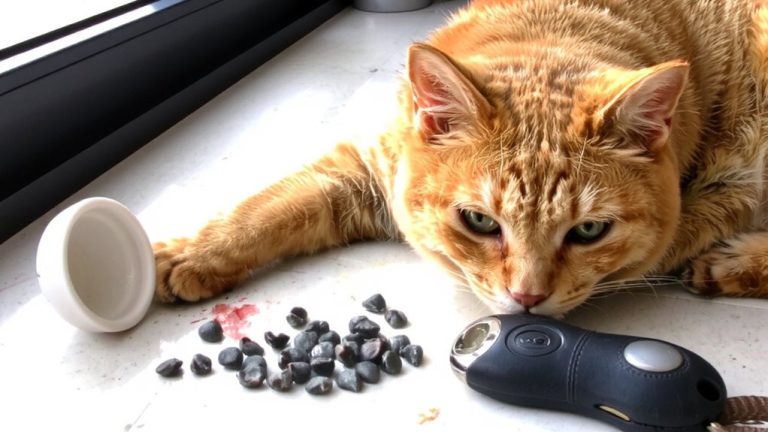
Think of it as a stubborn sore that just won’t heal-feline eosinophilic lip ulcer, sometimes called rodent ulcer, usually shows up as a flat, well-defined sore on the upper lip or right in the middle of the philtrum, often on both sides. You’ll notice it’s firm, slightly raised, and may ooze or bleed, though your cat likely won’t scratch it. This rodent ulcer is a common form of eosinophilic granuloma complex, linked to allergic reactions like flea bites, food, or environmental triggers. It’s not contagious, but it won’t clear up without addressing the root cause. Diagnosis is often clinical, though vets might biopsy atypical cases. Fast action helps-start with vet-recommended flea control (like topical selamectin or oral nitenpyram), and if the sore persists, your vet may prescribe prednisolone at 1–2 mg/kg daily. Early care keeps your cat comfortable and heals the lesion faster.
What Causes Rodent Ulcers in Cats?
| Trigger | Common Signs |
|---|---|
| Flea bite hypersensitivity | Single bite causes intense reaction |
| Mosquito bite hypersensitivity | Seasonal, outdoor exposure matters |
| Food allergens | Linked to diet changes or sensitivities |
| Environmental allergens | Pollen, dust mites, mold trigger flares |
Secondary infections can set in from licking, so prompt care is key.
How to Spot the Symptoms of a Rodent Ulcer
Ever wonder how to catch a rodent ulcer early in your cat? Keep an eye on their upper lip, where rodent ulcers often show up as firm, raised lesions with a raw, open center and a crusted, oozing border. These sores usually sit right in the philtrum-the groove in the center of the upper lip-and they’re often symmetrical, appearing on both sides. You might notice swelling or discoloration, even if your cat isn’t scratching much. Unlike other skin issues, rodent ulcers aren’t intensely itchy, but they can get infected from licking or debris. Look for persistent sores that don’t heal within a week or two. Catching these lesions early means faster care and less discomfort, so regular face checks during petting sessions are smart, simple prevention.
What Diagnosis and Testing Involve
How do vets pinpoint a feline eosinophilic lip ulcer for sure? They’ll start with a physical exam and your cat’s history to rule out other issues. If the lesion looks typical, your vet might use fine needle aspiration or an impression smear to check for eosinophils under the microscope-this gives a quick clue. But if the sore’s unusual, one-sided, or doesn’t heal, a skin biopsy is necessary. The tissue sample goes to the lab for histopathology, which confirms eosinophilic inflammation, collagen damage, and ulceration typical of the eosinophilic granuloma complex. This step’s essential to rule out squamous cell carcinoma, fungal infections, or bacterial abscesses. Histopathology doesn’t just confirm-it guides long-term care. While waiting, keep the area clean and prevent licking. Accurate diagnosis means targeted care, so trust the process and follow your vet’s lead.
Treatments That Work for Lip Ulcers
While tackling feline eosinophilic lip ulcers, your vet will likely start with the most common trigger: fleas. Aggressive flea control for 2–4 months is essential, since flea bite hypersensitivity is a leading cause of this hypersensitivity reaction. You’ll need to use vet-approved topical or oral preventives daily, ensuring all pets in the home are treated. If a secondary infection is present, targeted antimicrobial therapy based on culture results will help clear it. For stubborn cases unresponsive to flea control, prednisolone at 1–2 mg/kg/day orally often brings quick improvement. Triamcinolone acetone (0.05–0.1 mg/kg/day PO) works if your cat can’t tolerate prednisolone. Though less common, Feline eosinophilic granuloma complex may present similarly, so a biopsy is advised if the ulcer is destructive or one-sided.
How to Prevent Rodent Ulcer Recurrence
Since flea bite hypersensitivity is a leading trigger for rodent ulcers, keeping your cat on a strict flea prevention plan is your best defense against recurrence. Use veterinarian-recommended topical or oral flea control for at least 2–4 months, treating both your cat and the environment. If your cat’s ulcer returns, consider food allergy or mosquito bite hypersensitivity as possible culprits. Try an 8–12 week hypoallergenic food trial with hydrolyzed protein diets like Royal Canin Hydrolyzed Protein or Hill’s z/d. Limit outdoor exposure, especially at dusk and dawn, to reduce mosquito bite risks. In stubborn cases, long-term low-dose prednisolone or cyclosporine may be needed.
| Trigger | Prevention Strategy | Duration |
|---|---|---|
| Flea bite | Topical/oral flea control | 2–4 months minimum |
| Food allergy | Hypoallergenic diet trial | 8–12 weeks |
| Mosquito bite | Indoor confinement at peak times | Ongoing |
When to See a Veterinarian for Cat Lip Sores
What should you do if that crusty sore on your cat’s upper lip doesn’t go away after a week or two of flea treatment? It might be an eosinophilic ulcer, also known as an indolent ulcer, and knowing when to see a veterinarian is key. These sores, often linked to allergies or flea bites, usually appear as clean, eroded patches with raised borders, typically on the upper lip. If the lesion persists, grows, or shows signs of infection-like oozing or swelling-it’s time to act. Early vet visits improve outcomes, since treatments like corticosteroids or targeted antibiotics work best when started promptly. Your vet may also biopsy unusual or one-sided sores to rule out serious conditions like squamous cell carcinoma. Don’t wait weeks longer-timely care brings faster healing and less discomfort for your cat.
On a final note
You’ve got this: spot rodent ulcers early, note red, crusty sores on your cat’s upper lip, and act fast. Most cases respond to steroid treatments like 5 mg prednisolone daily for 7–10 days. Pair vet care with balanced nutrition-try limited-ingredient diets like Purina Pro Plan Sensitive Skin-to reduce flare-ups. Use flea prevention monthly, as allergies often trigger ulcers. Testers see improvement within 3–5 days. Stay consistent, monitor closely, and always consult your vet if sores persist or worsen.