How to Prevent and Treat Toxoplasmosis in Cats and Pregnant Owners
Keep your cat indoors and feed them cooked or commercial food to prevent toxoplasmosis. Clean the litter daily-oocysts take 1–5 days to become infectious. Pregnant owners should avoid handling litter and wear gloves when gardening. Cook meat to 145°F (63°C) and wash produce to reduce risk. If your cat shows lethargy, fever, or neurological signs, see your vet. Clindamycin (10–12.5 mg/kg twice daily) treats infection effectively when started early, and testing can confirm exposure-there’s more you can do to stay safe.
We are supported by our audience. When you purchase through links on our site, we may earn an affiliate commission, at no extra cost for you. Learn more. Last update on 19th July 2026 / Images from Amazon Product Advertising API.
Notable Insights
- Feed cats cooked or commercially prepared food to prevent infection from raw meat or prey.
- Keep cats indoors to reduce exposure to infected animals and contaminated soil.
- Pregnant women should avoid changing litter boxes; if necessary, wear gloves and wash hands thoroughly.
- Clean litter boxes daily to reduce risk, as oocysts take 1–5 days to become infectious.
- Treat infected cats with clindamycin and seek veterinary care; consult a doctor if pregnant and exposed.
How Cats Get Infected With Toxoplasmosis
A stray bite of raw meat or a quick hunt in the backyard-those everyday moments can expose your cat to *Toxoplasma gondii*, the parasite behind toxoplasmosis. Cats become infected when they ingest tissue cysts in infected prey or raw meat, especially from birds or rodents. Outdoor cats face higher risk because of hunting behavior and contact with contaminated soil. Only cats are definitive hosts-the parasite reproduces sexually in their intestines, producing oocysts shed in feces. Oocyst shedding lasts just 1–3 weeks, starting 3–10 days post-infection, but those oocysts can survive months in soil. Feeding your cat raw or undercooked meat increases infection chances-tissue cysts thrive in muscle and organs. Keep cats indoors, avoid raw diets, and scoop litter daily to reduce exposure. Prevention is part of responsible pet care-your cat’s habits directly impact household health.
Common Symptoms in Infected Cats
Silent but sometimes severe, toxoplasmosis can lurk in your cat without warning-most infected cats show no signs at all, especially healthy adults, but when symptoms of toxoplasmosis do appear, they’re usually seen in kittens or cats with weakened immune systems. If your cat is infected, you might notice fever, loss of appetite, and lethargy. Some develop a pulmonary infection, leading to labored breathing or coughing from pneumonia. Others may show neurological signs like seizures, circling, or uncoordinated movements if the brain is affected. Ocular symptoms such as uveitis can cause red, painful eyes and, left untreated, blindness. While infected cats often recover with care, early recognition of these signs helps guarantee a better outcome. Watch closely, especially if your cat spends time outdoors or eats raw meat, and consult your vet at the first sign of illness.
Diagnosis and Treatment Options for Cats
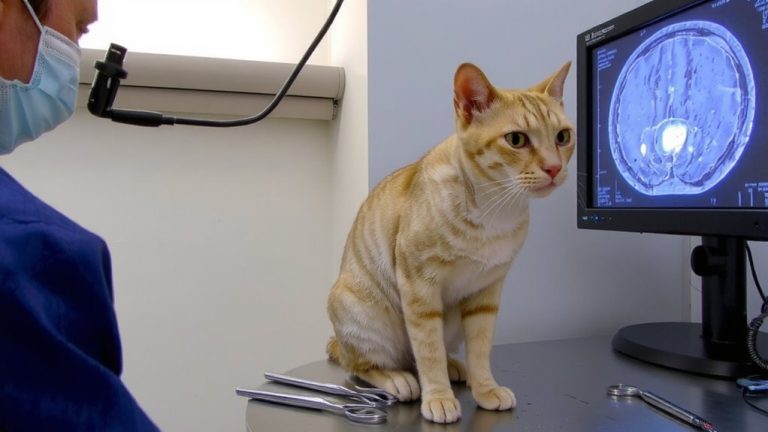
Spotting the signs of toxoplasmosis in your cat is just the first step-now it’s time to confirm what’s going on. Diagnosis typically starts with serologic testing: high IgM antibody levels suggest an active infection, while elevated IgG antibody means past exposure and immunity. Fecal oocyst detection is unreliable due to the short shedding period and delay in sporulation. Instead, PCR testing of feces, blood, or cerebrospinal fluid offers a more sensitive way to detect *T. gondii* DNA and confirm active infection. For treatment, clindamycin at 10–12.5 mg/kg twice daily for 2–4 weeks is the go-to, with clinical improvement usually seen within 2–3 days. Early intervention improves outcomes, especially in cats with ocular or neurological symptoms, though those with liver or lung involvement often face a tougher recovery.
How People Actually Catch Toxoplasmosis
While your cat might seem like the obvious suspect, you’re far more likely to pick up toxoplasmosis from eating undercooked meat-especially lamb, beef, or cured pork-than from scooping the litter box. Oocysts in the feces must become infective over 1–5 days, and only about 1% of cats are shedding them at any time. You’re also at risk from contact with contaminated soil, water, or unwashed fruits and veggies. The Centers for Disease Control emphasizes that eating raw meat poses a higher threat than handling cat waste. To stay safe, wash your hands thoroughly after gardening or handling meat, and cook food to safe internal temperatures. Pregnant women and immunocompromised individuals should take extra care.
| Source | Risk Level | Prevention Tip |
|---|---|---|
| Eating undercooked meat | High | Cook to 145°F (63°C) minimum |
| Unwashed fruits | Medium | Rinse under running water |
| Contaminated with cat feces | Low | Clean litter daily |
| Eating raw meat | High | Avoid charcuterie unless heated |
| Oocysts in the feces | Low | Wear gloves, wash hands thoroughly |
Why Toxoplasmosis Is Dangerous During Pregnancy
You’re more likely to get toxoplasmosis from a rare steak or unwashed salad than from your cat, but if you’re pregnant, the stakes shift dramatically once the *Toxoplasma gondii* parasite enters your system. When pregnant women contract toxoplasmosis during pregnancy, the parasite can cross the placenta and infect your unborn child, even if you show no symptoms. This leads to congenital toxoplasmosis, which causes serious health problems like seizures, vision loss, and developmental delays. Though only 10–30% of babies infected with T show signs at birth, up to 90% may develop issues later. First-trimester infections carry a lower transmission rate-around 15%-but cause more severe damage. Later infections raise the risk of toxoplasmosis to 60%. Since your immune system is naturally weakened immune during pregnancy, the risk of toxoplasmosis complications increases for both you and your baby.
Daily Habits That Prevent Toxoplasmosis
A clean litter box is your first line of defense against toxoplasmosis, especially during pregnancy, since Toxoplasma gondii oocysts take 1–5 days to become infectious after your cat sheds them in feces-daily scooping cuts the risk dramatically. Keep your cat indoors to reduce the chance of hunting and becoming a contaminated cat. Always wear disposable gloves when gardening, as soil may contain oocysts in their feces. Feed only commercial or cooked food-never raw meat-to avoid bradyzoite cysts. After contact with cat, soil, or litter, wash hands thoroughly with soap and water. Avoid eating contaminated food by washing produce and cooking meat well. Indoor cats are far less likely to shed oocysts. Use gloves and wash hands after handling raw meat. Clean litter boxes daily, and limit direct contact with cat. These habits drastically reduce your risk.
On a final note
Keep your cat indoors, feed them commercial cat food, and scoop the litter daily-Toxoplasma gondii thrives in outdoor environments and raw meat. Pregnant owners should avoid changing litter, wear gloves in gardens, and wash hands after pet contact. Routine vet checks and fecal tests help catch issues early. With smart habits and products like clumping litter and monthly parasite preventives, you protect both your cat and your family effectively, without stress or guesswork-just consistent, informed care.