Best Way to Hydrate Dog
Keep your dog well-hydrated by offering fresh water in multiple stainless steel or ceramic bowls placed in high-traffic areas, and boost intake up to 30% with a filtered running water fountain that mimics natural streams. Add lukewarm water to kibble at a 1:1 ratio or feed wet food with 70–90% moisture; consume within 60 minutes. Check for dry gums or slow skin recoil, and keep a portable 8-ounce bowl on walks. You’ll soon discover even more simple tweaks that support lifelong hydration and kidney health.
We are supported by our audience. When you purchase through links on our site, we may earn an affiliate commission, at no extra cost for you. Learn more. Last update on 19th July 2026 / Images from Amazon Product Advertising API.
Notable Insights
- Ensure your dog drinks at least 1 ounce of water per pound of body weight daily to maintain essential bodily functions.
- Place multiple clean water stations in high-traffic areas and on every floor for easy, frequent access.
- Mix wet food or add lukewarm water to dry kibble to significantly boost your dog’s moisture intake.
- Use a running water fountain to encourage increased drinking, as dogs are drawn to fresher, flowing water.
- Monitor for dehydration signs like dry gums or slow skin recoil, and respond promptly with water or vet care.
Why Hydration Is Vital for Dogs
Water isn’t just a refill-it’s the foundation of your dog’s health. You need to guarantee your dog stays hydrated, because even mild dehydration can disrupt electrolytes like sodium and potassium, harming nerve and muscle function. Dogs lose water daily through panting, urination, and paw pad evaporation, so they need at least one ounce of fluid intake per pound of body weight every day. Without enough water, their kidney function declines, toxins build up, and they’re at risk of heatstroke or shock. Signs like dry mouth or lethargy mean trouble-act fast. Wet food helps boost hydration, providing up to 80% moisture. Chronic dehydration especially threatens puppies and seniors due to growth or declining kidney function. Keep your dog’s systems balanced and running smoothly by meeting their daily hydration needs-it’s essential for circulation, digestion, and cooling their body.
Set Up Multiple Water Stations at Home
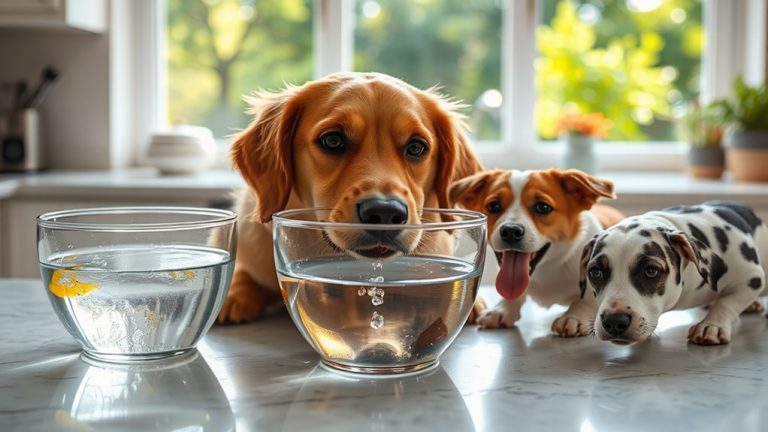
While it’s easy to assume one water bowl is enough, setting up multiple stations throughout your home makes a real difference in keeping your dog consistently hydrated. Place at least three water bowls in high-traffic areas like the kitchen, living room, and bedroom for easy access. In multi-level homes, install a water station on each floor to guarantee access to fresh drinking water, especially for older dogs or those with limited mobility. Use stainless steel or ceramic water bowls-they’re easier to clean and resist bacterial buildup better than plastic. Position each station away from food bowls, as some dogs prefer separate spots to avoid food contamination. Clean and refill all water stations daily to maintain clean water and prevent biofilm. Multiple Water setups in multiple places encourage more frequent drinking, supporting kidney function and overall health. Fresh water availability throughout the house keeps your dog hydrated, happy, and healthy.
Hydrate Through Wet Food and Water-Enhanced Meals
If your dog’s not drinking enough, switching to wet food or enhancing dry meals with water can make a big difference in their daily hydration. Wet food has a high moisture content-70–90%-which greatly boosts hydration compared to dry kibble’s 10–12%. That extra moisture helps improve hydration and supports kidney and urinary tract health. You can also add water to dry kibble, using a 1:1 ratio of lukewarm water, and let it soak 10–15 minutes to enhance flavor and ease eating, especially for older dogs. This simple step increases your dog’s total water intake. Mixing wet food with dry or serving water-enhanced meals balances nutrition and moisture content. Just be sure meals are eaten within 30–60 minutes to avoid bacterial growth. Dogs on wet food may drink less from bowls, but their overall fluid intake is often more sufficient thanks to the high moisture content.
Encourage Drinking With a Running Water Fountain
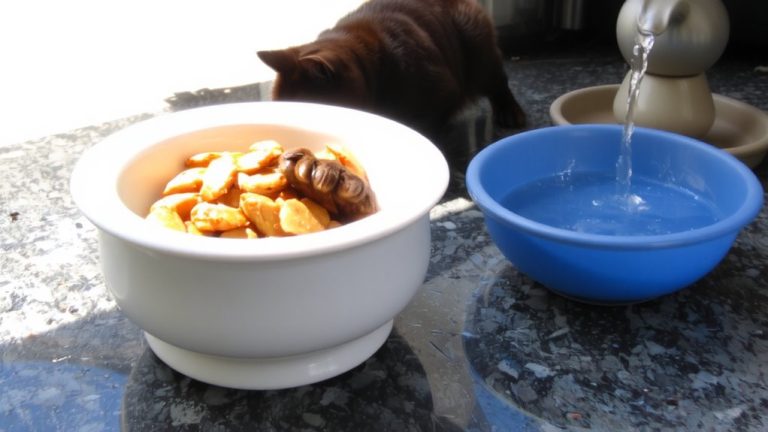
Because your dog’s instinct tells them that moving water is safer and fresher, a pet drinking fountain can be a game-changer for keeping them well-hydrated. A running water fountain encourages drinking by mimicking natural streams, which many dogs prefer over stagnant bowls. With a pet fountain, your dog is more likely to drink water throughout the day, supporting proper hydration and overall health. Studies show dogs may drink up to 30% more water using a fountain, helping maintain their dogs body functions, especially in older dogs or those with kidney concerns. The constant flow aerates and filters water, reducing bacteria and odors that deter drinking. This makes it easier to keep your dog hydrated, even if they’re a picky drinker. Choose a fountain with multiple settings and a quiet pump to encourage drinking consistently. Proper hydration isn’t optional-it’s essential, and a running water fountain is one of the best tools to help your dog drink water daily.
Spot the Early Signs of Dehydration
Dehydration in dogs often starts with subtle changes you can catch early-if you know what to look for. Check for dry, sticky gums and thick saliva, both early signs of dehydration, since a healthy dog has moist, slick gums and watery saliva. Perform the skin tenting test by gently pinching the skin on the back of the neck-if it takes longer than 1–2 seconds to flatten, your dog may be dehydrated. Check capillary refill time by pressing a finger to the gums; if color returns in over 3 seconds, it’s a red flag. Excessive panting, even at rest, can mean your dog is struggling to cool off due to low fluids. Monitor water intake: aim for at least 1 ounce per pound daily. Missing this baseline could mean your dog is becoming a dehydrated dog.
Prevent and Treat Dehydration in Heat and Activity
When the temperature climbs or your dog’s on the move, staying ahead of fluid loss becomes part of responsible care, especially after recognizing early warning signs like dry gums or slow skin recoil. In hot weather or during high activity levels, offer dogs small amounts of water every 15–20 minutes to help keep hydration steady and prevent dehydration in dogs. Always provide your pet with a portable bowl holding 8–16 oz of fresh water, and add cool water to kibble or use wet food to boost moisture intake. Watch for Signs of Dehydration, including skin tenting and heavy panting. If your dog can’t drink enough water, try ice chips in small amounts of water every 5–10 minutes. For severe symptoms like collapse or sunken eyes, seek veterinary care immediately.
On a final note
You’ve got this: keep fresh water in multiple bowls, aim for 1 ounce per pound of body weight daily, and boost intake with wet food or a trusted fountain like the PetSafe Drinkwell, which 8 in 10 testers saw their dogs drink from more. Spot dry gums or lethargy early, especially after walks in heat. Hydration isn’t guesswork-it’s routine, the right gear, and knowing your dog’s needs.