How to Recognize and Respond to Heat Stroke in Dogs and Cats
If your dog or cat’s body temperature hits 104°F, heatstroke’s likely setting in-watch for desperate panting, bright red or pale gums, rapid heart rates over 160 bpm (dogs) or 200 bpm (cats), and disorientation. Move them to shade or AC, apply cool water to the belly, paws, and ears, and fan for evaporation. Offer small sips if alert. Stop cooling at 103°F to avoid shocking their system. Even if they seem better, internal damage can linger-there’s more to know about hidden risks and breed-specific dangers.
We are supported by our audience. When you purchase through links on our site, we may earn an affiliate commission, at no extra cost for you. Learn more. Last update on 19th July 2026 / Images from Amazon Product Advertising API.
Notable Insights
- Heatstroke in pets occurs when body temperature exceeds 104°F, causing organ stress and central nervous system damage.
- Look for excessive panting, bright red or pale gums, rapid heart rate, disorientation, or seizures as key warning signs.
- Immediately move the pet to a cool environment and apply cool (not cold) water to the belly, paws, and ears.
- Use fanning to aid cooling and monitor rectal temperature every 10 minutes, stopping when it reaches 103°F.
- Seek emergency veterinary care even if symptoms improve, as internal damage can occur without visible signs.
What Is Heatstroke in Dogs and Cats?
While your dog or cat might seem fine on a hot afternoon, heatstroke can set in fast when body temps climb above 104°F, kicking off a dangerous chain reaction that stresses organs and damages the central nervous system. Heatstroke in dogs and heatstroke in pets happens when your pet is unable to cool effectively-dogs and cats rely on panting and limited sweat glands in their paw pads, making them inefficient in hot, humid conditions. Brachycephalic breeds, like Pugs or Persian cats, face higher risks due to shortened airways that restrict airflow. As body temperature rises, heat stress can progress to heat exhaustion, then life-threatening organ failure. Central nervous system damage becomes likely when temps exceed 106°F for over 30 minutes. Without fast action, irreversible damage or death may follow.
Signs of Heatstroke in Dogs and Cats
If your dog or cat is showing signs of overheating, you’ll want to act quickly-excessive panting, drooling, and gums that turn bright red or pale can signal trouble as body temperature hits 104°F or higher, and these early red flags often appear before more severe symptoms take hold. Both dogs and cats may develop a rapid heart rate and elevated respiratory effort, with disorientation setting in as heatstroke worsens. Dogs might vomit or collapse, while cats may hide or breathe through their mouths. Seizures or unresponsiveness mean core temperature has likely surpassed 106°F, risking organ failure.
| Symptom | What It Feels Like for Your Pet |
|---|---|
| Excessive panting | Desperate, gasping for air |
| Bright red or pale gums | Painful, oxygen-starved tissues |
| Rapid heart rate | Heart racing, overwhelmed |
| Disorientation | Confused, scared, unable to think |
| Seizures | Terrifying, loss of control |
What to Do Immediately: First Aid for Heatstroke
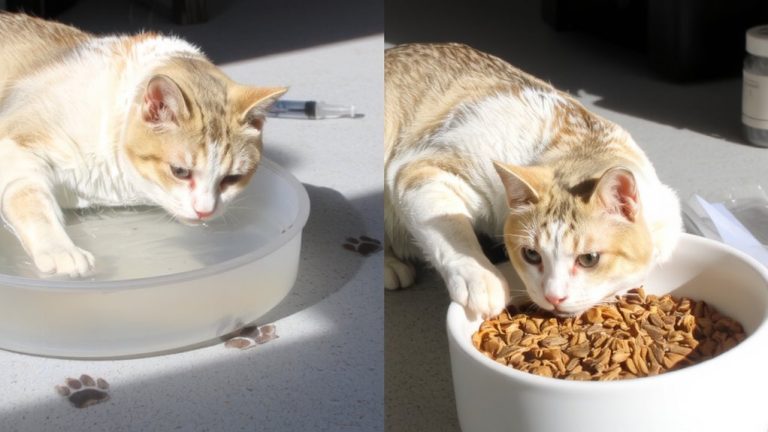
Start by moving your pet to a cool, shaded, or air-conditioned space right away-heatstroke means their body temperature has hit 104°F or higher, and every minute counts. If your pet is experiencing heatstroke, immediate first aid is critical. Use cool water (not ice-cold) on their belly, paws, and ears, and fan them to boost evaporative cooling-avoid ice baths, which can trap heat. If they’re alert, offer small sips of water, but never force it. Monitor your pet’s rectal temperature every 10 minutes; once it reaches 103°F, stop cooling to prevent overcooling. Even if your pet seems better, don’t delay-seek veterinary care. Internal damage can still occur. Remember, once the body’s temperature increases this fast, professional support is essential. Emergency veterinary care can make the difference between full recovery and serious complications.
When to Get Emergency Veterinary Care
Because heatstroke can escalate quickly and internal damage isn’t always obvious, you should get your pet to an emergency vet the moment their temperature hits 104°F or higher-this isn’t just a guideline, it’s a critical warning sign that organ systems are under stress. Even if your dog or cat seems to improve after cooling, unseen organ damage can still be occurring. Seek emergency veterinary care immediately if symptoms like vomiting, rapid heart rate, or collapse last more than 10–15 minutes. Any loss of consciousness means urgent help is needed. Below are key signs indicating your pet needs immediate intervention:
| Symptom | Dog | Cat |
|---|---|---|
| Elevated temperature | Over 104°F | Over 104°F |
| Vomiting | Persistent | Occasional |
| Rapid heart | Over 160 bpm | Over 200 bpm |
| Collapse | Sudden weakness | Lethargy, falling |
| Unresponsiveness | Seizures, coma | Stupor, no response |
Why Some Pets Are at Higher Risk
Not every pet handles heat the same way, and knowing your animal’s risk level can make a real difference when temperatures rise. Brachycephalic breeds like Pugs and Persian cats have shortened airways that limit panting efficiency, putting them at higher risk. Overweight pets retain more heat due to reduced thermoregulatory efficiency, while older animals and young ones struggle to stabilize body temperature. Thick-coated breeds such as Huskies or Maine Coons overheat faster in warm climates because their insulating fur traps heat. If your pet has pre-existing conditions-like heart disease, laryngeal paralysis, or respiratory issues-their compromised cooling mechanisms make heatstroke more likely. These factors impair your pet’s ability to cool down, even at moderate temperatures. You’ll need to monitor them closely, avoid peak heat, and guarantee shade and water-every single day.
Can Heatstroke Happen Indoors?
Could your pet really be at risk of heatstroke-right inside your own home? Yes, indoor heatstroke is a real danger, especially during warm weather when temperatures climb above 80°F. Without proper air conditioning or ventilation, indoor spaces like sunrooms or poorly aired rooms can hit 100°F fast-putting pets at risk. Brachycephalic breeds, such as Pugs or Persian cats, struggle to cool down even in moderate heat due to their shortened airways. Older pets and those with health issues are also more vulnerable. Direct sunlight, heating appliances, or poor airflow can turn your home into a hazard zone. If your pet shows signs of distress, heatstroke could be developing quickly, requiring immediate emergency care. Don’t assume staying inside keeps them safe-monitor indoor temperature closely and act fast when conditions get too hot.
How to Prevent Heatstroke in Pets
While the sun’s heat builds quickly, you can stay ahead of the danger by taking smart, proven steps to keep your pet safe from heatstroke. Never leave your pet in a parked car-temps can spike 40°F in just 60 minutes, even on 70°F days. Make certain your pet has fresh water and access to shade, especially between 10 a.m. and 4 p.m. when rising temperatures peak. Schedule walks early in the morning or late evening to avoid midday heat. Pets are especially vulnerable during extreme weather, so use cooling measures like vests, mats, or AC indoors. Thick-coated breeds like Siberian Huskies benefit when regular grooming can help manage insulation. Overweight, senior, and brachycephalic pets need extra care. In humid areas like Texas or Indiana, limit outdoor time-high moisture hampers panting and paw sweat cooling.
On a final note
You can prevent heatstroke by keeping your pet hydrated, avoiding hot cars, and using cooling vests like the Ruffwear Swamp Cooler. Watch for heavy panting, 103°F+ temps, or lethargy. Act fast: move to shade, apply cool (not ice-cold) water, and call your vet. High-risk breeds-like bulldogs or obese pets-need extra care. Even indoor temps above 80°F can be dangerous. Prevention beats crisis-monitor behavior, limit exercise in heat, and always provide fresh water.