Recognizing and Managing Feline Hyperesthesia Syndrome
You might notice your cat suddenly twitching, rippling skin along the back, or obsessively grooming near the tail base-classic signs of feline hyperesthesia syndrome. Episodes last seconds but can include darting, biting, or dilated pupils. Rule out arthritis, skin issues, or thyroid problems with blood work and imaging. Try gabapentin at 5–10 mg/kg every 8–12 hours, fluoxetine for compulsive behaviors, and reduce stress with consistent routines. Pheromone diffusers and environmental enrichment help, too-there’s more to optimizing your cat’s comfort just ahead.
We are supported by our audience. When you purchase through links on our site, we may earn an affiliate commission, at no extra cost for you. Learn more. Last update on 19th July 2026 / Images from Amazon Product Advertising API.
Notable Insights
- Sudden skin rippling along the back, especially near the tail, is a hallmark sign of feline hyperesthesia syndrome.
- Episodes triggered by touch may include frantic grooming, tail chasing, dilated pupils, or aggression lasting seconds to minutes.
- Diagnosis involves ruling out other conditions using blood tests, imaging, and skin evaluations.
- Treatment often includes gabapentin for nerve pain or fluoxetine to reduce compulsive behaviors.
- Environmental enrichment and stress reduction help manage episodes in genetically predisposed cat breeds.
What Is Feline Hyperesthesia Syndrome?
Think of it as your cat’s nervous system hitting a speed bump-feline hyperesthesia syndrome (FHS), often called “twitchy cat disease,” kicks in with sudden, intense sensitivity along the back, especially near the tail base. Feline Hyperesthesia Syndrome causes extreme sensitivity, where even light touch triggers violent skin rippling or frantic grooming. Cats with hyperesthesia may dart, bite their flank, or show dilated pupils-all lasting 20 to 30 seconds. This increased sensitivity to touch stems from underlying neurological confusion, possibly linked to seizures or pain. Though any cat can develop hyperesthesia syndrome in cats, Siamese, Burmese, Abyssinian, and Persian breeds are more prone, typically between 1 and 5 years old. Skin sensitivity episodes aren’t just behavioral-they’re physical responses. Diagnosis means ruling out other issues via blood work, imaging, and skin scrapings. Managing it starts with your vet’s guidance, environmental calm, and targeted care to reduce triggers and support nervous system health.
What Are the Signs of Feline Hyperesthesia?
While your cat may seem perfectly fine between episodes, sudden signs of feline hyperesthesia can be alarming-watch for rapid rippling or twitching skin along the lower back, especially near the tail base, where even light touch triggers an intense reaction. This extreme sensitivity often causes your cat to lash out, bite, or overgroom, leading to self-trauma to the tail or surrounding skin. During these 20- to 30-second episodes, you might notice dilated pupils, drooling, vocalization, or frantic scratching at the cat’s skin. Stress and anxiety can worsen symptoms, making calm environments essential. The twitching skin and erratic behavior are hallmark traits of feline hyperesthesia syndrome, and though your cat may appear normal afterward, repeated episodes demand attention. Early intervention helps prevent infection from excessive licking and maintains your cat’s overall well-being.
How Is Feline Hyperesthesia Diagnosed?
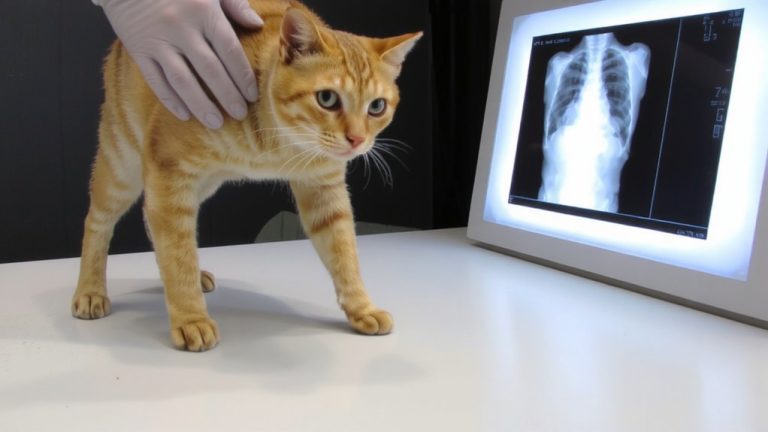
How do you know if your cat’s strange episodes are truly feline hyperesthesia? You’ll need an integrated multidisciplinary diagnostic approach to accurately diagnose hyperesthesia. Your vet will start with blood work to rule out hyperthyroidism and other systemic issues. They’ll also check for skin problems using skin scrapings and fungal cultures. Since symptoms can mimic those of intervertebral disc disease or spinal arthritis, imaging like X-rays or MRI may be necessary. It’s vital to assess both neurological and dermatological conditions, as studies show many suspected cases link to underlying issues. If all tests come back normal and your cat responds to medication trials for pain, itchiness, or seizures, feline hyperesthesia syndrome may finally be confirmed. This thorough process guarantees you’re treating the real cause, not just the symptoms.
What Causes Feline Hyperesthesia?
Though the exact cause of feline hyperesthesia syndrome isn’t fully understood, experts agree it likely stems from a mix of neurological, skin-related, and behavioral factors, so you’ll want to take into account all angles when evaluating your cat’s episodes. The exact cause remains unknown, but possible causes include epileptiform brain activity, as some cats show signs similar to partial seizures. Neurological issues like spinal arthritis or tail trauma may also contribute. Your cat’s breed of cat matters-Siamese, Burmese, Abyssinian, and Persians seem more prone, hinting at genetic links. Behavioral health plays a role too; stress or anxiety from environmental changes can trigger episodes. Skin sensitivity or neuropathic pain might further explain sudden twitching or agitation. Watching for patterns in timing, duration, and triggers helps clarify underlying causes. While no single test confirms feline hyperesthesia syndrome, ruling out medical conditions sharpens the focus on holistic management.
What Are the Treatment Options?
Now that you’ve identified possible triggers and considered the mix of neurological, genetic, and behavioral factors behind feline hyperesthesia, you can focus on managing the condition effectively. A solid treatment plan often includes gabapentin, prescribed at 5–10 mg/kg every 8–12 hours, to ease nerve pain linked to your cat’s skin twitching. If seizure-like activity is suspected, antiseizure meds like phenobarbital may help. For compulsive overgrooming, behavior-modifying drugs such as fluoxetine (0.5–1 mg/kg daily) can make a real difference. Short-term corticosteroids might address skin inflammation, but long-term use isn’t ideal. To minimize stress and support overall well-being, combine environmental enrichment-like daily play and Feliway diffusers-with consistent routines. These strategies not only soothe your cat’s skin but also improve outcomes for feline hyperesthesia syndrome long-term.
How Can You Manage Episodes at Home?
When your cat shows signs of an episode, the first thing to remember is to keep your hands off their lower back and tail base, since touching these areas can intensify skin rippling and lead to sudden aggression. These movements often triggers hyperesthesia, worsening your cat’s anxiety. Instead, quietly distract your cat with a food-dispensing toy or treat to interrupt behaviors linked to obsessive-compulsive disorder. Avoid sudden noises or actions that might escalate the episode. Use a recovery cone or soft t-shirt to help reduce self-mutilation during intense licking or biting. Maintain a consistent routine and enrich their environment-interactive play and pheromone diffusers can help reduce arousal. These steps support immediate safety during feline hyperaesthesia syndrome episodes while minimizing factors that can exacerbate your cat’s anxiety.
How Can You Support Long-Term Comfort and Wellbeing?
Since consistency plays a key role in managing feline hyperesthesia syndrome, sticking to a predictable daily routine-feeding meals at the same times, scheduling play sessions, and maintaining a quiet sleep environment-can markedly reduce stress and cut down on episode frequency, especially in genetically sensitive breeds like Siamese and Burmese. You can further support your cat by using prescribed Medicine like gabapentin or amitriptyline, which help control neuropathic pain and anxiety. Products like Feliway diffusers promote calmness, while safe spaces reduce agitation. Prevent self-trauma during episodes with barrier t-shirts or recovery cones to protect skin from biting or licking. Regular environmental enrichment and positive reinforcement improve behavioral outcomes. With consistent care and support from Veterinary Medicine, you’re not just managing hyperesthesia-you’re enhancing your cat’s quality of life, reducing stress, and promoting long-term feline wellbeing.
On a final note
You can manage feline hyperesthesia by combining vet-approved meds, like gabapentin, with daily routine, 2–3 scheduled play sessions using wand toys, and a consistent feeding schedule using measured portions of high-protein, low-grain food. You’ll track episodes in a log, reduce stress with Feliway diffusers, and create quiet zones. Most cats show improvement within 4–6 weeks when you follow a plan, so stay consistent, observe closely, and partner with your vet for long-term comfort.