How to Introduce a Fearful Rescue Dog to Regular Brushing Sessions
Start by building trust-let your dog approach the brush first in a quiet space like the bathroom, using a soft-bristled brush or grooming glove. Offer high-value treats like chicken or peanut butter on a lick mat during 3–5 minute sessions. Stroke gently, starting on low-sensitivity areas, and keep sessions under one minute. Reward calm cues like soft eyes or leaning in. Watch for lip licking or whale eye, and repeat daily until comfort grows-there’s more to discover about shaping confidence.
We are supported by our audience. When you purchase through links on our site, we may earn an affiliate commission, at no extra cost for you. Learn more. Last update on 19th July 2026 / Images from Amazon Product Advertising API.
Notable Insights
- Let the dog approach the brush first, using treats and calm encouragement without force.
- Start with quiet time near the dog, offering high-value treats to build trust gradually.
- Choose a quiet, low-traffic area with non-slip flooring for a secure grooming space.
- Begin touching with soft strokes on low-sensitivity areas, rewarding immediately with treats.
- Monitor body language closely and end sessions before signs of stress appear.
Build Trust With a Fearful Dog First
While your rescue dog might be wary at first, building trust sets the foundation for every step that follows, especially when introducing something new like brushing. Start by letting your dog approach you, using a calm voice and avoiding direct eye contact to reduce stress. Spend quiet time nearby daily, offering high-value treats like small bits of chicken or cheese-this is positive reinforcement that helps your dog link your presence with good things. Watch their body language closely: signs like lip licking, whale eye, or a tucked tail mean they’re uneasy, so give more space. Wait until you see soft eyes, a loose stance, or them leaning into your touch before attempting any handling. Building trust also means being predictable-stick to consistent times for feeding, walks, and interactions so your dog feels safe and understood.
Set Up a Calm Grooming Space
Since a rescue dog’s comfort depends on feeling safe and in control, setting up a calm grooming space starts with choosing a quiet, low-traffic spot like a bathroom or laundry room-places with non-slip flooring that prevent scary slips during brushing. Lay down a rubber-backed mat or towel to give your dog secure footing and reduce anxiety from slipping. Keep tools out of sight at first-you’ll introduce them later to avoid overwhelming your dog. Play soft instrumental music or white noise at 45–55 decibels to muffle sudden sounds and support positive grooming sessions. Position your dog facing away from the door to minimize escape urges and the stress of feeling cornered. This thoughtful setup creates a predictable, safe environment where your dog can relax, making grooming sessions less intimidating and more successful over time.
Let Your Dog Sniff the Brush
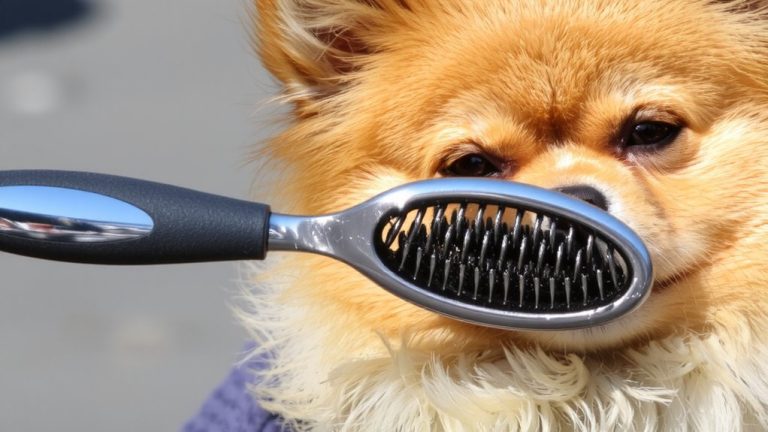
When introducing your rescue dog to grooming, letting them sniff the brush on their own terms can make all the difference in building trust. Let your dog approach the brush at their pace-place it on the floor or in your hand, motionless, so they feel in control. This first time experience should be pressure-free and calm. Use a soft-bristled brush or grooming glove, as these are less threatening and more comfortable to investigate. Pair sniffing with high-value treats, like peanut butter on a nearby lick mat, to create a positive association. Repeat short 3–5 minute sessions daily until your dog shows relaxed cues-loose posture, soft eyes, or nudging the brush voluntarily. Let your dog lead the process, ensuring they build confidence without overwhelm. This foundation sets the stage for stress-free grooming long-term.
Start With Gentle Strokes
Gentle touches build trust, and that’s exactly where your brushing journey should begin. Start by using your fingers to softly stroke and massage your dog’s coat, mimicking brushing motions to ease them into touch without tools. Focus on low-sensitivity areas like the back and shoulders first-these spots are less likely to trigger fear. After each stroke, offer praise or a treat to create a positive link with grooming. Then, introduce a soft-bristled brush with just 10–15 seconds of light passes, applying minimal pressure on sensitive skin. Keep grooming sessions short-under one minute-and always watch for signs of relaxation. Only increase time once your dog stays calm for three straight sessions. This gradual approach helps your dog accept brushing as a safe, comfortable routine.
Reward Calm Grooming Behavior
Building on the trust you’ve started with soft strokes and light brushing, the next step is shaping your rescue dog’s response through smart, timely rewards. Reward calm grooming behavior immediately with small, high-value treats like chicken or cheese after they tolerate a touch or brush stroke. Use verbal praise like “good girl” in a soft tone to reinforce stillness during brief brushing sessions. Offer a lick mat with peanut butter to create a positive association with Regular Grooming. Pair each small success-like letting the brush sit nearby or accepting a single comb stroke-with a favorite toy or treat. Even minor calm responses help build confidence. Watch closely for signs of stress and stop before tension builds. Consistency strengthens trust, making future visits to a professional groomer easier. These steps create a stress-free routine centered on patience, positive reinforcement, and your dog’s comfort.
Spot Fear Signs Early
What if your dog’s lip licking isn’t just a quirk but a quiet plea for space? You’ve got to spot fear signs early. Watch for stiffening, whale eye, or turning her head away when grooming tools appear-these aren’t small things. Backing up, cowering, or sudden yawning often mean anxiety, not boredom. If she trembles at the sight of a brush or pants with no heat, stress is rising. Dilated pupils and tucked tails are red flags. Note how she reacts to combs versus brushes-some textures scare her more. Avoidance can delay brushing, which risks matting and skin issues. Spotting these cues early helps you adjust, keeping sessions calm. That means less trauma and more trust. Gentle handling supports healthy skin and strengthens your bond. Catching subtle signs now prevents breakdowns later. You’re not just grooming-you’re building safety, one stroke at a time.
Get Help If She Remains Scared
Why is Sassy still trembling every time you reach for the brush, even after going slow and using treats? If your Rescue Dog shows no improvement after 4–6 weeks of consistent, gentle training, it’s time to contact us or a professional. Fear-based reactions like cowering, snapping, or freezing mean she may need experts with the right tools and experience. A certified groomer can safely handle matted coats without causing pain, while a behaviorist can implement counter-conditioning protocols tailored to her needs. In some cases, your vet might recommend mild sedation or anti-anxiety medication to prevent further trauma during initial sessions. Scheduling professional grooming every 4–6 weeks builds trust through positive, controlled handling. These steps guarantee her coat stays healthy and she feels safer over time-because every Rescue Dog deserves patience, expertise, and care.
On a final note
You’ve built trust, created a calm space, and let your dog sniff the brush-now keep sessions short, about 2–3 minutes, using a slicker brush or soft-bristle tool. Start with gentle strokes on low-stress areas like the back, rewarding calm behavior with small, pea-sized treats. Watch for fear signs-tucked tail, lip licking-and pause if needed. Consistency, patience, and positive reinforcement make all the difference in shaping confident, stress-free grooming habits.