The Complete Guide to Choosing Pet-Safe Houseplants and Avoiding Toxic Varieties
You protect your pets by choosing non-toxic houseplants like Spider Plant, Boston Fern, and Haworthia, all ASPCA-verified and safe for cats and dogs. Avoid toxic varieties like pothos, sago palm, and peace lily, which can cause vomiting, liver failure, or worse. Place safe plants on high shelves or in hanging macramé hangers to prevent chewing. Even non-toxic types may cause mild stomach upset if eaten in bulk. Smart placement and regular care keep both your plants thriving and your pets out of harm’s way-discover how each plant performs in real homes with pets around.
We are supported by our audience. When you purchase through links on our site, we may earn an affiliate commission, at no extra cost for you. Learn more. Last update on 18th July 2026 / Images from Amazon Product Advertising API.
Notable Insights
- Choose ASPCA-verified non-toxic plants like Spider Plant, Boston Fern, and Haworthia to keep pets safe.
- Avoid common toxic houseplants such as Pothos, Peace Lily, and Sago Palm that can cause serious health issues.
- Confirm plant safety by cross-referencing with reliable sources like the ASPCA’s toxic and non-toxic plant database.
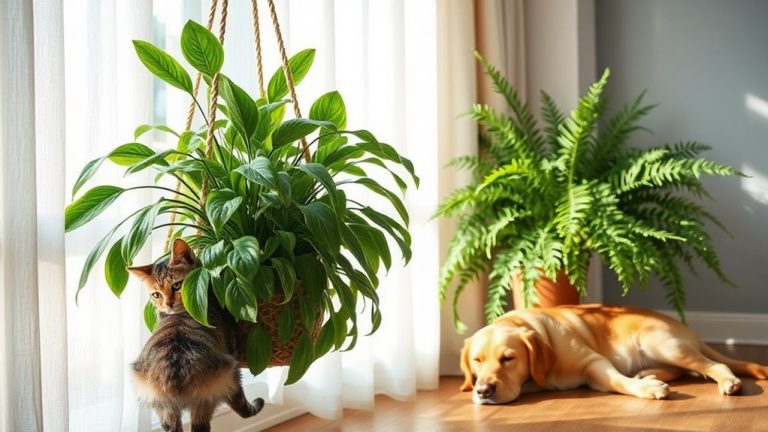
- Place non-toxic plants on high shelves or in hanging planters to prevent excessive chewing and digestion.
- Even pet-safe plants may cause mild stomach upset if eaten, so monitor pets around all greenery.
Why Pet-Safe Houseplants Matter for Cats and Dogs
While your cat might be drawn to nibble on a dangling leaf or your dog may sniff around the base of a potted plant, keeping your indoor greenery safe for pets isn’t just about avoiding mess-it’s a critical part of responsible pet care. Cats and dogs often explore with their mouths, putting them at risk if a plant is toxic to cats or dogs. Species like lilies or pothos can cause organ damage, even in small amounts. Choosing pet-safe houseplants verified by the ASPCA-like Haworthia or Calathea, which are non-toxic to cats-eliminates life-threatening risks. Even non-toxic plants may cause mild stomach upset if eaten in bulk, so monitor your pets. Using the ASPCA’s Toxic and Non-Toxic Plants list helps you reduce stress for both you and your pets, ensuring a healthier, safer home where everyone thrives.
Top 7 Non-Toxic Houseplants for Pet Owners
You’ve got your furry friend’s health in mind, and choosing safe greenery is a smart next step. These pet-safe indoor picks are all non-toxic and tested for real-home performance. The Spider Plant removes formaldehyde, thrives in indirect light, and is a favorite among cat owners. Boston Fern loves humid bathrooms and filtered light, staying lush without harming pets. Calathea Rattlesnake dazzles with its nightly “prayer” motion, needs dappled light and moist soil, and is confirmed non-toxic. Ponytail Palm stores water in its caudex, shows red-tipped leaves in bright light, and is completely safe. Haworthia fasciata, or Zebra Cactus, thrives on sunny windowsills with minimal water and striking white-striped leaves. All seven are non-toxic, reliable, and perfect for homes with curious paws. You’re not just decorating-you’re protecting.
Common Toxic Plants to Avoid Around Pets
Though many houseplants bring life to your space, some can pose serious risks to pets, so it’s key to know which ones to keep out of reach. Several popular indoor plants are toxic and can cause mild to severe reactions. Philodendrons and Pothos, common houseplant picks, contain calcium oxalate crystals that cause oral irritation, drooling, and swelling. Snake Plants and Yucca species contain saponins that may lead to vomiting and diarrhea. Peace Lily, while beautiful, has insoluble oxalates that cause mouth burning and swallowing issues. Even more concerning, Sago Palm is highly toxic-its cycasin toxin can lead to acute liver failure after small ingestions. Oleander and Lily of the Valley affect cardiac function, potentially leading to Serious Health issues like arrhythmias or cardiac arrest. These toxic indoor plants aren’t worth the risk, especially if your pets tend to chew. Always verify plant safety to protect your pets.
How to Verify a Plant Is Safe for Pets?
| Common Name | Risk to Pets |
|---|---|
| Peace Lily | Toxic |
| Spider Plant | Non-Toxic |
| Pothos | Toxic |
| Boston Fern | Non-Toxic |
| Aloe Vera | Toxic |
Pet-Proof Your Plants With Smart Placement
While keeping your favorite houseplants within sight, you can still protect your pets by lifting greenery off the ground where chewing and digging are most likely to happen. Use hanging baskets or macramé hangers to keep elevated plants out of reach, especially for soil-free varieties like Tillandsia cyanea that thrive with weekly soaking and prefer bright, indirect light. Place pet-safe plants such as Calathea Rattlesnake on high shelves near east-facing windows, where filtered light supports growth and secure placement prevents paw access. Trailing types like Baby’s Tears do well in glass cloches or terrariums, adding a humidity boost while staying off-limits. For larger specimens-like the Lucky Braided Money Tree-choose sturdy, elevated surfaces to guarantee stable, secure placement. With smart positioning, your plants stay healthy and your pets stay safe, keeping everything and everyone happy.
Safe Plant Care for Pet-Friendly Homes
You’ve set up your space with smart plant placement to keep your pets out of trouble, and now it’s time to talk about how caring for pet-safe plants the right way adds another layer of safety and wellness for your furry friends. As a plant parent, your indoor plants do more than look good-they boost air quality, especially when you rotate your Lucky Braided Money Tree quarterly and wipe its leaves to reduce dust. Keep your Calathea Rattlesnake in dappled light with moist soil, and water your Red Ponytail Palm every two weeks to prevent overwatering. Mounted Staghorn Ferns thrive with a weekly 15-minute soak, eliminating messy soil that might tempt cats. Flush your Guzmania ‘Crown’s rosette weekly in 60%+ humidity to avoid stagnant water. Safe plant care means healthy plants and safer pets.
What to Do If Your Pet Eats a Toxic Plant?
Even one bite of a toxic plant can spell trouble, so act fast if your pet nibbles something dangerous. Time is critical-seek help within 2 hours, especially with toxins like Oleander. First, contact your veterinarian or the ASPCA Animal Poison Control Center at (888) 426-4435, available 24/7. Don’t wait for symptoms of plant toxicity like vomiting, drooling, diarrhea, or lethargy-some, like lily exposure in cats, can lead to acute kidney failure in 18–24 hours. Do not induce vomiting unless instructed, as plants like Pothos can further irritate the airway. For accurate identification, bring a photo or sample of the plant to the clinic. This helps vets tailor treatment, especially with species like Sago Palm (cycasin) or Philodendron (insoluble calcium oxalates). Quick action and proper info boost recovery odds markedly.
On a final note
You’ve got this: keep your home green and pets safe by choosing non-toxic plants like spider plants or parlor palms, place them out of reach using stands over 3 feet high, and avoid lilies, pothos, and sago palms entirely. Check the ASPCA database often, use pet-safe fertilizers like Osmocote Indoor, and if ingestion happens, call Animal Poison Control at 888-426-4435 immediately-fast action saves lives.