Step-by-Step Guide to Brushing a Cat’s Tail Without Causing Fear
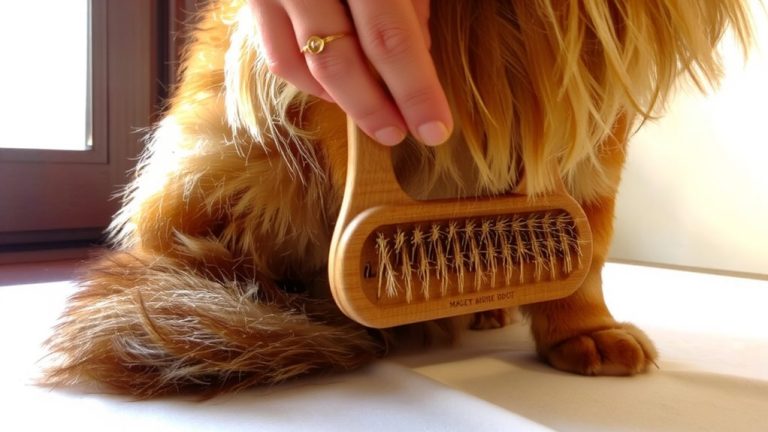
Start by gently petting the base of your cat’s tail, where it meets the back, using soft fingertip strokes to mimic natural grooming. Use a soft-bristle brush or grooming glove, avoiding stiff tools that irritate sensitive skin. Brush in slow, gentle strokes from base to tip, following the hair’s natural direction. Limit early sessions to 10–15 seconds, watching for tail flicking, flattened ears, or growling. Stop immediately if your cat shows stress-short, positive experiences build trust, especially when paired with treats, and set the stage for smoother sessions each time.
We are supported by our audience. When you purchase through links on our site, we may earn an affiliate commission, at no extra cost for you. Learn more. Last update on 19th July 2026 / Images from Amazon Product Advertising API.
Notable Insights
- Start brushing at the tail base using gentle strokes to minimize fear and build comfort gradually.
- Use a soft-bristle brush or grooming glove to prevent irritation on sensitive nerve endings.
- Brush in the direction of hair growth with slow, short strokes to mimic natural grooming.
- Watch for stress cues like tail flicking or flattened ears, and stop immediately if observed.
- Pair brushing with treats and end sessions positively to reinforce trust and reduce fear.
Pet the Base of a Sensitive Tail Gently
While every cat’s tail is unique in sensitivity, starting at the base-where the tail meets the back-can make a big difference in keeping your cat calm and receptive, since this area tends to be less reactive than the tip or midshaft. When petting your cat, use gentle strokes with your fingertips to mimic natural grooming behavior, focusing on less sensitive areas first. Pay close attention to your cat’s body language: if the tail flicks or ears flatten, stop-never force interaction. Always move slowly around your cat’s hindquarters, and avoid grabbing the tail, which houses 20–23 vertebrae and many nerves. Pair light petting with treats to build trust. This helps prepare your cat’s skin and coat for eventual brush use, making grooming sessions smoother and less stressful for both of you.
Use a Soft Brush for Sensitive Tails
Because a cat’s tail is packed with nerves and muscles-up to 23 vertebrae control its movement-using a soft-bristle brush or grooming glove makes all the difference in keeping your cat calm and comfortable. Your cat’s tail has delicate nerve endings and often has sensitive skin, especially if fur is thin, so a soft brush helps avoid irritation. Stiff tools like slicker brushes can trigger tail flicking or swatting, signs of discomfort. Opt for a soft bristle brush or grooming gloves to guarantee gentle brushing feels safe, not startling. These tools distribute natural oils and remove loose fur without pressing too hard. To make the process smooth, gradually introduce the soft brush by first touching areas your cat likes. Over time, this builds trust and supports stress-free grooming. Real testers note cats stay relaxed longer when grooming gloves mimic petting. Choose gentle brushing every few days for best results.
Brush Tail From Base to Tip Gently
Start at the base of your cat’s tail, where it meets the body, and use gentle, slow strokes with a soft-bristled brush or grooming glove to ease into the session without spooking sensitive nerves. When brushing, always move in the direction of hair growth to avoid irritation and effectively remove loose hair. Brush tail from base to tip gently, using smooth, consistent strokes that follow the natural direction of hair. This technique keeps the experience calm and helps prevent discomfort, especially on thin fur or exposed skin. Most cats tolerate short grooming sessions better, so limit initial brushing to 10–15 seconds. As your cat relaxes-signs like purring or loose posture appear-you can gradually extend the time. Using soft tools and proper technique makes brushing a positive part of your cats’ care routine, supporting healthy skin and reducing shedding.
Watch for Stress and Stop Early
Since a cat’s tail is packed with nerves and muscles, it’s no surprise that even gentle brushing can quickly become overstimulating, so you’ve got to stay alert. Watch for stress signals like a twitching tail, flattened ears, or dilated pupils-these mean stop brushing now. If your cat pulls away, flicks its tail rapidly, or makes a low growling sound, stop immediately. These aren’t mood swings; they’re clear warnings. Limit early sessions to just 2–3 strokes to gauge tolerance. End the session before overstimulation happens, even if the tail isn’t fully groomed. That way, your cat stays calm and learns to trust the process. Real pet owners report better results when respecting these cues, building cooperation over time. Stay patient, read the signs, and prioritize comfort-this keeps brushing safe, stress-free, and effective in the long run.
On a final note
You’ve got this-start slow, use a soft-bristle brush like the Safari Dual-Head, and always stroke base to tip, never against the grain. Most cats prefer 30-second sessions, twice weekly, especially with gentle praise and a high-value treat, like Temptations Classic, afterward. Watch for tail flicking or ears back-stop early if stress shows. Consistency builds trust, keeps coats tangle-free, and supports skin health. Brushing shouldn’t be a battle.