How to Recognize Signs of Illness in the First Week With a New Pet
Watch your new pet closely the first week for changes in appetite, energy, or bathroom habits-skip a meal for over 24 hours, or see vomiting, diarrhea, or straining to urinate, and it’s time to act. Check gums daily; they should be pink and moist, not pale or bright red. Monitor for sneezing, coughing, or discharge, which aren’t just stress signs. Lethargy, hiding, or sudden aggression can signal pain. Track water intake-increased thirst may point to kidney issues or diabetes. Notice skin, coat, eyes, and breath: redness, hair loss, cloudiness, or bad odor could mean infection or dental disease. Excessive licking of paws or genitals may reveal injury. While some hiding is normal, combined symptoms need evaluation. You’ll find out which specific warning signs to never ignore, and how quickly they can escalate.
We are supported by our audience. When you purchase through links on our site, we may earn an affiliate commission, at no extra cost for you. Learn more. Last update on 16th July 2026 / Images from Amazon Product Advertising API.
Notable Insights
- Monitor for lumps, skin irritation, or gum discoloration, as these can indicate underlying health issues in the first week.
- Watch for respiratory symptoms like sneezing or nasal discharge, which are common early signs of illness.
- Diarrhea or vomiting within 48 hours may signal infection or stress and should be closely evaluated.
- Sudden appetite loss lasting over 24 hours or unexplained weight loss can point to serious health concerns.
- Lethargy, excessive hiding, or aggression may reflect pain or illness, especially when combined with physical symptoms.
Monitor Your New Pet’s First 7 Days Closely
While your new pet settles into their home, keep a close eye on their behavior and physical condition during the first seven days, since early warning signs often appear within 24 to 72 hours. You should monitor your new pet daily for any physical symptoms like lumps, skin irritation, or gum discoloration. Watch for respiratory issues such as sneezing or nasal discharge, especially in the first 7 days. Diarrhea or vomiting within 48 hours may signal stress or infection. Behavioral changes like excessive hiding, aggression, or unusual vocalization can indicate fear or pain. Keep track of changes in appetite, which may reflect underlying illness. These signs, paired with shifts in energy or demeanor, warrant a vet call. Staying alert during this time helps catch problems early, ensuring a smoother adjustment and healthier start in their new home.
Watch for Appetite, Water, and Bathroom Changes
Since your new pet’s diet and routine are settling in, you’ll want to keep a close eye on how much they’re eating, drinking, and eliminating-subtle shifts here often flag early health concerns. A sudden drop in appetite for over 24 hours could point to infection or digestive issues. Watch for increased thirst and higher water intake, especially with frequent urination, as these may suggest kidney problems or diabetes. Any vomiting or diarrhea warrants attention, since those can quickly lead to dehydration. House soiling or straining could signal a urinary tract infection or stress. Track bathroom habits daily-changes in stool, urine volume, or litter use are early warning signs. Unexplained weight loss, even with normal eating, is another red flag. Staying alert to these patterns helps catch issues fast and keeps your pet on track to thriving in their new home.
Spot These Behavioral Red Flags in Your New Pet
Changes in your pet’s bathroom habits and appetite are just part of the picture-behavior tells another story, one that’s equally revealing when it comes to their health. Watch for subtle changes like behavioral shifts including lethargy, hiding more than usual, or refusal to leave cage spaces-these are Early Signs of Illness. If your pet shows sudden changes such as aggression or excessive vocalization, especially if they were calm during meet-and-greet sessions, pain or stress could be the cause. A once-social pet now avoiding contact may be in discomfort. Excessive licking of paws, tail base, or genitals within the first few days points to possible injury or infection. Don’t ignore these red flags-prompt vet evaluation helps guarantee a smoother shift. Early detection supports quicker recovery, keeping your new companion healthy and thriving in their new home.
Check Your New Pet for These Physical Signs
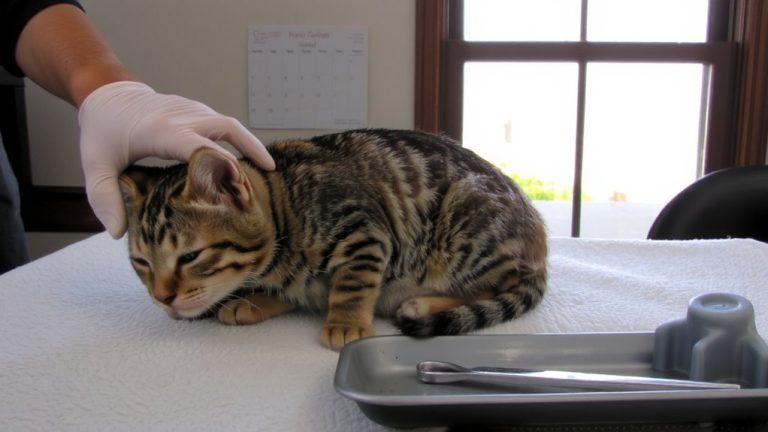
A quick physical check can catch problems early and save your new pet from unnecessary suffering, so start by opening their mouth for a peek at the gums-they should be pink and moist, not pale, white, or bright red, which could point to anemia, shock, or infection. Check for tartar buildup or bad breath-both signal dental disease, common in 80% of pets by age three. Inspect skin and coat for redness, hair loss, or parasites like fleas, especially in warm climates. Look for eye discharge; yellow, green, or bloody means infection may be brewing. Suspect ear infections if you notice odor or head shaking. Perform abdominal palpation: tenderness or swelling could mean internal trouble.
| Area Checked | Normal Sign | Warning Sign |
|---|---|---|
| Gums | Pink, moist | Pale, red, or dry |
| Teeth & Breath | Minimal tartar, fresh | Bad breath, heavy tartar |
| Skin and Coat | Smooth, fur intact | Parasites, bald spots |
| Eyes & Ears | Clear, no odor | Eye discharge, ear infections |
| Abdomen | Soft, non-painful | Hardness, pain on palpation |
Is My Pet Stressed or Actually Sick?
While your new pet might seem a little off at first, don’t assume it’s just nerves-some signs like hiding or meowing more than usual are common during the first few days, especially when adjusting to new sounds, smells, and routines, but when those behaviors come with skipped meals, no energy, or constant pacing, it’s time to look closer. Behavioral changes alone may signal stress vs illness, but when paired with appetite loss, lethargy, or vomiting or diarrhea, early signs of illness are likely present. Respiratory symptoms like coughing or nasal discharge aren’t typical stress responses and need prompt attention. Monitor bathroom habits closely-straining or blood in stool or urine demands immediate professional evaluation. While mild clinginess or low energy can be normal, sustained issues aren’t something to wait out. Trust your gut: when in doubt, get a vet check to rule out medical causes and keep your pet on track.
Your 7-Day New Pet Health Checklist
Your new pet’s first week is a critical window for spotting subtle signs of illness and setting the stage for lifelong health, so start strong by scheduling a vet visit on day one with Clear Creek Animal Hospital at (704) 285-2736 to establish a baseline, begin core vaccinations, and catch potential issues early. Daily monitoring helps you catch early symptoms that pets often hide. Watch for changes in behavior, appetite, or bathroom habits-these subtle shifts can signal underlying illness. Early veterinary care can help prevent minor issues from becoming serious.
| Day | Checklist Focus |
|---|---|
| 1 | Vet visit, vaccinations, health baseline |
| 2 | Track water intake and appetite changes |
| 3 | Watch for signs of vomiting or diarrhea |
| 4 | Check skin for redness, fleas, or hair loss |
| 5-7 | Monitor behavior, energy, and symptoms daily |
Call Clear Creek Animal Hospital Immediately If You See These Signs
If you notice your pet vomiting or having diarrhea for more than a day, don’t wait-call Clear Creek Animal Hospital at (704) 285-2736 right away, since these symptoms can quickly lead to dehydration and may point to infections, parasites, or even toxin ingestion. Digestive upset is a common sign of pet illness, but when symptoms appear alongside behavior changes, weight loss or gain, or lethargy, it’s time to call the vet. Labored breathing, coughing, or nasal discharge require urgent care, as they may signal respiratory or heart issues. Blood in urine or stool, straining to urinate, or sudden aggression are red flags for illness in pets. Don’t wait if your pet stops eating for over 24 hours or shows signs of pain-prompt evaluation at Clear Creek guarantees fast, effective treatment.
On a final note
Keep a close eye on your new pet’s eating, drinking, and bathroom habits-drops in appetite, less water intake, or irregular stools signal trouble. Watch for lethargy, hiding, or aggression, and check ears, eyes, and skin daily. Stress mimics illness, but drastic changes aren’t normal. Call Clear Creek Animal Hospital immediately if you see vomiting, diarrhea, labored breathing, or temperature shifts.