How to Identify Added Water in Wet Cat Food and Its Nutritional Impact
Check your cat’s wet food moisture level-if it’s over 80%, there’s likely added water, even if not listed. Watch for broths, reconstituted meats, and gelling agents like starch or wheat gluten, which boost water content. This dilution lowers protein, calories, and key minerals like sodium and selenium. While the extra moisture supports hydration and urinary health, too much can reduce nutrient density. You’ll want to balance both for ideal feline health, and there’s more to know about choosing the right formula.
We are supported by our audience. When you purchase through links on our site, we may earn an affiliate commission, at no extra cost for you. Learn more. Last update on 19th July 2026 / Images from Amazon Product Advertising API.
Notable Insights
- Check moisture content: levels above 80% often indicate added water, exceeding natural tissue levels of 70–75%.
- Review ingredient list for broths, reconstituted proteins, or gelling agents, which add or retain significant water.
- High moisture without “water” listed may still come from liquid ingredients like gravy or broth.
- Added water dilutes protein, calories, and essential minerals, reducing nutrient density and dietary effectiveness.
- While added moisture aids hydration and urinary health, excessive dilution risks inadequate nutrient intake.
How to Spot Added Water in Wet Cat Food
How can you tell if water’s been added to your cat’s wet food? Check the moisture content-most canned cat food ranges from 60–80%, but levels above 80% may mean added water. Natural animal tissue holds about 70–75% moisture, so higher moisture levels suggest dilution. Even if “water” isn’t listed, broths or reconstituted meat by-products on the ingredient list can be hidden sources. Gelling agents like starch or wheat gluten trap water, boosting moisture content without showing “water” outright. Compare similar products: if one has much lower protein on the guaranteed analysis despite similar ingredients, added water might’ve diluted it. Always review the ingredient list and moisture levels together-this helps you spot when your cat’s food contains more water than it should. Stay sharp-your cat deserves every nutrient in that can.
Why Added Water Affects Nutrient Density
While hydration matters, pouring extra water into wet cat food isn’t just about moisture-it directly weakens the nutrient punch in every bite. Added water causes calorie dilution and lowers macronutrient concentration, reducing the meal’s energy density and overall nutrient density. This can lead your cat to eat more volume without gaining needed calories or protein, risking dietary adequacy. Excess water also impacts mineral balance and nutrient bioavailability, especially for key minerals like sodium, potassium, and selenium already low in wet cat food.
| Factor | Effect of Added Water |
|---|---|
| Macronutrient concentration | Decreased |
| Energy density | Reduced |
| Nutrient bioavailability | Potentially impaired |
Though hydration is beneficial, too much added water disrupts the precise formulation meant to support your cat’s health, making it harder to meet daily nutritional needs without careful monitoring.
Are Gelling Agents and Broths Good for Hydration?
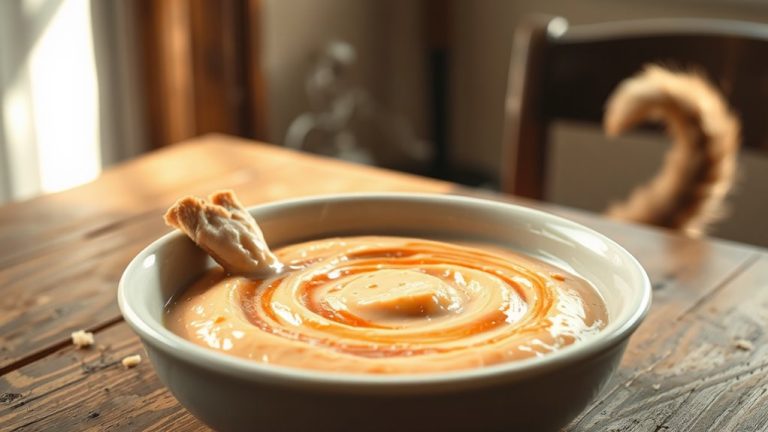
Ever wonder why some wet cat foods seem juicier or more gelatinous than others? That’s thanks to gelling agents like starch or soluble fibers, which bind water and boost moisture levels in the food. Combined with broths-typically 70–80% water-these ingredients markedly increase your feline’s dietary water intake. This added hydration is bioavailable, meaning it supports healthy urinary function by promoting higher urine volume and lower urine specific gravity, reducing urolith risk. Even though gelling agents may slightly limit mineral bioavailability, they don’t hinder overall hydration benefits. Wet food with broths and gelling agents can provide up to 80% of your cat’s daily water needs, which is essential since cats naturally drink little. Their evolutionary prey-based diet was high in moisture, so high-water content wet food better matches their natural intake, keeping hydration on track without relying on the bowl.
How to Balance Hydration and Nutrition
You’re already giving your cat a hydration advantage if you’re using wet food with broths or gelling agents, since those boost moisture levels and support healthy urine dilution. Wet food typically contains 60–80% moisture, helping meet your cat’s daily water intake needs with minimal drinking, while dry food offers only 6–10%, demanding higher water consumption to compensate. Cats on dry diets often fall 30% short on total water intake, risking concentrated urine and compromised urinary health. Even with their low thirst drive, cats rely on preformed water in food-especially canned diets-for proper hydration. Feeding high-moisture wet food supports kidney function and balances the nutritional impact of their diet. You can mix wet and dry food strategically, but prioritize moisture levels to maintain long-term urinary health and ideal hydration.
On a final note
You can spot added water by checking for broth, gel, or high moisture content-often over 80%-on the label. While it boosts hydration, it dilutes protein and calories, lowering nutrient density. Opt for foods with meat as the first ingredient and minimal broth. Real testers note firmer stools and better energy with less watery formulas. Balance hydration and nutrition by pairing lower-moisture pâtés with fresh water, ensuring your cat thrives.