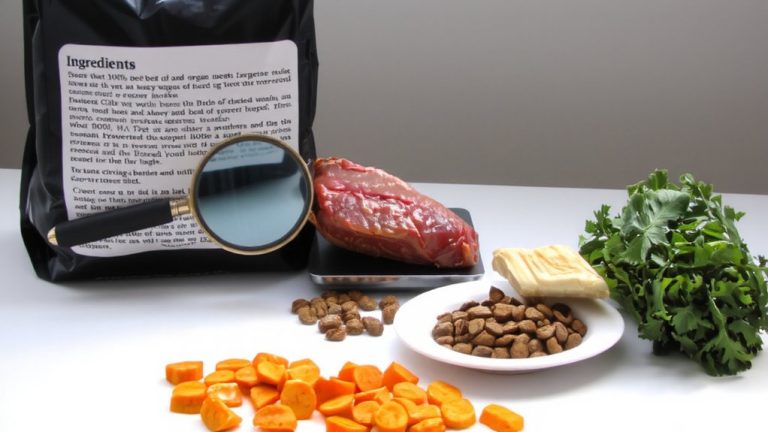
Why Veterinarian Recommended Isn’t Always a Reliable Label Claim
You see “Veterinarian Recommended” on over 40% of pet food bags, but it only means a survey of vets favored it-not that it’s proven nutritious or tested in feeding trials. Those surveys might be biased, use incentives, or lack real-world clinical data. It doesn’t guarantee digestibility, nutrient absorption, or even AAFCO compliance through actual trials. Look instead for foods backed by feeding trials, formulated by board-certified nutritionists, and backed by transparent quality testing-where real results begin.
We are supported by our audience. When you purchase through links on our site, we may earn an affiliate commission, at no extra cost for you. Learn more. Last update on 19th July 2026 / Images from Amazon Product Advertising API.
Notable Insights
- “Veterinarian recommended” reflects survey opinions, not clinical evidence or nutritional superiority.
- Surveys may be biased by incentives, leading questions, or unrepresentative sampling of vets.
- The claim doesn’t require feeding trials, digestibility testing, or proof of meeting nutrient needs.
- AAFCO allows the claim based on surveys, not performance, safety, or bioavailability data.
- Many such foods lack validation from Board-Certified Veterinary Nutritionists or real-world testing.
What “Veterinarian Recommended” Really Means
Ever wonder what’s behind the label claim “veterinarian recommended”? It’s not just a slogan-pet food manufacturers must back it with a statistically valid survey of veterinarians, often polling up to 300 veterinary professionals. The AAFCO sets strict guidelines for these surveys, requiring proper sampling and clear questions so results reflect real preferences. You don’t need every vet to endorse the product; a predetermined percentage favoring it qualifies the claim. While this sounds convincing, the term doesn’t mean the food is clinically proven or nutritionally superior-it’s marketing based on opinion, not independent nutrient analysis. Regulatory oversight varies by state, so companies must keep documentation ready. Remember, even if a food is veterinarian recommended, always check that it meets AAFCO nutrient profiles for your pet’s life stage.
How Brands Use “Veterinarian Recommended” Surveys (And Why They’re Flawed)
While brands must back the “veterinarian recommended” claim with a statistically valid survey of up to 300 licensed veterinarians, how they conduct these surveys can markedly influence the results. The pet food industry often designs surveys that favor their product, sometimes offering incentives or using limited comparative data, which skews veterinary responses. Though AAFCO requires methodological rigor, enforcement varies by state, and not all surveys reflect real-world clinical judgment. This claim appears on a pet food label to signal trust, but it doesn’t confirm nutritional superiority.
| Factor | Reality |
|---|---|
| Veterinarian input | Often based on marketing surveys, not clinical trials |
| AAFCO compliance | Meets guidelines, but no independent verification |
| Survey objectivity | May involve incentivized veterinary participation |
| Label impact | Influences pet owners despite limited nutritional context |
Why “Veterinarian Recommended” Doesn’t Prove Nutritional Quality
Just because a pet food carries a “veterinarian recommended” label doesn’t mean it’s nutritionally superior, and you should know what’s really behind that claim. That label only means vets were surveyed, not that the product meets higher nutritional quality standards. It doesn’t confirm the pet food products meet nutrient requirements through feeding trials or rigorous testing. AAFCO standards don’t require proof of food safety, performance, or even a minimum number of vets polled. So, while “veterinarian recommended” sounds trustworthy, it doesn’t guarantee the food supports long-term health. Many such diets haven’t undergone feeding trials to prove digestibility or balanced nutrition. You’re better off checking the label for AAFCO nutrient adequacy statements, not marketing terms. Your pet relies on you to look beyond buzzwords and choose food that truly fulfills their nutrient needs-every day.
The Gap Between “Veterinarian Recommended” and AAFCO Feeding Trials
Though a “veterinarian recommended” label might catch your eye at the pet store, it doesn’t mean the food has been tested to meet your pet’s nutritional needs through real-world feeding trials. That claim only means a survey of up to 300 veterinarians showed preference-it doesn’t prove the pet food meets AAFCO feeding trials, the gold standard for nutritional adequacy. Unlike those rigorous tests, “veterinarian recommended” doesn’t require proof of nutrient standards, safety, or long-term health outcomes. Even if a formula is labeled “veterinarian formulated,” it may never have been fed to a single healthy pet. AAFCO doesn’t mandate evidence of nutrient bioavailability, so your pet could miss key nutrition despite the endorsement. Real feeding trials are rare-only two companies currently run them-making it harder to know if your pet food truly supports lifelong wellness.
What to Look for Instead of “Veterinarian Recommended”
Only two pet food companies today complete AAFCO feeding trials, the rigorous tests that prove a diet supports long-term health in real animals, so your best move is to choose brands that go beyond marketing and deliver actual proof of nutritional adequacy. Look for a Statement of Nutritional Adequacy based on feeding trials, not just “formulated to meet AAFCO” nutrient profiles, which rely on untested calculations. Pick foods created by Board-Certified Veterinary Nutritionists-they’re trained beyond general vets and often develop prescription diets with clinical precision. In the pet food business, transparency matters: check for full ingredient disclosure and solid quality assurance, since some brands hide spiking mineral levels from cheap fillers like bone meal. Poor AAFCO nutrient monitoring has caused recalls, including one premium brand with 22 incorrect claims across nine products. Stick with companies that prioritize real testing, expert formulation, and consistent quality assurance-it’s the smartest choice for your pet’s long-term health.
On a final note
You’re better off checking AAFCO statements, real feeding trials, and ingredient quality than trusting “veterinarian recommended” alone, since surveys often lack scientific rigor, involve small samples, or reward brand loyalty. Look for foods meeting AAFCO nutrient profiles through feeding tests, not just formulation. Prioritize whole meats, balanced fats, and vetted brands transparent about sourcing-your dog’s energy, coat, and digestion will show the difference within weeks.