Best Practices for Providing Shade and Shelter in an Outdoor Rabbit Hutch
Place your rabbit’s hutch in partial shade all day, using deciduous trees or windbreaks to block direct sun and rain while allowing winter light, keep it out of low-lying, damp areas, and guarantee temps stay below 25°C to prevent heatstroke, use a waterproof, elevated design with sealed flooring and a 6-inch raised base to reduce moisture, and pair with a shaded, predator-proof run for complete protection and comfort. For more key details on long-term hutch success, keep exploring the essentials.
We are supported by our audience. When you purchase through links on our site, we may earn an affiliate commission, at no extra cost for you. Learn more. Last update on 19th July 2026 / Images from Amazon Product Advertising API.
Notable Insights
- Place the hutch in partial shade all day to prevent heatstroke from direct sunlight and temperatures above 25°C.
- Use a waterproof roof with overhang and elevate the hutch at least 6 inches to stay dry and avoid damp buildup.
- Position the hutch away from prevailing winds and rain, using natural windbreaks or trees for protection.
- Cover the top two-thirds of the run with shade cloth to provide UV protection while maintaining airflow.
- Avoid low-lying areas to reduce moisture accumulation and lower the risk of respiratory issues and sore hocks.
Choose a Shaded, Sheltered Spot for Your Outdoor Rabbit Hutch
While sunlight can feel inviting, placing your rabbit’s hutch in direct exposure risks overheating-rabbits can’t sweat or pant efficiently, so temperatures over 25°C (77°F) quickly lead to heatstroke. For your outdoor rabbit, choose a shaded, sheltered spot that offers partial shade all day to protect your rabbits from direct sunlight. Position the hutch away from the prevailing wind and rain, ensuring it has a waterproof roof and raised base to prevent damp and flooding. A solid roof paired with a raised base keeps bedding dry and reduces cold seep. Use natural windbreaks or plant deciduous trees nearby-they provide summer shade and winter sun. Avoid low-lying areas where moisture collects, as they increase respiratory risks. This simple setup keeps your hutch safe, dry, and well-ventilated, giving your pet consistent comfort year-round.
Build a Weatherproof Outdoor Rabbit Hutch With Solid Floors
A well-built outdoor rabbit hutch starts with a solid, weatherproof design that keeps your rabbits safe, dry, and comfortable no matter the season. Your outdoor housing should measure at least 3m x 2m x 1m, with a sheltered area of 6ft x 2ft x 2ft. Use solid floors made of non-porous flooring-like sealed wood or heavy-duty foam mats-to prevent damp buildup and sore hocks. Elevate the hutch at least 6 inches on legs for a raised hutch that stays dry. Install a waterproof roof using sealed plywood, permanently attached with zip ties or fasteners. For predator protection, staple 13mm galvanized wire mesh (16g, 1.2mm thick) to the frame’s inside, creating a secure wire mesh skirt. This weatherproof setup guarantees long-term safety, comfort, and durability for your rabbit hutch.
Elevate the Hutch to Stay Dry and Prevent Damp
You’ve built a weatherproof hutch with solid, sealed flooring and a waterproof roof, but keeping your rabbit safe and dry goes beyond just overhead cover. To stay dry and prevent damp, elevate the hutch at least 6 inches off the ground. This helps stop damp accumulation from rain or morning dew. Use rot-resistant legs-like treated wood or PVC-to support the structure and extend its life. Raised flooring not only acts as a predator deterrent but also reduces wire corrosion from ground moisture. Damp conditions can lead to respiratory infections and sore hocks, so proper airflow and elevation are essential. Make sure all sealed seams remain intact and inspect regularly for leaks, especially after heavy rain. Elevating the hutch keeps bedding drier, maintains hygiene, and supports long-term health with minimal maintenance.
Attach a Predator-Proof Run With Shade and Dig Protection
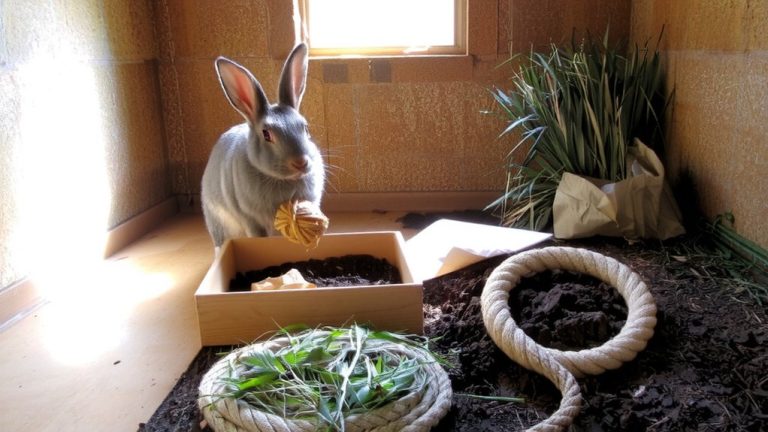
Since your rabbit needs both safety and stimulation outdoors, attaching a predator-proof run is a smart next step in creating a secure, enriching environment. Make sure it’s built with 16g welded wire mesh and buried 2 feet deep, using paving slabs or a wire skirt for solid dig protection. Each rabbit needs at least 32 sq ft, so size it accordingly. Use shade cloth across the top 2/3 for airflow and UV protection, and include a designated dig box filled with soil to deter tunneling elsewhere. Solid roofing or tarps block rain and aerial threats, but leave some areas open to prevent humidity. Here’s how to get it right:
| Feature | Specification |
|---|---|
| Mesh | 16g welded wire mesh, 13mm holes |
| Burial | Buried 2 feet deep with wire skirt |
| Shade | Shade cloth on top 2/3 |
| Dig Protection | Paving slabs perimeter, designated dig box |
Connect Hutch and Run for 24/7 Rabbit Access
While your rabbit thrives on routine, they also need the freedom to follow their natural instincts at any hour, which is why keeping the hutch and run permanently connected makes all the difference. You must have a permanently attached setup to provide 24/7 access so your rabbits can move freely between shelter and exercise space. Make sure the connecting doorway is at least 10” x 12” so rabbits can pass easily, day or night. Rabbits need at least 3m x 2m x 1m of combined space-this minimum space lets them stretch, hop, and retreat safely. Whether indoors or out, integrating the hutch or run through tunnels or direct access supports their crepuscular behavior. Blocking access disrupts their rhythm and causes stress. Give your rabbits uninterrupted access to their exercise area-you’ll see more binkies and natural movement. Continuous access means better mental health, so make sure they always have space to run and retreat as needed.
Add Hiding Spots and Soft Bedding in the Hutch
A well-designed hutch includes at least one fully enclosed hiding spot-measuring no less than 12” x 12” x 10”-so your rabbit can duck inside and stretch out completely, which helps mimic the secure, dark burrows they’d seek in the wild. These enclosed hiding spaces should have solid walls to reduce stress and support natural behaviour. Line them with hay or straw, both safe bedding material options that are soft bedding rabbits can nest in. Add fresh hay daily to the sleeping area-it encourages chewing, provides comfort, and helps with temperature regulation. Avoid treated wood or toxic paints in hiding spots, as rabbits may chew them. Use only non-toxic, chew-safe materials. Pair soft bedding with a solid floor or foam mats to prevent sore hocks. Proper hiding spots and soft bedding together create a secure, cozy environment that keeps your rabbit calm and healthy.
Keep Your Outdoor Rabbit Hutch Safe in Summer and Winter
If you’re keeping your rabbit outdoors, protecting them from extreme temperatures is essential-place the hutch in partial shade using a shade cloth stapled to the top two-thirds of the wire panels, which blocks direct sunlight while still allowing airflow to keep things fresh and cool. During summer, breathable shade cloth helps prevent overheating; rabbits can’t handle temps above 25°C (77°F) and need lots of space and proper ventilation. In winter, insulate with straw, seal drafts, and help keep warmth in-without sacrificing airflow to avoid humidity and respiratory issues. Use a waterproof roof with overhang and elevate the hutch to keep your rabbits dry. Secure all covers with zip ties or galvanized staples so they stay put in wind. Check daily for damp, leaks, or damage. Your outdoor area should support year-round comfort-shelter, shade cloth in summer, and snug bedding in winter help keep your rabbits safe, healthy, and content in their space.
On a final note
Keep your rabbit healthy by placing the hutch in a shaded, wind-protected spot and using a solid-floor design, elevated 6 inches off the ground to avoid damp, tested setups show ¾-inch plywood walls with asphalt shingles shed rain best, attach a 2-foot-deep, predator-proof run with partial canopy cover, connect it permanently for 24/7 access, add hide boxes and 2 inches of soft straw bedding, and check daily for dryness, warmth, and safety.