Cat Food Taurine Levels: Wet vs Dry (AAFCO Minimums)
Your cat can’t make taurine on their own, so they need it in their food to avoid heart failure or blindness. Dry food has at least 25 mg per 100 kcal, while wet food has 50 mg because processing degrades taurine. You’ll see higher levels in canned formulas to make up for losses. Look for “complete and balanced” labels and real meat like chicken or fish first on the ingredient list. Trusted brands like Royal Canin or Untamed add extra to guarantee safety. There’s more to how it works inside your cat’s body, down to the retinal cells and heart muscle.
We are supported by our audience. When you purchase through links on our site, we may earn an affiliate commission, at no extra cost for you. Learn more. Last update on 19th July 2026 / Images from Amazon Product Advertising API.
Notable Insights
- Taurine is essential for cats because they cannot produce it and must get it from animal-based proteins in their diet.
- It prevents serious health issues like dilated cardiomyopathy and irreversible retinal damage in cats.
- AAFCO requires 25 mg/100 kcal in dry food and 50 mg/100 kcal in wet food to ensure adequate intake.
- Wet food has higher taurine requirements due to greater nutrient loss during high-heat processing.
- Labels differ to reflect processing losses and ensure cats receive enough taurine from either food type.
What Is Taurine, and Why Can’t Cats Live Without It?
Think of taurine as the quiet guardian of your cat’s heart and vision-because without it, serious health issues can take root before you even notice. Taurine is an essential amino acid that cats cannot synthesize on their own, meaning they rely on you to provide it daily. Unlike dogs, cats lack the liver enzymes to produce taurine from cysteine and methionine, making this nutrient non-negotiable. As obligate carnivores, they must get taurine from animal-based proteins like meat, fish, and organs. Without enough, taurine deficiency in cats can trigger dilated cardiomyopathy, a life-threatening heart condition, or feline central retinal degeneration, leading to irreversible blindness. To protect heart function and sight, AAFCO requires at least 25 mg/100 kcal in dry food and 50 mg/100 kcal in wet food. You’re not just feeding a meal-you’re fueling survival.
How Does Taurine Protect Your Cat’s Heart and Eyes?
Because your cat’s heart and eyes depend on taurine to function properly, feeding a diet that meets AAFCO’s minimum requirements-25 mg/100 kcal in dry food and 50 mg/100 kcal in wet food-is essential for preventing serious conditions like dilated cardiomyopathy (DCM) and feline central retinal degeneration (FCRD). Taurine, an essential amino acid cats can’t make on their own, supports cardiac health by maintaining strong heart muscle contractions-without it, the heart enlarges and weakens. It’s also highly concentrated in the retina, where it helps convert light into neural signals. A deficiency can lead to night blindness and, over 6 to 24 months, irreversible retinal damage. Feline central retinal degeneration and dilated cardiomyopathy were once common, but now they’re preventable with proper taurine levels in their food.
Why Wet vs. Dry Cat Foods Have Different Taurine Levels?
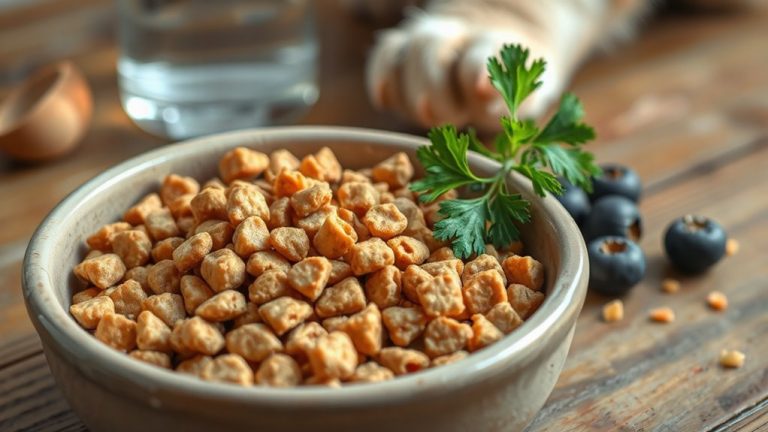
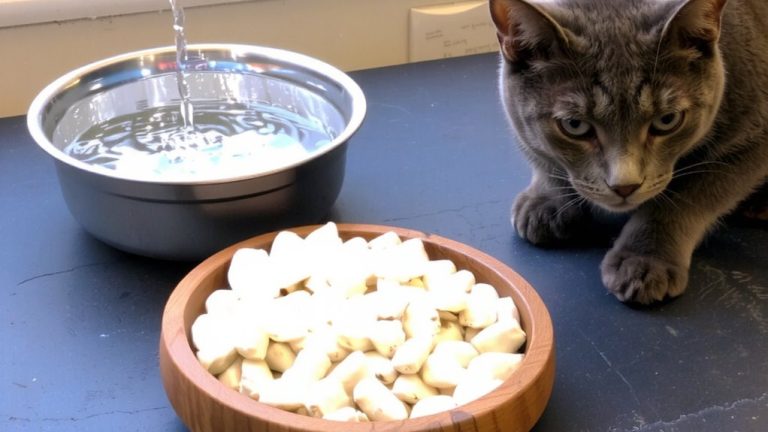
While wet and dry cat foods both need to meet AAFCO’s taurine requirements, you’ll notice wet formulas start with nearly double the amount-50 mg per 100 kcal compared to 25 mg for dry. That’s because canned cat food undergoes high-heat processing, which causes taurine degradation and greater nutrient loss. To compensate, manufacturers add extra taurine through supplementation, ensuring the final product still meets minimum taurine levels after processing. Dry food, on the other hand, is cooked at lower temperatures, so it experiences less taurine breakdown and doesn’t need as much added. AAFCO accounts for these differences by setting a 0.2% taurine minimum in canned cat food versus 0.1% in dry. So, even though wet food starts with more taurine, both types are designed to deliver what your cat needs when fed as directed.
How to Find Cat Food With Enough Taurine
When you’re scanning the label, make sure the cat food is marked “complete and balanced” according to AAFCO guidelines, which guarantees it meets essential nutrient requirements, including taurine levels of at least 0.1% per kg for dry food and 0.2% for canned. Look for animal-based proteins like chicken or fish high on the ingredient list-taurine is naturally found in meat. Check for taurine supplementation, especially in grain-free or homemade diets, to meet your cat’s taurine requirement. High-quality commercial cat foods like Royal Canin or Untamed add extra taurine to offset processing losses. For maximum intake, choose dry cat food with at least 25 mg/100 kcal or canned food with 50 mg/100 kcal. These specs guarantee proper taurine levels, supporting heart and eye health through reliable, tested nutrition.
On a final note
You need taurine in your cat’s diet-it’s non-negotiable for heart and eye health. Cats can’t make it themselves, so rely on food to provide it. Wet foods typically offer more taurine (250–500 mg/kg) than dry, partly due to processing differences. Always check labels for “taurine added” and aim for AAFCO-compliant foods. Real-world testers noticed shinier coats and better energy in cats on taurine-rich diets. Pick reputable brands like Purina Pro Plan or Hill’s Science Diet for consistent levels.