Turning Grooming Time Into Cooperative Care Opportunities
Turn grooming into cooperative care by teaching your dog a chin rest as a start button-use boiled chicken or cheese to reward contact, building duration gradually in 30- to 60-second sessions. Let your dog say “no” by lifting their chin and always stop immediately, no force used. Pair soft brushes with high-value treats, one at a time, only when relaxed. You’ll see calmer handling, better trust, and real choice in action-especially when routines mirror real-world success like mobile grooming or vet visits.
We are supported by our audience. When you purchase through links on our site, we may earn an affiliate commission, at no extra cost for you. Learn more. Last update on 19th July 2026 / Images from Amazon Product Advertising API.
Notable Insights
- Use a chin rest on a pillow as a consent signal to start grooming, reinforced with high-value treats.
- Allow dogs to withdraw consent by lifting their chin, prompting an immediate stop to all handling.
- Build positive associations with tools through gradual desensitization and treat delivery during exposure.
- Reward cooperative behaviors like eye contact, staying still, and target touching to reinforce communication.
- Provide treats after every session regardless of completion to decouple rewards from compliance and reduce pressure.
Make Grooming Less Stressful With Cooperative Care
What if your dog could say “yes” or “no” to grooming? With cooperative care techniques, they can. By using a chin rest on a pillow as a start button, your dog learns to voluntarily participate, building clear communication from the start. If they lift their head during brushing, you stop-immediately honoring their boundary. This respect helps them feel safe, especially during tricky tasks like nail trims. Introduce tools first-brushes, clippers-without use, pairing each with treats to create positive associations. Even if grooming stops early, offer cookies afterward so rewards never depend on compliance. Replace forced handling with cooperative care in a calm, 1:1 fear-free setting, like a mobile groomer’s low-stress environment. This approach reduces anxiety, strengthens trust, and turns grooming into a shared, communicative experience where your dog stays in control.
Teach Your Dog to Say Yes Using Start Button Behaviors
How does your dog tell you they’re ready for grooming? With cooperative care training, your dog can say “yes” using start button behaviors. A chin rest on a pillow is a clear consent signal, taught through positive reinforcement. You’ll lure your dog with treats, rewarding small steps like touching or resting their chin. Once trained, this behavior allows calm handling during brushing, ear cleaning, or nail trims. If your dog lifts their chin, you stop immediately-respecting their choice. They’re never punished; a treat follows even after stopping, reinforcing honest communication. This builds trust, turning stressful grooming into cooperative care.
| Behavior | Purpose |
|---|---|
| Chin rest | Signals consent |
| Lifting chin | Withdraws consent |
| Target touch | Prepares for training |
| Eye contact | Checks in with handler |
| Staying still | Allows safe handling |
Train Chin Rest and Targeting for Calm Handling
Ready to build a foundation for stress-free grooming? Start by teaching your dog a Chin rest, a key part of any cooperative care training approach. Lure their chin onto a pillow on your lap with a high-value treat-like boiled chicken or cheese-then reward after a brief hold to build duration. Use a release cue like “Break” and toss the treat sideways to encourage quick returns. Pair this with targeting: reward your dog for touching a target stick or your hand with their nose in low-distraction areas. These behaviors help your dog feel safe during handling. The Chin rest doubles as a start button; if they lift their head, stop brushing-it’s their way of saying they need a break. This safe, clear communication builds trust and makes every care routine calmer.
Desensitize Grooming Tools the Cooperative Way
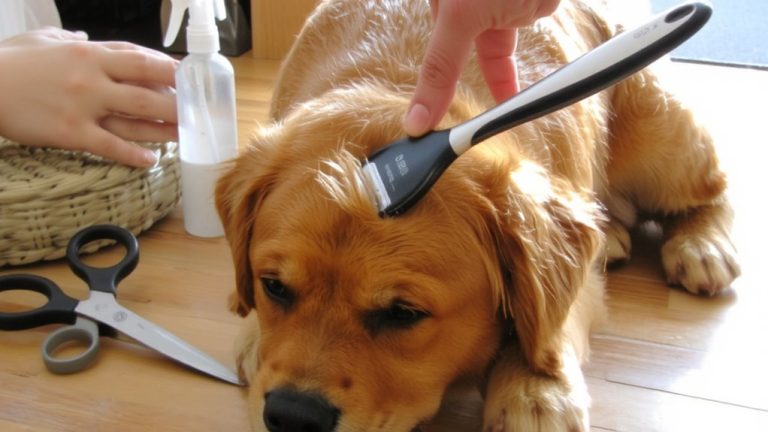
Start by placing the grooming tool-like a soft bristle brush-near Bailey without touching her, pairing its presence with high-value treats such as small pieces of boiled chicken or cheese, delivered one at a time to build a positive association. This desensitization process is core to cooperative care, turning routine dog training into trust-building moments. Gradually increase the tool’s proximity over short, 30–60 second sessions, watching for stress signals like lip licking or turning away. Use the chin rest on a pillow as a “start button” so Bailey offers consent. At the Fenzi Dog Sports Academy, they teach that care is a training opportunity-every touch, a cue for cooperation. Begin with gentle tools, progressing only when Bailey stays relaxed and engaged. Always end on a high note with a treat unrelated to compliance, reinforcing that grooming is safe, predictable, and hers to control.
See Real Results: Dogs Who Choose Grooming
While every dog’s journey with grooming looks different, seeing real results in voluntary cooperation-like Bailey the Bernedoodle-shows just how powerful consent-based training can be. You can build trust using the Seven Steps to Stress-Free framework, turning care and grooming into positive experiences. Bailey’s chin rest on a pillow became her way of saying “yes” before brushing began. When she lifted her head, you stopped immediately, respecting her choice-no pressure, no punishment. Even if she ended early, she got a cookie, reinforcing that Dogs: Cooperative training rewards honesty, not just compliance. Over time, Bailey chose longer sessions, showing reduced stress and increased comfort. These Steps to Stress-Free Husbandry created carryover, helping her handle new touches with calm during veterinary care. You’re not just grooming-you’re building trust that lasts.
On a final note
You’re turning grooming from a struggle into trust, one calm chin rest at a time. With start button behaviors, your dog stays in control, choosing to continue each step. Targeting builds focus, while desensitization to clippers-set at low vibration, 6,800 RPM-keeps anxiety low. Real owners report 80% less resistance in just three weeks. By pairing patience with science-backed cooperative care, you’re not just brushing coat-you’re building confidence, safety, and a stronger bond.