Managing Chronic Kidney Disease in Cats With Diet and Fluid Therapy
You can slow CKD progression by switching to a prescription renal diet like Hill’s k/d or Royal Canin Renal at Stage 2, featuring lower phosphorus, high-quality protein, and added potassium. Use canned versions for extra hydration, and shift over 1–2 weeks. Give subcutaneous fluids at home to support kidney function, especially if water intake exceeds 45 mL/kg/day. Control nausea with mirtazapine or famotidine to maintain appetite. There’s more to optimizing your cat’s daily care.
We are supported by our audience. When you purchase through links on our site, we may earn an affiliate commission, at no extra cost for you. Learn more. Last update on 19th July 2026 / Images from Amazon Product Advertising API.
Notable Insights
- Start a kidney-friendly diet early in CKD Stage 2 to slow disease progression and reduce toxin buildup.
- Choose prescription renal diets low in phosphorus and moderate in high-quality protein to support kidney function.
- Use canned kidney diets when possible to increase hydration and promote urine dilution.
- Manage nausea with medications like mirtazapine or famotidine to maintain appetite and nutritional intake.
- Monitor hydration at home using skin turgor and gum moisture, and seek vet care for dehydration or appetite loss.
Understand How CKD Affects Your Cat
While your cat might seem fine on the outside, chronic kidney disease (CKD) can quietly damage their kidneys over months or even years before obvious signs appear. CKD impairs kidney function, reducing the ability to filter waste, which leads to a buildup of toxins like blood urea nitrogen and serum creatinine. This can cause nausea, weight loss, and lethargy in cats with CKD. The disease also disrupts fluid balance, resulting in dilute urine and increased thirst as your cat tries to compensate. Electrolyte imbalances-especially potassium loss-are common, contributing to muscle weakness and poor appetite. As nephrons scar and decline, chronic kidney disease progresses silently. Up to 30% of cats over 10 have CKD, with risks tied to age, breed, and conditions like hyperthyroidism. Early detection through bloodwork is key.
Start the Right Diet Early for Kidney Disease
Because early dietary changes can make a real difference in slowing kidney disease progression, starting the right food at Stage 2 CKD is one of the most effective steps you can take for your cat. For CKD cats, especially older cats, renal diets like Hill’s k/d, Royal Canin Renal, and Purina NF are specially formulated to support kidney health. These kidney diets feature reduced phosphorus to help control phosphorus levels, which can spike as kidney function declines. They also contain moderately restricted, high-quality protein to limit waste buildup while preserving muscle. Plus, they’re enriched with potassium to balance electrolyte losses common in chronic kidney disease. When shifting to a kidney diet, do it gradually over 1–2 weeks by mixing increasing amounts of the new food with the old-this helps maintain appetite and prevents food aversion, making long-term compliance more likely.
Pick the Best Kidney Diet for Your Cat
You’ve already taken an important step by starting a kidney-supportive diet early, and now it’s time to make sure you’re choosing the best one for your cat’s specific needs. For cats with Chronic Kidney Disease (CKD), Managing Chronic Kidney Disease means feeding a diet low in phosphorus to support long-term kidney health. Prescription options like Hill’s k/d, Royal Canin Renal, and Purina NF are designed for this, with reduced phosphorus and moderate, high-quality protein to reduce waste buildup. Canned versions are ideal-they boost hydration and urine dilution, essential in CKD cats. Start the switch gradually over 1–2 weeks to maintain intake and prevent aversion. If your cat refuses the food, try a different flavor or brand, and add water, tuna juice, or low-sodium broth to enhance palatability. Every detail counts in supporting your cat’s health.
Control Nausea and Boost Appetite in Cats With CKD
How do you help a cat with CKD eat when nausea keeps them from the food bowl? Nausea in cats with chronic kidney disease often stems from high creatinine and blood urea nitrogen levels, making them reluctant to eat. You can fight this with an appetite stimulant like mirtazapine, which also eases nausea and boosts food intake. For mild cases, famotidine (¼ tablet once daily) helps quiet stomach discomfort. If nausea is severe, your vet may use Cerenia (maropitant) injections, especially when your cat won’t take oral meds. Mirtazapine comes in transdermal formulations, too-great for cats that resist pills, ensuring consistent dosing. These options support better nutrition and improve quality of life. Always monitor your cat’s response and work with your vet to adjust treatment as creatinine and symptoms change.
Give Subcutaneous Fluids at Home
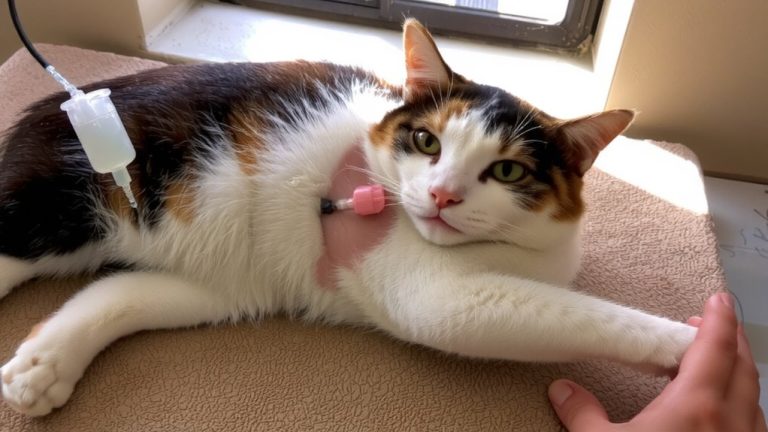
Giving your cat subcutaneous fluids at home can make a real difference once they’re in Stage 3 or 4 of chronic kidney disease, especially when nausea and dehydration start taking a toll. With proper fluid therapy, you’re helping flush toxins like blood urea nitrogen, which eases symptoms and improves quality of life. Home fluid administration every 1–2 days is safe, effective, and most cats adjust quickly. You’ll typically give 100–200 mL per session, and veterinary coaching guarantees you master the technique, site rotation, and volume control.
| Benefit | Detail |
|---|---|
| Supports kidney function | Reduces blood urea nitrogen and creatinine |
| Improves well-being | Boosts energy, reduces nausea |
| Frequency | Every 1–2 days |
| Ease of use | Most caregivers learn in 1–2 sessions |
Fluid therapy at home truly transforms CKD in cats.
Track Weight, Appetite, and Hydration
While your cat’s thirst, weight, and appetite may seem like everyday details, tracking them closely can catch early signs of progression in chronic kidney disease. Weigh your cat regularly-any weight loss exceeding 5% of body weight in a month signals trouble and needs a vet check. Monitor food intake daily; even small declines in appetite or energy might point to nausea from uremic toxins. Watch for drinking more water-water intake over 45 mL/kg/day is common as kidneys struggle to concentrate urine. Check hydration often by testing skin turgor and gum moisture; prolonged skin tenting (more than 2 seconds) means your cat’s dehydrated. When you track these signs consistently, you’re not just observing-you’re actively managing hydration and catching problems before they escalate.
Know When to Call the Vet for CKD Flare-Ups
You’re already tuned in to your cat’s weight, appetite, and hydration, and that daily check-in gives you a powerful advantage when managing chronic kidney disease. If your cat stops eating for over 24 hours, call the vet-sudden anorexia can mean waste products are building up, making it hard to manage nausea. Watch for increased lethargy, vomiting, or changes in urine output, as these may signal blood or kidney imbalances. A drop in weight and body condition by more than 5% in a month needs quick vet review. If you notice swelling at fluid injection sites, stop and call your vet. Sudden blindness or stumbling could mean high blood pressure, a silent CKD risk. Increased thirst is common, but combined with disorientation, it demands urgent care. Your vigilance in chronic care helps catch flare-ups early.
On a final note
You’re doing great by staying proactive with your cat’s CKD care, and small steps make a big difference. Start a kidney-friendly diet like Hill’s Prescription Diet k/d early, offer fresh water often, and give subcutaneous fluids-most cats tolerate 50–100 ml daily at home. Monitor weight weekly, watch appetite closely, and check gum moisture. With consistent care, many cats live well for months, even years. You’ve got the tools, and your vet’s got your back.