How to Use a Furminator on a Golden Retriever Without Over-Brushing
Use the FURminator Long Hair Dog deShedder in Large, designed for double-coated breeds like your Golden Retriever, to safely remove up to 90% of loose undercoat without harming guard hairs. Always brush with the grain, using gentle, long strokes from neck to tail, and limit sessions to 5–10 minutes once or twice weekly. Avoid daily use and sensitive areas like the tail base and back. Clean the stainless steel edge after each pass-clogged blades lose nearly 60% efficiency. If you notice thin patches, pause brushing to let guard hairs regrow; consistent, careful use keeps your dog’s coat thick and protected through seasonal sheds. There’s more to mastering coat care the smart way.
We are supported by our audience. When you purchase through links on our site, we may earn an affiliate commission, at no extra cost for you. Learn more. Last update on 19th July 2026 / Images from Amazon Product Advertising API.
Notable Insights
- Use the FURminator Long Hair Dog deShedder in Large, designed for double-coated breeds like Golden Retrievers.
- Brush only with the grain, using long, gentle strokes from neck to tail to protect guard hairs.
- Limit sessions to 5–10 minutes, 1–2 times per week during peak shedding to prevent coat damage.
- Focus on high-shed areas like the undercarriage and hindquarters, avoiding the back and tail base.
- Clean the FURminator edge after each pass to maintain efficiency and prevent clogging.
Why Your Golden’s Double Coat Needs FURminator Caution
Your Golden’s double coat isn’t just fluffy-it’s a finely tuned system, with a dense, insulating undercoat beneath long, protective guard hairs that shield against sun, rain, and heat. When you use the Furminator, you’re targeting only the loose undercoat, never the top layer. But go too often or too hard, and that stainless steel edge can damage guard hairs-cutting what should be protected. Unlike the undercoat, guard hairs grow back slowly, so overuse leaves thin patches, especially on the back and tail. You’ll compromise weather resistance and disrupt natural airflow, making hot South Carolina summers harder on your dog. Stick to 1–2 times weekly during peak shedding, and always brush without cutting into healthy fur. A well-maintained double coat keeps your Golden comfortable, protected, and ready for every adventure.
Choose the Best FURminator for a Thick Undercoat
The right tool makes all the difference when managing a Golden Retriever’s thick, double-layered coat, especially after understanding how easily the wrong approach can compromise that protective topcoat. You need a FURminator built for the job-specifically the FURminator Long Hair Dog deShedder in Large, designed for dogs over 51 lbs with long hair. Its stainless steel edge technology safely removes loose undercoat hairs without cutting the guard hairs. This is vital for your Golden Retriever, whose thick undercoat sheds heavily in seasonal cycles. Choose a model labeled for double-coated breeds and featuring an adjustable handle with a comfort grip, so you maintain control and avoid pressing too hard. Using the correct FURminator means effective, gentle shedding management every time-keeping your dog comfortable, their coat healthy, and your floors fur-free without irritation or damage.
Always Brush With the Grain to Protect the Coat
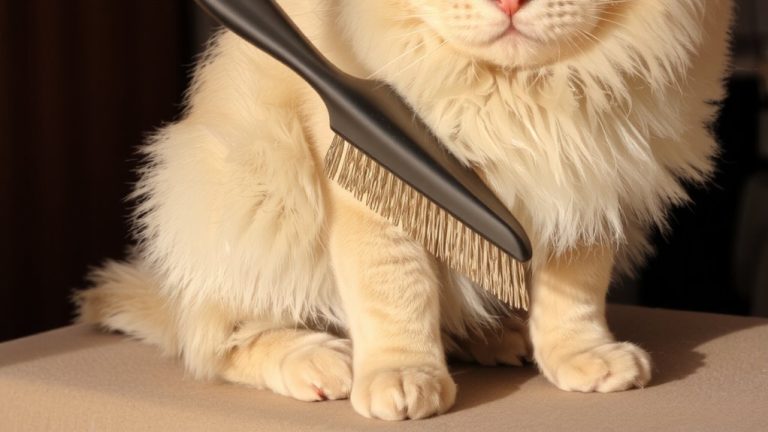
While it might seem efficient to push the brush wherever it glides easiest, always work with the grain of your Golden Retriever’s coat-brushing from the base of the neck toward the tail-to protect the guard hairs and maintain the coat’s natural integrity. When you brush with the grain, you align with the natural direction of your dog’s fur, reducing snags and discomfort. Using the Furminator in this way helps safely extract the undercoat without cutting healthy guard hairs. Its stainless steel edge is designed for removing loose hair efficiently when you use long, gentle strokes. Avoid brushing against the grain-it can damage protection layers and irritate skin. Stay mindful over sensitive areas like hips and tail, where repeated passes may thin the coat. Brushing correctly means less stress for your dog and a healthier, shinier coat over time, especially with regular sessions.
Keep Sessions Under 10 Minutes to Avoid Damage
Short, consistent grooming sessions work best when using a Furminator on your Golden Retriever, especially since over-brushing can harm the coat even if you’re following the grain. Limit each session to under 10 minutes to protect the guard hairs and prevent thinning. Regular use 1–2 times per week during peak shedding keeps the coat healthy without risking damage. Always work in gentle, long strokes and pay attention to how your dog’s coat responds over time.
| Session Length | Frequency | Result |
|---|---|---|
| 5–10 minutes | 1–2x/week | Healthy shedding control |
| Over 10 minutes | Daily | Coat stress, thinning |
| Under 5 minutes | 2x/week | Minimal undercoat removal |
| Any length | Daily | Risk of damage, stop using |
If the coat looks patchy, stop using the tool temporarily and allow regrowth. Regular use done right supports a shiny, manageable coat.
Target High-Shed Areas, Skip Sensitive Spots
Your Golden Retriever’s undercarriage and hindquarters are prime zones for seasonal shedding, so that’s where you’ll want to focus your Furminator sessions. Using the tool on these high-shed areas helps remove loose, dead undercoat efficiently-up to 90% with each pass-without stressing the skin. Avoid sensitive spots like the ears, tail base, chest, and back, where guard hairs are critical and over-brushing can cause thinning or breakage. Stick to one area at a time, working in short, gentle strokes to prevent irritation. The Furminator’s stainless steel edge works best where undercoat buildup is visible, not on sparse or delicate regions. Limit use to 1–2 times weekly during peak shedding to keep the coat healthy. Targeting the right spots means you’re removing dead undercoat effectively while preserving the dog’s natural insulation and shine.
Clean After Each Pass, Watch for Skin Irritation
Keep the Furminator working at its best by clearing hair from the edge every few strokes-this keeps the tool pulling loose undercoat instead of just pushing it around, just like testers found when they saw clogged edges reduce pickup by nearly 60%. You should clean after each pass to maintain efficiency and prevent dragging. Use the release button to clear fur quickly and keep sessions smooth. Watch for skin irritation like redness or itching, especially after multiple strokes in one spot. Avoid pressing hard, particularly along the spine and hips, where skin’s more sensitive. Check sensitive areas like the ears and tail before going over them-these zones need lighter, slower passes. If your dog flinches or you notice discomfort, stop and reassess. Regularly inspect the coat for any missed tangles or hot spots, and let your dog rest between sections to prevent stress.
On a final note
Use your FURminator gently, no more than 10 minutes weekly, always brushing with the grain to protect your Golden’s double coat. Focus on high-shed zones like the back and flank, avoiding thin-skinned areas. Clean the tool after each pass for peak performance. Watch for redness or irritation-testers note that overuse causes skin stress. Pair regular grooming with omega-rich food, and you’ll see healthier fur, less shedding, and a happier dog.