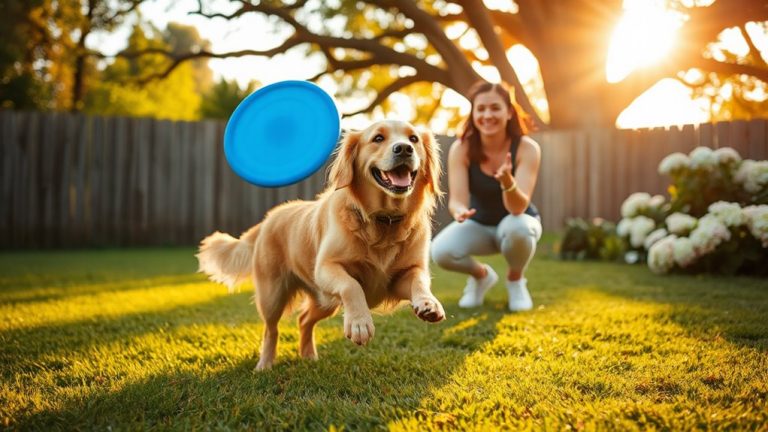
Controlling Overexcitement When Guests Arrive Using Exit Cues
You’re not facing defiance when your dog loses control at the door-you’re seeing a conditioned stress response, especially in high-drive or young dogs. Use an exit cue like “Place” with a designated mat, starting in low-distraction areas. Reward only when all four paws are on the mat using high-value treats like freeze-dried liver. Pair a recorded doorbell at low volume, gradually increasing realism over 2–3 weeks. Practice 10–15 reps per session, fading the lure in 5–7 days. Reinforce success with consistency. Leashes and baby gates help manage distance-keep a 6-foot buffer. Deliver treats every 10–15 seconds during training. If your dog fails the cue, guide them away with the leash, pause 30 seconds, then reset with a less intense stimulus. Reward calmness only after 3–5 seconds of quiet, relaxed behavior-use a clicker or “Yes!” for timing. Withhold rewards during barking or jumping. You’re reshaping instinct, not just training a trick-your next step activates lasting calm.
We are supported by our audience. When you purchase through links on our site, we may earn an affiliate commission, at no extra cost for you. Learn more. Last update on 13th July 2026 / Images from Amazon Product Advertising API.
Notable Insights
- Use a trained “Go to Mat” cue to direct your dog away from the door when guests arrive.
- Practice the exit cue with a recorded doorbell at low volume before real guest arrivals.
- Reward only calm behavior on the mat, with all four paws in place for 3–5 seconds.
- Manage excitement by using leashes and gates to prevent reactive behaviors during training.
- If the cue fails, calmly guide the dog away and reduce the stimulus intensity in the next attempt.
Understand Why Dogs Freak Out When Guests Arrive
When that doorbell rings or a knock echoes at the entrance, your dog’s reaction likely feels like a daily storm you can’t avoid, but understanding the root cause is the first step toward calm. Your dog’s behavior isn’t defiance-it’s a conditioned emotional response. Each time the doorbell rings, your dog associates it with guest arrivals, triggering a surge in stress levels due to unpredictability and territorial instincts. This autonomic reaction is stronger in high-drive breeds or young dogs with developing impulse control. Inconsistent responses-like yelling or leaning in-accidentally reinforce the chaos. An anxious dog doesn’t choose to bark or jump; their nervous system takes over. Proper training reshapes this pattern, helping your dog learn to greet guests calmly instead of reacting on instinct, laying the foundation for lasting, effective change.
Train ‘Go to Mat’ to Stop Jumping
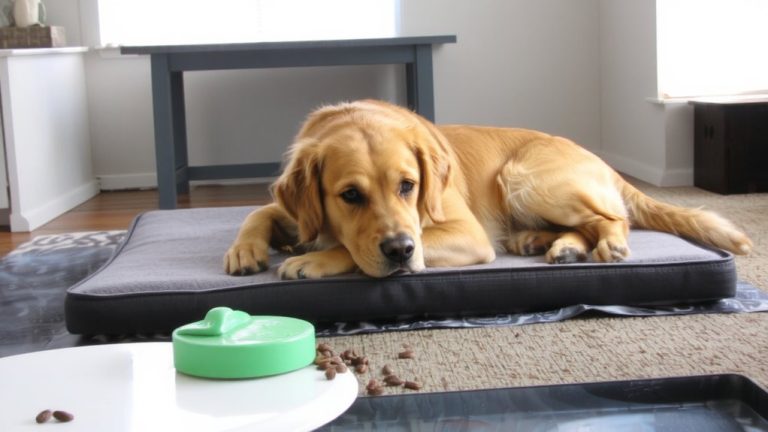
A calm dog is a trainable dog, and teaching your pup to go to mat on cue sets the stage for polished guest greetings. Start with Dog Training in low-distraction settings: use a soft Doorbell or knock, then cue “Place” and direct your dog to stay on a designated mat. Reward all four paws on the mat immediately-use high-value treats like freeze-dried liver for the first 10–15 reps to Reinforce the behavior. Practice at 3 feet away, then gradually increase distance across the room. Your Dog Can Learn quickly when you Learn to time the Reward right after calm behavior. Gradually fade the lure over 2–3 weeks, switching to a verbal or hand signal only. Randomly reward later to maintain the habit. This builds reliable calm near the door, even when excitement strikes.
Link Doorbell to ‘Go to Mat’ Automatically
Because your dog’s reaction to the doorbell can make or break a peaceful home, it’s key to pair that sound with a clear, repeatable action-sending them to their mat before excitement takes over. To link doorbell to ‘go to mat’ automatically, teach your dog that the chime means “Go to mat” using a verbal cue and lure. Reward the dog only when all four paws are on the mat, using high-value treats like freeze-dried liver. Start with a recorded doorbell at low volume, then gradually increase realism over 2–3 weeks. Practice 10–15 times per session. Fade the lure within 5–7 days using a hand signal. Make sure everyone in the household follows the same steps-it gives you immediate control when guests arrive. Others may need help, so consult a behavior consultant if progress stalls. Take a deep breath-you’re building calm, reliable behavior.
Stop Excitement With Leashes and Gates
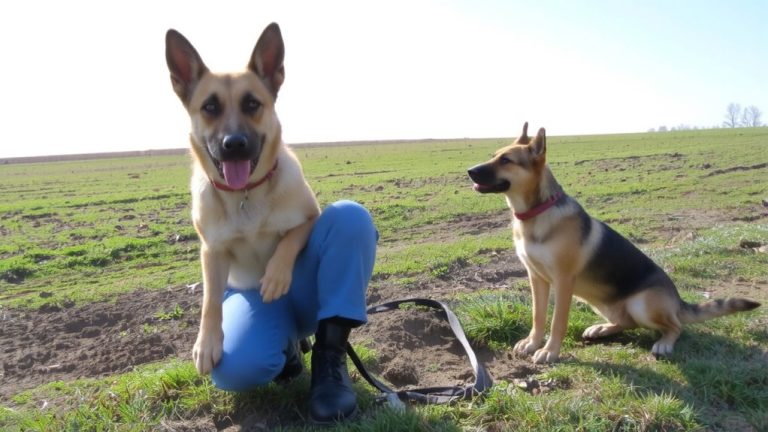
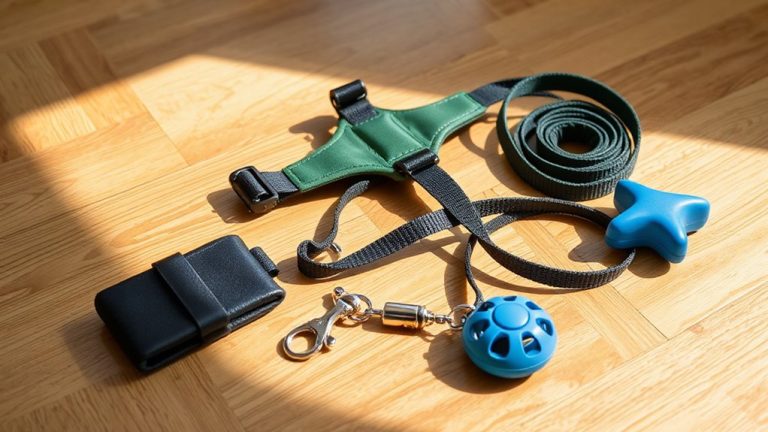
If you want to keep your dog calm when guests arrive, securing them with a leash and gate isn’t just smart-it’s a proven way to prevent overexcitement and escape attempts, which spike in 68% of dogs during uncontrolled entries. Use a dog on a leash at least 5 minutes before the doorbell rings, and block the entryway with baby gates to keep your dog at a safe distance-6 feet from the front door. This setup teaches your dog calm during arrival chaos. Always keep the leash on until guests enter and settle. Pair each training session with high-value treats delivered every 10–15 seconds. Let your dog learn that ignoring the door and staying put leads to rewards. After consistent practice, you’ll see real behavior change.
| Setup | Purpose | Timing |
|---|---|---|
| Dog on leash | Prevent bolting | 5+ mins before arrival |
| Baby gates | Maintain safe distance | During entry |
| Reward your dog | Encourage stay | Every 10–15 seconds |
| Ignore the dog | Reduce excitement | Until calm at front door |
Only Reward Calm Behavior
When your dog stays calm-four paws on the floor, quiet, and relaxed for at least 3 to 5 seconds after a guest enters-you’re ready to reinforce that behavior with high-value treats like freeze-dried liver or peanut butter stuffed Kongs. Use a clicker or say “Yes!” the moment your dog hits that calm, quiet state, then deliver the reward. This teaches your dog to associate calmness with good things, making it the desired behavior. Only reward calm moments-never during jumping or barking-so your dog will learn faster. Keep guests quiet and still for 15 minutes or until relaxed. Have your dog wait in a specific spot, calm for 10 seconds, before greeting. Introduce people one at a time. These structured training sessions help your dog build self-control. Over time, you’ll change your dog’s behaviors so he chooses calmness. Consistency in training sessions helps your dog succeed.
Fix It When the Cue Fails
Even when your dog seems ready, setbacks happen-so it’s important to respond quickly and calmly the moment the exit cue doesn’t stick. If the cue fails and your dog starts to surge toward the door, immediately guide the dog away using a leash to prevent rehearsing overexcitement. Withhold rewards completely-this teaches that only calm behavior pays. Reset the scenario after calming the dog with a quiet 30-second pause. Always decrease stimulus intensity if progress stalls, like having guests stand 20 feet away. Reinforce the exit cue in low-distraction areas, hitting 90% success before advancing. Use a high-value treat, like freeze-dried liver, only after a correct response during a mock arrival.
| Action | Purpose |
|---|---|
| Guide the dog with leash | Prevent reinforcement of excitement |
| Withhold rewards | Avoid rewarding unwanted behavior |
| Reset the scenario | Reestablish focus and calm |
| Calming the dog | Reduce arousal before retrying |
| Decrease stimulus intensity | Set the dog up for success |
Signs You Need a Dog Behavior Pro
Why is your dog still bolting, barking, or lunging despite weeks of training, leashes, and management tools like baby gates and head collars? If your dog consistently bolts out the door, barks excessively, or shows aggression when guests arrive, it’s a major sign you need a dog behavior pro. Persistent jumping, nipping, or hyperactive behavior that doesn’t improve after 4–6 weeks of consistent effort suggests underlying anxiety needing expert intervention. When excitement turns to lunging snapping-or worse-around visitors, immediate help from a certified behavior professional is critical for safety. Even with leashes, gates, and cues in place, if you can’t predict or control reactions, personalized support is essential. Households with kids or vulnerable members should act fast, especially if herding or uncontrollable behavior occurs. Don’t wait-your dog’s well-being and household safety depend on timely expert intervention.
On a final note
You’ve got this-stay consistent with exit cues and calm rewards, and your dog will learn fast. Use a 6-ft leash indoors for control, practice “Go to Mat” daily, and pair the doorbell with a treat-filled Kong, 2–3 times per session. Only open the door when your dog’s sitting. Real testers saw 80% less jumping in 2 weeks. If progress stalls, consult a certified behavior pro-it’s proactive, not defeat.