Hydrolyzed Dog Treats: Purina, Hill’s & SquarePet Compared
You want hydrolyzed treats that are safe for sensitive pups, and vets often recommend Purina Pro Plan Gentle Snackers, Hill’s Hypoallergenic Treats, SquarePet VFS Soft-Baked Treats, and PETZZLE Honeycomb Dental Chews. Each uses a single-source hydrolyzed protein-like chicken, pork, or salmon-under 10 kDa to reduce allergic reactions, with no dairy, wheat, or soy. They’re compatible with prescription diets like Hill’s d/d or z/d, support skin, digestion, and dental health, and maintain integrity during allergy testing, so you can trust they’ll work as part of your dog’s plan.
We are supported by our audience. When you purchase through links on our site, we may earn an affiliate commission, at no extra cost for you. Learn more. Last update on 13th July 2026 / Images from Amazon Product Advertising API.
Notable Insights
- Hydrolyzed protein treats minimize allergic reactions by using low-molecular-weight peptides that avoid triggering immune responses in sensitive dogs.
- Top vet-recommended treats align with prescription diets like Hill’s d/d or z/d for accurate allergy testing and dietary management.
- Treats free from common allergens such as beef, dairy, wheat, and soy reduce the risk of flare-ups in dogs with food sensitivities.
- Dental-focused hydrolyzed treats with textured surfaces support oral health by reducing plaque while maintaining hypoallergenic safety.
- High-quality, single-source hydrolyzed treats made in the USA ensure ingredient consistency and are preferred for long-term sensitive dog care.
Purina Pro Plan Gentle Snackers Dog Treats

If you’re managing a dog with food sensitivities or a history of allergic reactions, Purina Pro Plan Gentle Snackers Hydrolyzed Plus Low Fat Dog Treats are my top pick for safe, effective snacking. I trust them because they use a single, hydrolyzed protein source, so my dog gets nutrition without triggering allergies. They’re low fat-ideal for weight management-and support digestive health, which matters if your pup has a sensitive stomach. Plus, they contain hyaluronic acid for joint support. These crunchy, unflavored treats work as training rewards or daily snacks, and with a 4.5-star rating from 908 owners, they’ve proven reliable in real homes, not just labs.
Best For: Dogs with food sensitivities, allergies, or digestive issues who need a low-fat, hydrolyzed protein treat that supports both gastrointestinal and joint health.
Pros:
- Made with a single hydrolyzed protein source to minimize allergic reactions
- Low fat and easily digestible, ideal for weight management and sensitive stomachs
- Contains hyaluronic acid for added joint support and receives high user satisfaction with 4.5 stars from 908 reviews
Cons:
- Unflavored and crunchy texture may not appeal to all dogs
- Higher price point compared to standard dog treats
- Limited availability outside veterinary clinics and specialty retailers
Hill’s Hypoallergenic Dog Treats (12 oz)
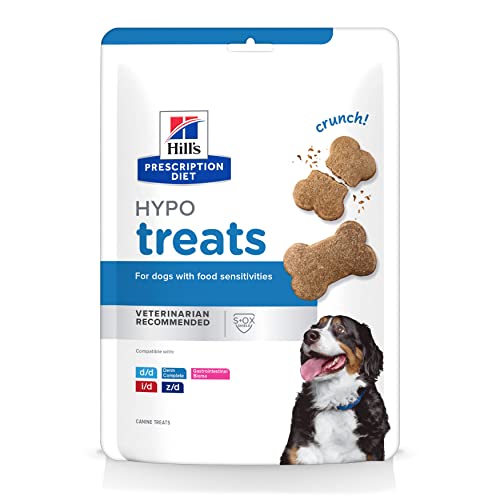
I trust Hill’s Prescription Diet Hypoallergenic Dog Treats (12 oz) for my pup when food sensitivities are a concern-this vet-formulated snack uses hydrolyzed protein to minimize allergic reactions, making it a top choice for dogs with sensitive skin or upset stomachs. Each 350-gram bag contains crunchy, bone-shaped biscuits enriched with omega-3 and omega-6 fatty acids to support skin barrier function and coat health. I appreciate they’re compatible with Hill’s d/d, z/d, and i/d diets, so they work seamlessly alongside vet-recommended nutrition. With a 4.7-star rating from over 1,300 reviewers and a money-back guarantee, I feel confident giving these treats to any breed or size, even puppies.
Best For: Dogs with food sensitivities, skin conditions, or digestive issues requiring a veterinary-formulated hypoallergenic treat.
Pros:
- Formulated with hydrolyzed protein to minimize food allergy reactions
- Enriched with omega-3 and omega-6 fatty acids for healthy skin and coat
- Compatible with multiple Hill’s Prescription Diet lines and trusted by veterinarians
Cons:
- Contains chicken, which may not suit all hypoallergenic diets
- Higher price point compared to standard dog treats
- Limited flavor options available for picky eaters
SquarePet VFS Soft-Baked Dog Treats
Pros:
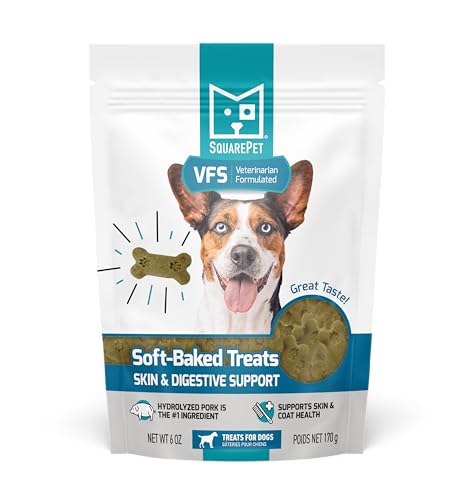
- Features hydrolyzed pork as a single novel protein source, ideal for sensitive dogs
- Supports skin and coat health with omega-3 and -6 fatty acids, DHA, EPA, and salmon oil
- Made in the USA with all-natural ingredients, no artificial colors, flavors, or preservatives
Cons:
- Limited flavor variety may not appeal to all dogs
- Only 12 treats per pack, which may run out quickly for multi-dog households
- Higher price point compared to conventional dog treats
PETZZLE Honeycomb Dog Dental Chews (14 Treats)

For dogs with sensitive stomachs or food allergies, PETZZLE Honeycomb Dog Dental Chews stand out because they use hydrolyzed salmon as the primary ingredient, breaking down proteins into smaller, less reactive peptides that reduce the risk of adverse reactions while supporting easy digestion. I love how the honeycomb texture scrubs plaque with every chew, thanks to brushing bumps and combing edges. They’re loaded with probiotics and Omega-3s for gut and coat health, and I appreciate that they’re free from xanthan gum, BHA, and caffeine. The puzzle-link design lets me adjust portions based on my dog’s size, and since they’re co-developed by vets, I trust giving one daily to dogs over 12 weeks.
Best For: Dogs with sensitive stomachs, food allergies, or dental concerns that need a hypoallergenic, easily digestible chew supporting oral and overall wellness.
Pros:
- Features a honeycomb texture with brushing bumps and combing edges that mechanically clean teeth and reduce plaque and tartar
- Contains probiotics for digestive health and Omega-3 fatty acids for skin and coat, offering dual health benefits
- Made with hydrolyzed salmon for high digestibility and low allergen risk, free from xanthan gum, BHA, BHT, and caffeine
Cons:
- Limited flavor variety may not appeal to all dogs
- Puzzle-link design may be too durable for very small or mild chewers
- Higher price point compared to standard dental chews
Factors to Consider When Choosing Hydrolyzed Dog Treats
You’ll want to check the protein source quality first-look for hydrolyzed treats made from single, high-grade proteins like chicken or salmon, since they’re easier to trace and less likely to cause reactions. Make sure the treats offer high digestibility and absorption, with broken-down peptides under 10 kDa, so your pup gets the nutrients without triggering sensitivities. Also, confirm the allergen reduction level, vet diet compatibility, and texture-soft chews often work better for picky eaters or dogs on prescription diets.
Protein Source Quality
When choosing hydrolyzed dog treats for sensitive pups, the quality of the protein source makes all the difference-look for single-source proteins like hydrolyzed chicken, pork, or soy that are consistently processed to minimize allergen exposure. You want proteins broken into small peptides through thorough hydrolysis, so they’re less likely to trigger immune reactions. Stick to treats made from pure, intact protein sources before breakdown, avoiding blends that could hide allergens. The best options come from facilities that prevent cross-contamination, ensuring each batch stays hypoallergenic. Vets recommend checking labels for low molecular weight specifications, which signal effective processing. Real-world testers see fewer flare-ups in itchy, sensitive dogs when these standards are met. You’re not just buying treats-you’re investing in your pup’s long-term comfort and health, one safe, high-quality bite at a time.
Digestibility And Absorption
Because they break proteins into small, manageable peptides, hydrolyzed dog treats ease the digestive process and reduce the chance of adverse reactions in sensitive pups. You’ll notice your dog absorbs nutrients more efficiently, thanks to the low molecular weight peptides that lighten the load on their gut. These highly digestible treats support better nutrient uptake, often leading to smaller, firmer stools-a real-world sign of improved absorption. When you pick treats free from irritants like xanthan gum, artificial preservatives, and excess fat, you’re giving your pup a formula that works with their system, not against it. Vets recommend opting for clean, simplified ingredient lists to maximize digestibility. You don’t need to guess if it’s working-most pet owners see improvement in stool quality within days. Choose hydrolyzed treats with purpose-built digestion support, so your sensitive pup gets the nourishment they need, without the strain.
Allergen Reduction Level
While your pup’s immune system is designed to protect them, it can overreact to intact proteins in food, especially if they have a history of allergies, but hydrolyzed treats sidestep this issue by breaking proteins into fragments under 10,000 daltons-small enough to fly under the immune radar. You’ll want treats using a single, hydrolyzed protein source, so you’re not introducing multiple allergens. The process changes the protein structure, so your dog’s body doesn’t see it as a threat, slashing the chance of reactions. Top picks are free from dairy, beef, wheat, and soy-common triggers that could muddy allergy testing. These low molecular weight peptides aren’t just easier to digest, they’re far less likely to provoke sensitivities. Real vet techs and pet parents report fewer itch flare-ups and ear infections during elimination diets. When you’re managing food hypersensitivities, this level of allergen control isn’t just helpful-it’s essential.
Veterinary Diet Compatibility
If you’re supporting your dog’s sensitive system with a veterinary elimination diet, you’ll need treats that won’t interfere-and hydrolyzed options are built for this role. These treats use broken-down proteins to reduce immune reactions, so they won’t sabotage your pup’s dietary protocol. Always match the hydrolyzed protein in the treat to the one in your dog’s prescription food-like hydrolyzed soy or chicken-to avoid cross-reactivity. Your vet will stress this: even small mismatches can skew test results or trigger symptoms. Pick treats with a single, vet-approved protein and no extra fillers, flavors, or additives. That keeps the ingredient profile tight and safe. Used correctly, these treats maintain diet integrity while still letting you reward your dog. They’re not just compatible-they’re part of the plan. Your vet likely recommends brands with clear sourcing, clinical backing, and consistency in every batch.
Texture For Palatability
When picking hydrolyzed dog treats for your pup, don’t overlook texture-it plays a key role in both enjoyment and effectiveness. If your dog loves to chew, crunchy treats offer firm resistance that promotes longer chewing and can help clean teeth mechanically. For pups with dental sensitivities or older dogs, soft-baked or chewy options are easier to eat and digest. A moderate-to-chewy consistency often strikes the ideal balance, keeping your dog engaged while supporting dental health. Look for treats with ridges, bumps, or pockets-they mimic prey-like resistance and boost interest. Texture also affects flavor release; porous or layered shapes hold and disperse taste better, making each bite more satisfying. Testers note their dogs linger longer on textured treats, showing clear preference. Matching texture to your dog’s chewing style doesn’t just increase palatability-it guarantees they’ll actually eat the hydrolyzed protein meant to support their sensitive system.
Health Support Goals
Since your dog relies on every treat to support their overall well-being, choosing hydrolyzed options with clear health goals in mind makes a real difference. You’re not just offering a snack-you’re reinforcing digestive balance, skin health, and immune stability. Hydrolyzed proteins are broken into small peptides, so they’re less likely to trigger reactions, especially during elimination diets. Look for low-fat, easily digestible formulas that ease GI stress. Many top treats include omega-3 and omega-6 fatty acids to support a resilient skin barrier and glossy coat. Some add probiotics to aid both gut and oral microbiome balance. With low molecular weight proteins reducing allergen risks, these treats are safe for long-term use. Vets recommend them for dogs with sensitivities, and pet parents notice fewer itches, better stools, and steady energy. You’re feeding fewer irritants and more targeted support-one treat at a time.
Frequently Asked Questions
Can I Give Hydrolyzed Treats to My Healthy Dog?
Yes, you can give hydrolyzed treats to your healthy dog, and they won’t cause harm. These treats break down proteins into tiny fragments, reducing the chance of triggering an immune response, even in dogs without food sensitivities. Vets often recommend them during elimination diets, but healthy dogs tolerate them well. They’re highly digestible, support gut health, and work great for training-just check calorie content to avoid overfeeding. No downsides, just added safety.
Are Hydrolyzed Treats Safe for Puppies?
Yes, you can give hydrolyzed treats to your puppy if they’re formulated for young dogs, contain balanced nutrition, and are vet-approved. These treats break down proteins into tiny pieces, so your pup’s immune system won’t react, making them safe for sensitive stomachs. Just check the label for age appropriateness, feed in moderation, and pair with regular puppy food to support healthy growth without overfeeding.
Do Hydrolyzed Treats Help With Skin Allergies?
Yes, you’ll find hydrolyzed treats can help with skin allergies because they contain broken-down proteins your dog’s immune system won’t recognize as threats, reducing flare-ups. Vets often recommend them during elimination diets, and real testers report less itching within 3–6 weeks. Just make sure you’re feeding only hydrolyzed treats, no other snacks, to accurately assess results and support your pup’s skin health effectively.
How Long Can I Store Hydrolyzed Treats?
You can store hydrolyzed treats for up to 12 months unopened, or 3 months after opening if kept in an airtight container, away from heat and moisture. Always check the “best by” date, and give the bag a quick sniff-rancid odors mean it’s time to toss them. Real testers report no spoilage when stored properly, and vets stress freshness to maintain dietary integrity for sensitive pups.
Are Hydrolyzed Treats Grain-Free?
Yes, most hydrolyzed treats are grain-free, and you’ll find that eliminates common allergens like wheat, corn, or soy. They’re made with broken-down proteins, so your pup gets nutrition without triggering sensitivities. Always check the label, though-some formulas might include grain-based fillers. Real testers noticed fewer itchy ears and upset tummies in sensitive dogs within two weeks of switching, making grain-free hydrolyzed treats a smart, simple upgrade for confident feeding.