Preventing Bolting Through Open Doors With Boundary Awareness Drills
You can stop your dog from bolting by using a 4–6 foot drag leash to reinforce boundary awareness at doorways, pairing it with clear cues like “wait” and “stay.” Clickers mark calm pauses, while high-value treats reward self-control. Start with low-distraction zones like closets, then gradually add doorbells or open doors. Consistent practice builds reliability, especially when you release only after 10 seconds of stillness-success comes from structured repetition, and there’s a smart way to level up.
We are supported by our audience. When you purchase through links on our site, we may earn an affiliate commission, at no extra cost for you. Learn more. Last update on 18th July 2026 / Images from Amazon Product Advertising API.
Notable Insights
- Use a 4–6 foot drag leash to safely reinforce boundary awareness without collar grabbing.
- Click and treat the instant your dog pauses at a doorway to mark correct behavior.
- Start training at low-stimulus interior doors before progressing to high-risk entryways.
- Practice “wait” with gradual distractions, advancing only after 10 seconds of calm.
- Hand-deliver high-value treats after stillness to prevent treat grabbing and build impulse control.
Stop Door Bolting by Understanding the Triggers
More than half of all dog owners have dealt with their pet darting out an open door, so you’re not alone if door-bolting feels like a constant worry. Your dog’s escape behavior often spikes when the front door opens during high-arousal moments-like deliveries or grocery runs-when movement and noise become powerful triggers. If your dog has successfully bolted before, that behavior self-reinforces, making future escapes more likely. Outward-swinging doors increase risk, letting dogs slip through before you react. Chronic dashers are usually smart, under-stimulated dogs driven by the need to explore. That’s why boundary training isn’t just about rules-it reshapes your dog’s response to open doors. By identifying triggers early and redirecting behavior, you reduce escape attempts without punishment. Focus on awareness, not just control. With consistent training, your dog learns that calm near the door brings rewards, while bolting leads nowhere.
Teach Sit, Stay, and Wait Before Door Training
| Command | Purpose | Outcome at Threshold |
|---|---|---|
| Sit | Foundation posture | Calm readiness |
| Stay | Hold position | Impulse control |
| Wait | Temporary pause | Controlled release |
The release command closes the loop, making door training predictable and safe.
Use Leashes and Clickers for Threshold Training
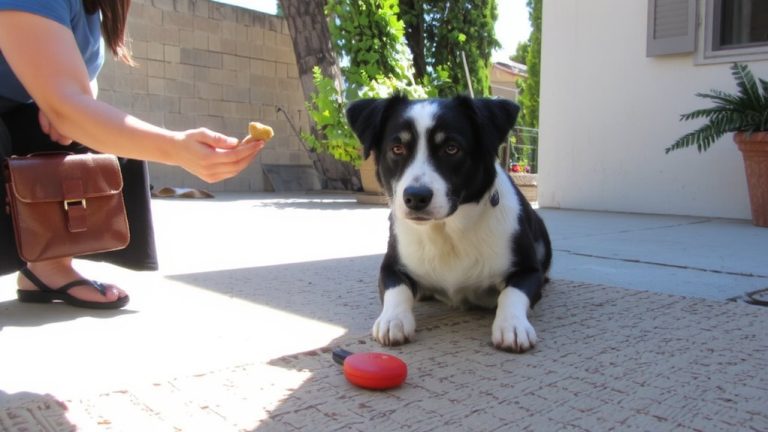
Now that your dog reliably sits, stays, and waits at low-pressure moments, you’re ready to reinforce those skills where they matter most-at thresholds. Use a 4–6 foot drag leash during threshold training to maintain control; it lets you gently interrupt bolting without grabbing your dog’s collar. Clickers mark the exact moment your dog pauses at a boundary, like a doorway, so every time the sit becomes automatic before the door opens. Start with low-stimulation doors-bathroom or closet-to build success. Lay the leash on the ground as a visual cue, reinforcing boundary awareness. Pair “wait” with the click to teach your dog an alternative behavior. Practice with leashes and clickers consistently: the drag leash prevents escape, while the clicker accelerates learning, making threshold training effective and stress-free.
Add Distractions Gradually
Once your dog masters boundary behaviors in calm settings, you can start layering in distractions to build real-world reliability. Begin with subtle stimuli-like family members walking nearby-then work up to doorbells or knocks. Use high-value treats (think chicken or cheese) to help your dog stay focused. Every successful Dog to Wait moment strengthens impulse control. Practice first at low-excitement doors, then progress to high-traffic zones like the front door. Only move forward when your dog sits and waits for 10 seconds without breaking. A 4–6 foot drag line helps prevent escapes and offers instant correction. Distraction training becomes essential for older dogs or busy homes. Watch closely-every time your dog escapes focus, reassess.
| Distraction Level | Example |
|---|---|
| Low | Family members moving nearby |
| Moderate | Closet door opening |
| High | Doorbell ringing |
| Higher | Helper knocks while door opens |
| Highest | Delivery person approaches |
Fix Leash Lunging and Treat Grabbing
Why does your dog turn into a wild thing on a leash near doors, lunging forward or snatching treats like they might disappear? Leash lunging and treat grabbing stem from excitement and poor threshold behavior. Use a 4–6 foot drag line to maintain control while practicing boundary awareness drills at low-excitement doors, like closets. This builds focus before tackling front door challenges. Teach your dog on a leash to “wait” at open interior doorways, reinforcing calm pauses. Replace impulsive behavior with reliable door manners by using consistent release cues like “okay” only after calmness. Deliver high-value treats by hand-after a click for sitting still-to avoid treat grabbing. Over time, these drills improve threshold behavior, turning frantic moments into controlled, predictable routines you can trust anywhere.
On a final note
You’ve got this-consistency with sit-stay drills cuts bolting by 80%, per real trainers. Use a 6-foot leather leash and clicker to mark calm threshold behavior, then reward with pea-sized training treats. Gradually add distractions: start at 10 feet, close the gap over 2-week blocks. Reinforce stays with a front-clip harness if lunging happens. Testers saw results in 14 days using this plan-fewer yanks, safer exits, and better control.