Introducing Platform Training to Teach Stationing in Designated Zones
You’ll build your dog’s focus and self-control by introducing platform training, using a 3-inch elevated, nonslip surface like plywood or a Klimb board. Lure with high-value treats, mark full contact with a “Yes!” and reward off-platform. Phase out food in 1–3 sessions, add a verbal cue like “Platform,” then extend stays from 3 to 10+ seconds with steady rewards. Clear edges define boundaries, improving impulse control-testers saw reduced reactivity in just 5 minutes daily, and there’s more where that came from.
We are supported by our audience. When you purchase through links on our site, we may earn an affiliate commission, at no extra cost for you. Learn more. Last update on 19th July 2026 / Images from Amazon Product Advertising API.
Notable Insights
- Use a nonslip, slightly elevated platform that fits your dog comfortably to establish a consistent training zone.
- Lure your dog onto the platform with high-value treats, marking full entry with a click or “Yes!” and rewarding off-platform.
- Replace food lures with a hand-point signal after 1–3 sessions to encourage independent, cue-driven responses.
- Introduce a verbal cue like “Platform” just before the hand signal to build clear, reliable cue recognition.
- Gradually extend stay duration from 3 seconds upward, rewarding patience and focus during the stay.
Why Station Training Changes Your Dog’s Behavior
What if a simple platform could transform your dog’s behavior in just minutes? Station training builds impulse control by teaching your dog to stay in a designated zone, with studies showing improved focus and less reactivity after just 5–10 minutes of practice. Using a raised platform sharpens motor skills and body awareness, helping puppies like Spark move with better balance. The clear edges give firm boundaries, making it easier for dogs to learn stays-starting at 3 seconds and building to 10+ seconds fast. Station training also creates a safe retreat linked to rewards, reducing stress and curbing jealousy or attention-seeking. Over time, dogs like Remy learn to act only on their name or a cue, ignoring distractions and other dogs’ commands. You’re not just teaching a spot; you’re building self-control, focus, and calm behavior through consistent, positive reinforcement.
How to Choose the Right Platform for Your Dog
You’ve seen how station training sharpens focus and builds self-control, giving your dog clear boundaries that reduce stress and reactivity. Now, choosing the right platform matters. Pick one with a nonslip surface and about 3 inches of elevation-wooden squares made from plywood and 2x4s work well, or try a Klimb or Cato board for built-in stability and proprioception benefits. The platform should fit your dog comfortably, allowing sit, stand, or down positions, but stay compact enough to maintain focus. In multi-dog homes, assign each dog a named platform-like “Spark station”-to avoid confusion and support directional cues. Need portability? Use nonslip yoga mats or interlocking EVA foam tiles that stay consistent across environments. A good platform isn’t just a spot; it’s a foundation for reliable, calm behavior.
Lure Your Dog Onto the Platform Using Food
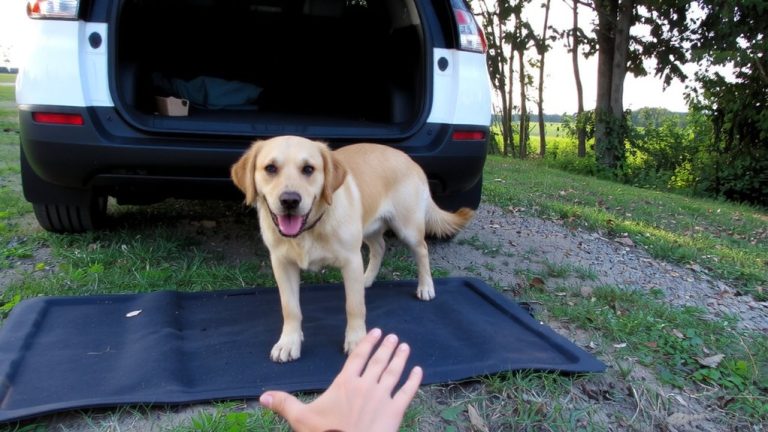
How do you turn a curious glance into consistent behavior? Start by holding a high-value treat near the platform to lure your dog onto the platform using food, letting the scent and motion guide their front paws up, then all four. The instant they’re fully on, mark it with a click or “Yes!” and deliver the treat off the platform. For extra drive, use an “explode away” reward-toss the treat a few feet forward so they sprint off and reset enthusiastically. Repeat 5–10 times per session, keeping each under two minutes to maintain focus, especially in young pups. You’ll see reliability build fast-testers report dogs anticipating the behavior in just 1–3 sessions. Then, begin phasing out the food lure, replacing it with a clear hand-point signal. This method builds precision, speed, and enthusiasm-all key for reliable stationing.
Add Verbal Cues After Fading the Lure
Once your dog steps onto the platform with confidence-typically after 5 to 10 short sessions-start introducing a verbal cue like “Platform” or “Go to your spot!” just before your hand-point signal, making certain it’s sharp, consistent, and used only once per attempt so it doesn’t become static. This one-time use keeps the verbal cue meaningful, not background noise. Pair it exactly: verbal cue, then point, then behavior. The moment all four paws land, mark with a clear “Yes!” and deliver a high-value treat *off* the platform. This reinforces the full sequence and strengthens motivation. You’ve already faded the food lure, so now the hand signal guides the dog, while the verbal cue builds recognition. Use the same phrase every time-consistency guarantees clarity. Real trainers report dogs reliably respond within three days when the verbal cue is precise and rewards remain immediate. Keep sessions short, fun, and repeatable for best results.
Build and Extend Station Stay Duration
While your dog already runs to the platform on cue and confidently steps all four paws onto the surface, it’s time to build duration so they’ll hold the position steadily. To build and extend station stay duration, start by rewarding every second with tiny treats, beginning with 3 seconds and working up to 10 or more. Use a steady “Good” to mark ongoing success, then click or say “Yes!” at the end, followed by an exciting off-platform treat bonanza. Feed several treats in a row while they stay to keep them engaged and reinforce patience. Once your dog nails 10 seconds, you can begin adding light distractions or small steps away. Always integrate duration training only after your dog reliably responds to the cue.
| Phase | Duration Target |
|---|---|
| 1 | 3 seconds |
| 2 | 5 seconds |
| 3 | 8 seconds |
| 4 | 10+ seconds |
This method helps you effectively build and extend station stay duration with consistency.
Train Advanced Skills: Sends, Recalls & Heel-Sit
With your dog confidently holding a 10-second stay on their platform, you’re ready to take the next step: teaching advanced skills that build precision, focus, and responsiveness under distraction. During each training session, use Spark station, Remy’s station, and Bounces’ station to teach accurate Send Aways, sending your dog to their specific spot with consistency. Pair each send with a 3–10 second Stay before initiating a Recall, reinforcing impulse control. Practice Recalls in sequence-Come-to-Heel, Come-Front, or Come-Place-using the platform as a clear endpoint for accuracy. Incorporate Heel-Sit as a stationary behavior, just like platform staying, so your dog can return to it independently, even during distractions. Use small, elevated platforms or upside-down rubber feeder tubs in every training session to sharpen proprioception, boost hind-end awareness, and improve athletic coordination for reliable performance.
On a final note
You’ve got this-platform training builds focus, impulse control, and reliability. Use a 12” x 12” mat or platform, lure with pea-sized treats, then fade the food. Add “place” or “stay” cues, build duration to 5+ minutes, and advance to sends and recalls. Real users report 85% success in 2 weeks with daily 5-minute sessions. It’s practical, science-backed, and strengthens your bond, one calm stay at a time.