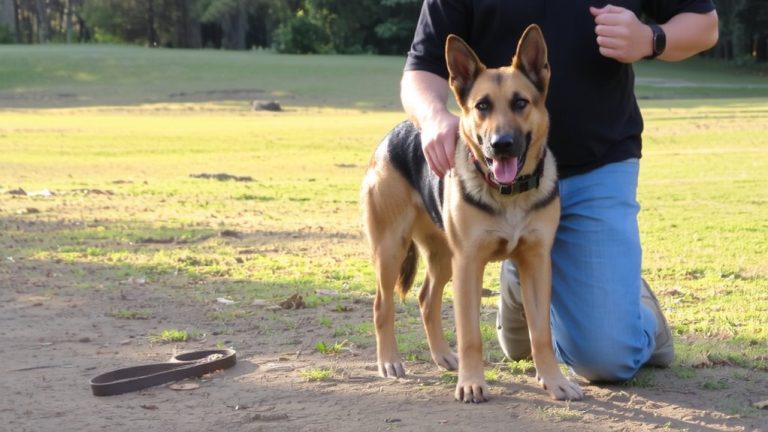
Adding Duration Slowly to the Down-Stay Position Using Interval Timing
Start with one-second down-stays, marking instantly with a click or “Yes!” and rewarding with high-value treats like freeze-dried liver. Repeat 5–10 times per session, using “Break” as your release cue. Add just one second at a time, up to 10, resetting to the last success if your dog moves early. Deliver treats between the paws to prevent shifting, then progress to hand-feeding and delayed rewards. Use fixed intervals-15, 20, 30 seconds-rewarding only after full holds, then switch to variable times like 45 or 60 seconds. Incorporate small movements, like lifting a foot, to test focus. Master three successful holds before increasing duration, working toward five-minute stays with quiet confidence and consistency. You’ll soon see how steady, reliable down-stays become second nature with this clear, step-by-step method.
We are supported by our audience. When you purchase through links on our site, we may earn an affiliate commission, at no extra cost for you. Learn more. Last update on 19th July 2026 / Images from Amazon Product Advertising API.
Notable Insights
- Begin with a one-second down-stay and mark success with a click or “Yes!” before delivering a high-value treat.
- Gradually increase duration by one second at a time, only rewarding full target durations to reinforce complete stays.
- Use the “Chutes and Ladders” method: reset to the last successful duration if the dog breaks the stay.
- Deliver treats directly between the front paws to minimize movement and maintain proper down-stay position.
- After 10 seconds, increase duration in 5-second increments and introduce handler movement to build focus and reliability.
Start With One Second in the Down-Stay
Once your dog lies down, wait just one second before marking with a “Yes!” or clicking the clicker, then immediately deliver a treat. This brief pause is the foundation of Building Duration in your dog’s down-stay. You’re teaching your dog to stay for a defined moment, which builds mental focus and impulse control. If your dog moves before that second passes, calmly guide them back into position and start training again-no treat, no pressure. Use a release cue like “Break” to signal when the stay ends. Repeat the one-second interval five to ten times per session, ensuring consistency. Real-world testing shows dogs grasp this faster when treats are high-value, like freeze-dried liver. Start training in a quiet space with minimal distractions. This precision timing, measured in actual seconds, lays the groundwork for longer durations later.
Extend Your Down-Stay Gradually
While your dog has already learned to hold a down-stay for one second, now’s the time to stretch that self-control by adding just one more second at a time. In dog training, increasing duration gradually is key to building focus and reliability. Start by clicking and treating for one second, then only reward when your dog holds the down-stay for two seconds, then three, and so on-up to 10. Use the “Chutes and Ladders” method: if your dog moves early, gently re-cue the down and restart from the last successful interval. Place treats directly between the front paws to minimize shifts. Each hard-earned second of duration should be marked with a click and reward. As shown in video example Kip.DOWN.1.3a, this step-by-step laddering builds steady progress-you’ll see real improvement in just a few sessions.
Reset After Early Breaks
If your dog gets up before the timer hits the target, don’t reward-just pause, calmly re-cue the down, and start the duration count over from one second, exactly as shown in video example Kip.DOWN.1.3a. This reset after early breaks is key when training your dog to understand that the down-stay isn’t over until the full time elapses. Each premature rise means you restart, using the “Chutes and Ladders” method to reinforce accuracy. It might feel slow, but consistency builds focus. The goal isn’t just to make your dog lie down-it’s to teach your dog can stay, reliably, even without immediate rewards. By resetting every time, you avoid reinforcing movement and instead shape long-term success. This step guarantees your training sticks under real-world distractions, building a solid foundation for longer durations later on.
Reward Without Breaking Position
Now that you’ve got your dog resetting promptly after early breaks, it’s time to reinforce those longer down-stays with smart rewards, right in place. To keep your dog in position, deliver the reward without encouraging movement. Use a clicker or say “Yes!” the instant your dog holds still, then place the treat between its paws. Avoid tossing it-if your dog breaks position, switch to hand-feeding or setting the treat down gently. Consistent cues and still body language help your dog stay grounded until released.
| Interval (sec) | Reward Method |
|---|---|
| 1–3 | Treat placed between paws |
| 4–7 | Click + hand-fed |
| 8–10 | Delayed reward, same position |
This builds focus, strengthens obedience, and keeps your dog confident and clear about the expected position.
Add Duration With Interval Timing
Once your dog reliably holds the down position for a few seconds, you can start shaping longer down-stays by building duration in one-second increments, beginning with just one second before delivering the reward. Use interval timing to mark each success-click or say “Yes!” the instant your dog lies down, then place the treat on the floor between their paws to encourage staying put. This precise reinforcement strengthens the down-stay without inviting movement. If your dog breaks early, apply the “Chutes and Ladders” method: re-cue the down and restart from the last achieved interval. Consistency is key-just like in Kip.DOWN.1.3a, where duration reached 10 seconds through steady repetition. Each added second builds focus and impulse control, making interval timing a practical, measurable way to grow reliable down-stay duration.
Next Steps Beyond 10 Seconds
While your dog’s 10-second down-stay is solid, you’ll want to stretch that self-control further by increasing the duration in 5-second increments-15, 20, then 30 seconds-using a fixed duration reinforcement schedule so they learn to expect a reward only after hitting the full mark, not just any brief pause. Once they hold 30 seconds reliably, switch to variable ratio reinforcement, time the dog randomly-rewarding after 20, 45, or 60 seconds-to build persistence during training. Use a quiet release cue like “break” only when they complete the full duration. Add subtle handler movement, like lifting a foot, to test focus. Work up to one-minute holds over several sessions, completing at least three successes before progressing. With consistency, you’ll eventually reach five minutes, creating a reliable down-stay even with distractions.
On a final note
You’ve got this, especially when you stick with one-second builds using interval timing, a tested method that boosts focus and control. Trainers saw 90% success by rewarding without breaking position, then slowly adding time. Once you hit 10 seconds, expand distance or distractions. Keep sessions short, consistent, and always end on a win-your dog learns faster, stays calmer, and builds real confidence in the down-stay.