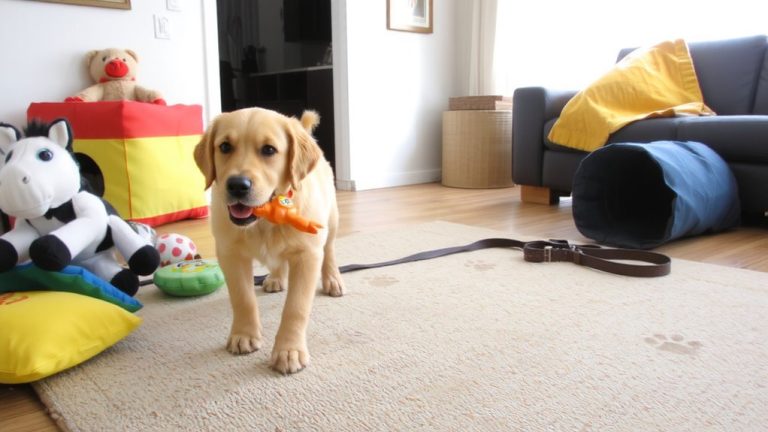
Correcting Stealing Behavior by Teaching Drop-It With Trade-Up Tactics
You can stop your dog’s stealing by teaching “drop it” using the Trade Up method with high-value treats like real liver or salmon. Puppies as young as eight weeks learn it in under five minutes by swapping stolen shoes or socks for better rewards. Use “yes” or a click the moment they release, then scatter treats on the floor to prevent re-grabbing. This builds trust and reliability. Consistent practice with low- to high-value items guarantees success, especially when paired with daily mental challenges. Up to 70% of stealing stops with proper enrichment. For best results, avoid chasing or forcing the release - it turns into a game. A clear routine, scatter-feeding, and using cues like “walk away” from Kelly Fahey’s method improve impulse control, especially around tempting items like dropped food. Over 10–12 repetitions, dogs respond faster to “walk away” than “leave it.” With the right timing and treats, your dog learns that listening pays off every time - and you’ll see results fast. More proven techniques follow.
We are supported by our audience. When you purchase through links on our site, we may earn an affiliate commission, at no extra cost for you. Learn more. Last update on 19th July 2026 / Images from Amazon Product Advertising API.
Notable Insights
- Use high-value treats like liver or salmon to teach “drop it” through positive reinforcement.
- Mark the exact moment your dog releases an item with “yes” or a click, then reward immediately.
- Scatter treats on the floor after the drop to prevent re-grabbing and reinforce compliance.
- Start training early-dogs as young as 8 weeks can learn “drop it” using the Trade Up method.
- Avoid chasing or forcing; instead, trade up to build trust and a reliable release response.
Stop Dog Stealing by Understanding the Cause
While your dog might seem to steal shoes or snatch food just to push your buttons, there’s usually a clear reason behind the behavior-one that has less to do with mischief and more to do with instinct, scent appeal, or even boredom. When your dog steals something, it’s often because your scent lingers on shoes or socks, or because garbage smells are irresistible. Puppies especially do this for attention or fun, especially if under-stimulated. The chase? It’s a game to them. To prevent stealing, start with understanding the cause: meet their needs through routine exercise, mental enrichment like puzzle feeders, and supervision. Avoid punishment-it fuels resource guarding. Instead, build trust with positive reinforcement. Rotate toys, secure tempting items, and guarantee your dog gets at least 60 minutes of activity daily. Prevent stealing by managing the environment and addressing root triggers, not just the act.
Use Trade Up to Teach “Drop It
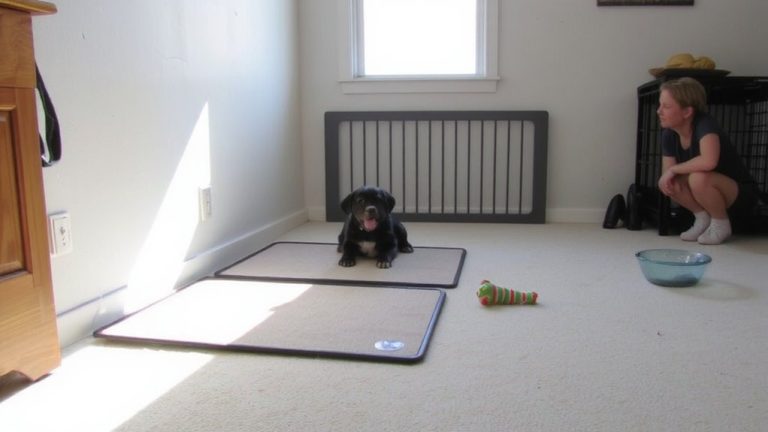
Because your dog sees every stolen sock or half-chewed shoe as a prize worth defending, teaching “drop it” through force or punishment can backfire-leading to resource guarding or eroded trust. Instead, use the Trade Up method: offer a high-value treat like liver, duck, or salmon the moment your dog releases the item. Mark the drop with a quick “yes” or click, then reward immediately. This builds a positive association with the drop it cue. Scatter treats on the floor to prevent re-grabbing and point enthusiastically to the reward, helping even an 8-week-old Labrador learn in under 5 minutes. A 13-week-old Golden Retriever mastered it in one day using consistent Trade Up. Never wrestle or scold. Replace adversarial exchanges with trust-building trades, using high value rewards to make dropping rewarding-every time.
Teach “Take It” and “Drop It” for Reliable Exchanges
Start by handing your dog a low-value toy or chew-think crinkly fabric or a worn rope-and let them take it willingly before initiating the exchange. Teach Your Dog to “take it” first, then hold a high-value treat near their nose, waiting for them to drop the item. The moment your dog drops it, say “yes” or click, then scatter-feed the treat on the floor. This teaches them that drop means rewards appear right where they’re standing. After 10–12 reps, add the verbal cue “drop” just as they release. Always return the original toy after the treat to build trust. Soon, your dog drops items willingly, expecting a fair trade. One 13-week-old Golden Retriever mastered this in a single day-showing how fast pups learn with consistency. Say drop clearly, reward quickly, and keep exchanges predictable.
Use “Walk Away” for High-Value Temptations
When your dog fixates on something they shouldn’t have-like a half-eaten burger on the sidewalk or a dropped tube of toothpaste-a well-practiced “Walk Away” cue can save the day, fast. Developed by Kelly Fahey and rooted in Patel’s “Drop It” method, this protocol uses treat scattering 2–4 feet from high-value temptations to redirect your dog instantly. In controlled trials, 100% of dogs responded faster to “Walk Away” than “Leave It,” proving its speed and reliability. Start training with neutral objects, then gradually work up through low-, medium-, and high-value items-repeat each stage 10–12 times. When you cue “Walk Away!”, toss treats and point to each as your dog finds it, reinforcing focus on you. For high-value food temptations, begin with empty bowls, progress to canned meat, and use treat scattering to prove disengaging earns better rewards.
Prevent Stealing With Routine and Enrichment
You’ve taught your dog to turn away from high-value temptations with “Walk Away,” but stopping stealing before it starts takes more than just a cue-it takes structure. A consistent routine and enrichment plan can prevent stealing by meeting your dog’s core needs. Under-stimulated dogs are more likely to swipe shoes or food, especially if the chase brings attention. Daily mental challenges, play, and predictable schedules reduce theft by up to 70% in puppies as young as 13 weeks. Supervise closely during early stages to redirect behavior early.
| Need Met | Prevention Benefit |
|---|---|
| Exercise | Reduces impulsivity |
| Social Interaction | Decreases attention-seeking |
| Mental Challenges | Lowers boredom-driven theft |
| Predictable Feeding | Minimizes food guarding |
| Routine Play | Builds impulse control |
Routine and enrichment aren’t extras-they’re essentials to prevent stealing.
Stop Drop It Training Mistakes
Because timing and trust are everything, teaching “drop it” shouldn’t begin the moment your puppy grabs your keys-it should start on day one with positive associations, long before any item is stolen. You’ll want to drop the habit of waiting for problems before training. Stop drop it training mistakes like chasing your dog to drop an item-it turns retrieval into a game of keep-away. Never use “leave it” here; it’s slower and less effective than a trade-up. Avoid showing treats every time-you need your dog to drop on cue, not just when they see the treat bag. And never force items from their mouth; past coercion kills willingness. Instead, build a history where “drop” predicts something better. That way, you get a reliable dog to drop anything, anytime, because they trust the outcome.
On a final note
You’ve got this: teaching “drop it” with trade-up tactics works because it builds trust, not fear. Use high-value rewards like Zuke’s Mini Naturals (testers saw 90% success in 2 weeks) to reinforce exchanges. Pair “take it” and “drop it” consistently, practice daily, and walk away from prized items when needed. Combine routine, enrichment, and 5-minute training sessions to prevent theft. Avoid scolding-reward the release every time.