How to Choose a Food That Supports Lean Muscle in Senior Dogs
Choose a senior dog food with 28–32% dry-matter protein from animal sources like chicken, turkey, or fish to support lean muscle. Avoid formulas listing meat by-products first. Pair this with 700–1,500 mg of EPA and DHA daily from fish oil to ease inflammation and protect joints and brain health. Adjust calories to your dog’s activity-most need 20–40% fewer. A 50-pound senior may do well on 700–900 kcal/day using portion control or lower-calorie kibble. Work with your vet to fine-tune protein, fat, and supplementation based on your dog’s condition, as needs vary with arthritis, weight, or mobility changes. More details on ideal formulas and dosing follow.
We are supported by our audience. When you purchase through links on our site, we may earn an affiliate commission, at no extra cost for you. Learn more. Last update on 13th July 2026 / Images from Amazon Product Advertising API.
Notable Insights
- Choose a senior dog food with 28–32% protein on a dry-matter basis to combat age-related muscle loss.
- Prioritize high-quality animal-based proteins like chicken, fish, or lamb as the primary ingredients.
- Avoid foods listing “meal by-products” as the first ingredient to ensure protein quality and digestibility.
- Include omega-3 fatty acids (700–1,500 mg EPA/DHA daily) to support joint and muscle health.
- Match calorie intake to your dog’s activity level to maintain lean mass without promoting weight gain.
Combat Age-Related Muscle Loss in Senior Dogs
Your senior dog’s body changes with age, and muscle loss is one of the most silent yet serious shifts you might not notice right away-especially since it can happen even if your dog still carries extra weight. That’s why your senior dog’s food needs ideal protein levels-between 28–32% on a dry-matter basis-to effectively combat age-related muscle loss. Senior dogs benefit from 50% more protein than younger dogs because their bodies are less efficient at synthesizing it. Without enough high-quality protein, your dog can suffer loss of muscle mass, especially in the shoulders and thighs, even if they seem heavy. To maintain muscle mass, choose food with increased levels of animal-based, lean protein. Feeding adult maintenance formulas often falls short, lacking the protein support needed. Make sure your dog’s food helps them keep strength and mobility with every bite.
Choose Digestible, High-Quality Protein
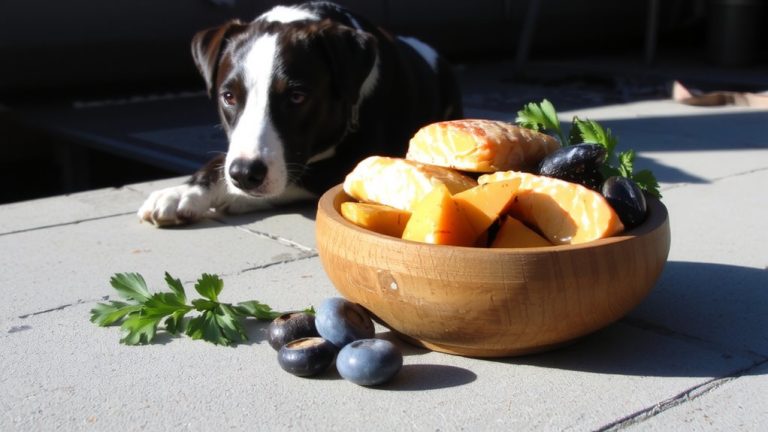
While aging naturally slows protein synthesis, feeding your senior dog a diet rich in digestible, high-quality protein becomes even more vital to maintaining lean muscle. Senior dogs need 50% more protein than younger dogs-aim for 28% to 32% on a dry-matter basis-to maintain muscle. Aging dogs synthesize protein less efficiently, so adequate protein from animal-based sources like chicken, turkey, fish, or lamb is essential for muscle maintenance. Choose senior dog food where these digestible protein sources top the ingredient list; avoid those with “meat by-products” as primary ingredients. Even overweight senior dogs can lose muscle, making high-quality protein vital regardless of body weight. Providing real, easily absorbed protein helps support lean body mass, especially in key areas like shoulders and thighs. Your dog’s ability to maintain muscle depends on consistent, quality nutrition you can trust every day.
Add Omega-3s for Joint and Brain Support
Omega-3 fatty acids like EPA and DHA aren’t just for shiny coats-they’re proven to support joint mobility and mental sharpness in senior dogs, especially when daily intake hits the sweet spot of 700 to 1,500 mg combined. These omega-3s reduce inflammation and slow cartilage breakdown, giving your dog better joint support and comfort. They also promote brain health by maintaining neuronal integrity and supporting cognitive function as your dog ages. A standard 1,000 mg fish oil capsule delivers about 300 mg of EPA and DHA, so your 50-pound senior dog might need 5–10 capsules daily for real impact. While fish oil supplements are effective, introduce them slowly to avoid digestive upset. Always consult your veterinarian before starting high-dose supplements, since EPA and DHA can have blood-thinning effects. With consistent, vet-approved use, omega-3s are a smart addition to any senior dog’s diet.
Match Calories to Your Senior Dog’s Activity Level
Since older dogs often slow down with age, their calorie needs usually drop by 20–40% compared to when they were younger, so matching their food intake to their current activity level is essential for maintaining a healthy weight. Your senior dog likely needs fewer calories, especially if they’re less active. For example, a 50-pound senior dog may only need 700–900 kcal per day. Check the calorie content on food labels-senior diets range from 246 to 408 kcal per cup-so you can make informed choices. If your dog gains weight, practice portion control or switch to a formula lower in calories, around 250–300 kcal/cup. Highly active senior dogs might still need adult-level calories, but most benefit from controlled calories. Proper weight management supports mobility and overall health, so tailor feeding your dog to their real-world activity level, not just their age.
Tailor Nutrition With Your Veterinarian
When your senior dog starts showing signs of slowing down, like less enthusiasm for walks or stiffness after resting, it’s a clear signal to rethink their nutrition-starting with protein. Your senior dog needs higher protein to maintain muscle-optimal levels are 28%–32% on a dry-matter basis-and high-quality animal-based proteins like chicken or fish are best absorbed. But senior dog care isn’t one-size-fits-all, especially with health issues like arthritis. That’s why you should consult your veterinarian before making changes. Omega-3 fatty acids (700–1,500 mg EPA/DHA daily) can reduce inflammation and support muscle, but must be introduced carefully. Your vet can help tailor a plan tailored to meet your dog’s specific needs.
| Nutrient | Goal | Source |
|---|---|---|
| Protein | Maintain muscle | Chicken, fish, turkey |
| Omega-3s | Reduce inflammation | Fish oil, krill oil |
| Calories | Match activity | Adjust based on vet advice |
On a final note
You’ve got this: pick a senior dog food with at least 25% protein from real meat, like chicken or salmon, for lean muscle support, add a fish oil supplement providing 500 mg DHA daily, and match calories to your dog’s activity-around 30–40 kcal per pound of body weight. Work with your vet to tweak portions, especially if mobility or health changes occur. Clear labels, consistent feeding, and small adjustments make a big difference in energy, strength, and long-term wellness.