How to Begin Teaching a Dog to Wait at Doorways Politely
Start with a 1-inch door crack and a loose leash to teach impulse control the moment your dog approaches, using high-value treats like real chicken or cheese. The instant they hesitate, mark it with a “yes” or click, then toss the treat behind them to encourage backing up. Say “wait” right after the marker, reinforcing only calm pauses. Repeat in short, frequent sessions until they consistently pause, then gradually widen the gap to 6 inches, half-open, and fully open. Master this at interior doors first-where success rates exceed 80%-before introducing distractions like jingling keys or doorbells. Practice at three different exits, including the garage and apartment door, slowly increasing wait time by 5–10 second increments while someone walks within 10 feet. Use frozen salmon or roasted chicken in real-world trials to maintain focus. You’ll soon build the foundation for reliable door manners in everyday scenarios. More advanced techniques build seamlessly on this early progress.
We are supported by our audience. When you purchase through links on our site, we may earn an affiliate commission, at no extra cost for you. Learn more. Last update on 19th July 2026 / Images from Amazon Product Advertising API.
Notable Insights
- Start with a 1-inch door opening to allow sight while preventing escape and building impulse control.
- Mark the first pause with a click or “yes” and immediately reward with a high-value treat.
- Toss the treat behind the dog to encourage backing up and reinforce staying in place.
- Introduce the “wait” command the moment the dog hesitates, right after marking the behavior.
- Gradually increase the door opening only after five consistent, successful pauses at each width.
Start With a Tiny Door Crack
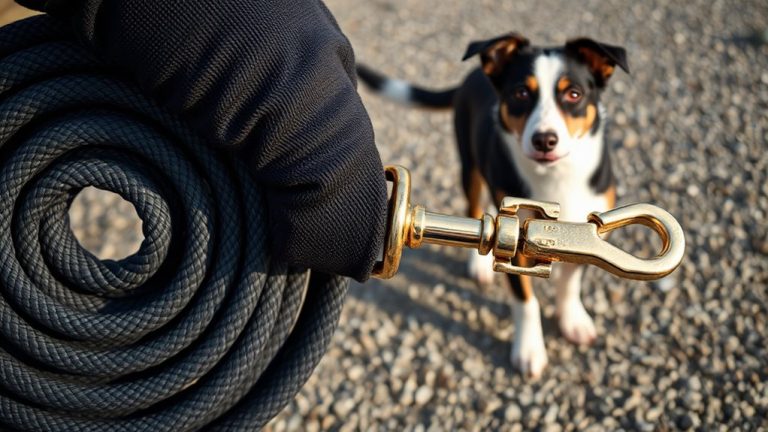
While your dog might be keen to dash out the moment the door starts opening, starting with just a tiny crack-about an inch wide-gives you control and sets them up for success. Use this narrow opening so your dog can see outside but can’t push through, teaching patience from the start. Keep a leash attached for safety, holding it slack unless they lunge-then calmly close the door. This crack size helps you teach “Wait” without overloading them. Repeat in short sessions, aiming for 5 consistent pauses before widening the gap. The leash prevents escapes while reinforcing boundaries. By gradually increasing the door opening only after success, you build reliable behavior. Teach this step thoroughly, and your dog will learn to stay back when the door open-even slightly.
Mark and Reward the First Pause
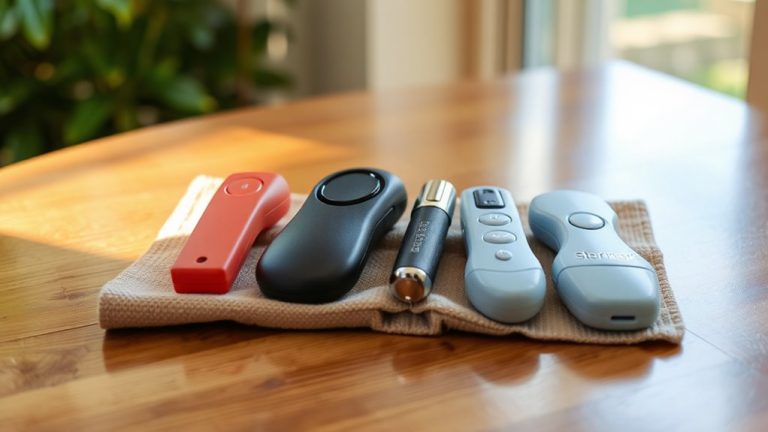
You’ve already taught your dog to stay calm with just a one-inch door opening, and now it’s time to reinforce that self-control by marking and rewarding the first pause. Use a clicker or say “yes” to mark the moment your dog hesitates, even briefly, when you open the door a crack. Immediately deliver a high-value treat behind your dog to encourage backing up and build a positive link to the door opening. Keep your dog on leash with the leash slack like a seat belt-only using it to safely close the door, not to pull. Use a release cue like “okay” to let them move after the reward. Repeat the exercise 5–10 times per session, doing multiple short sessions daily. Consistency strengthens impulse control.
Say “Wait” the Moment They Hesitate
When your dog starts pausing instinctively as you crack the door open, that split-second hesitation is your cue to introduce the “wait” command-say it clearly the moment they begin to hold position, right after marking the behavior with a click or “yes.” Follow immediately with a high-value treat tossed behind them to reinforce backing up, using chicken or cheese bits for strong motivation, and keep the leash loose to maintain a calm, pressure-free experience. You’re teaching them to hesitate just a beat longer each time. Start by marking the moment the door opens, even slightly, and they pause. Once they consistently hold for 2–3 seconds, say “wait” as their cue. Use interior doors first, where success rates exceed 80%. Repeat 5–10 times per session, tossing the treat behind to encourage weight shift. This precise timing builds reliable understanding of the verbal cue “wait.”
Open the Door Wider in Small Steps
After your dog starts pausing reliably at a cracked door for 3–5 seconds, you can begin expanding the gap in controlled increments, starting with just a 1-inch opening-enough to see outside but not let their nose through. This controlled door opening teaches impulse control. Slowly increase the width, only if your dog stays still. Each time you open the door wider, mark the moment they wait with a “yes” or click, then toss a high-value treat behind them. This reinforces staying put instead of lunging forward.
| Door Opening Size | Is It Wide Enough? |
|---|---|
| 1 inch | Just a peek |
| 6 inches | Nose might reach |
| Half-open | Test no movement |
| Fully open | Ready for release |
Gradually increase the amount the door opens, ensuring they remain calm at each stage before making it wider. Never open door wide too soon-wait until your dog is completely comfortable pausing at each step.
Add Distractions and Real-World Practice
Now that your dog consistently waits at a fully opened door with no movement or distractions, it’s time to start testing their self-control in more realistic situations. Begin to add distractions like jingling keys or a doorbell ring only after your dog reliably waits at the front door. Practice wait at the door during real-world practice-train at three different locations, like your garage, apartment exit, or car doors, to teach a dog impulse control across settings. Gradually increase wait duration by 5–10 seconds, adding motion like someone walking past within 10 feet. Use high-value treats, such as frozen salmon or chicken, to maintain focus. Real-world practice strengthens reliability, especially with traffic or passing dogs nearby. Always keep opening the door predictable and calm, reinforcing patience every step. This builds consistency, ensuring your dog stays safe and polite.
On a final note
You’ve got this-start small, reward fast, and stay consistent. Use a treat like Zuke’s Mini Naturals every time your dog pauses, even for a second. Crack the door just an inch at first, then slowly widen it over 5–7 sessions. Aim for 3 short practices daily, each under 2 minutes. Add noises or movement only after 90% success. A leash helps manage slips, and real progress shows within 10 days.