What Low-Oxalate Diets Mean for Cats Prone to Stones
You can protect your cat from calcium oxalate stones by feeding a low-oxalate diet that limits spinach, sweet potatoes, and raspberries-foods with 330–2,300 mg oxalate per 100g-and choosing safer options like cabbage, apples, and white rice. Pair meals with calcium-rich foods to bind oxalates in the gut, and use high-moisture canned food to double urine output, keeping specific gravity under 1.020 and pH above 6.5, which together discourage crystal formation; consistent habits like these shape safer urine chemistry over time.
We are supported by our audience. When you purchase through links on our site, we may earn an affiliate commission, at no extra cost for you. Learn more. Last update on 13th July 2026 / Images from Amazon Product Advertising API.
Notable Insights
- Low-oxalate diets reduce urinary oxalate levels, decreasing the risk of calcium oxalate stone formation in cats.
- Dietary calcium from sources like dairy binds oxalates in the gut, limiting their absorption and excretion in urine.
- High-moisture canned foods dilute urine, helping maintain specific gravity below 1.020 and reducing crystal buildup.
- Urine pH should stay above 6.5 to prevent acidic conditions that promote calcium oxalate crystallization.
- Avoid high-oxalate treats like sweet potatoes and raspberries, and monitor urine regularly with urinalysis.
Why Low-Oxalate Diets Prevent Calcium Oxalate Stones
While your cat’s body produces most of the oxalate found in urine, feeding a low-oxalate diet still plays a key role in preventing calcium oxalate stones by reducing the total oxalate load. Low-oxalate diets help limit dietary contributions, especially when they include adequate calcium to bind oxalate in the gut, lowering its absorption. This means less oxalate ends up in the urine, reducing crystal risk. Pair that with high-moisture, canned foods, and you get dilute urine-aim for a urine specific gravity under 1.020-to keep calcium and oxalate ions from concentrating. Even though dietary oxalate doesn’t drastically raise urinary levels, consistent use of low-oxalate diets supports long-term management. Also, maintaining a urine pH above 6.5 avoids overly acidic conditions that favor calcium oxalate stones, unlike some urinary diets that over-acidify for struvite prevention.
Foods to Avoid and Safer Alternatives for Cats
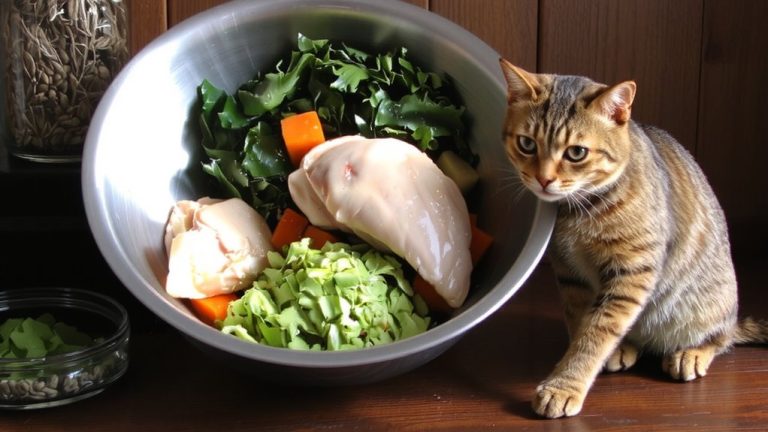
Since managing oxalate intake is key to preventing calcium oxalate stones, you’ll want to keep your cat away from high-oxalate foods like spinach, which ranges from 330 to over 2,300 mg per 100 grams, and Swiss chard, packing about 1,458 mg per 100 grams-both of which can boost urinary oxalate levels and increase crystal risk. Avoid treats with almonds, sweet potatoes, and raspberries, as they’re linked to calcium oxalate urolithiasis. Skip over-the-counter urinary diets that over-acidify urine, since that can worsen urinary crystals and stones. Instead, choose low-oxalate alternatives like cabbage, broccoli, apples, and white rice. Prioritize high-moisture canned foods to keep urine dilute-aim for a specific gravity below 1.020-to reduce stone risk, even when feeding low-oxalate alternatives.
How Diet Shapes Urine Chemistry and Stone Risk
If your cat’s urine stays too concentrated, calcium oxalate crystals can take hold, but you can take charge with the right diet-starting with high-moisture canned food, which doubles urine output compared to dry kibble and keeps urine specific gravity below 1.020. This dilute urine reduces mineral buildup and helps prevent calcium oxalate bladder stones. You’ll also want to maintain urine pH above 6.5; overly acidic urine spikes crystal risk. Therapeutic diets manage this balance carefully, while also using ideal calcium levels to bind oxalates in the gut, so less enters the urine. Thanks to RSS technology, these prescription formulas keep calcium oxalate in the low metastable range-meaning crystals are far less likely to grow. With consistent feeding, you’ll see more frequent urination, better flushing of stone-forming minerals, and improved urinary health overall-no guesswork needed.
Daily Habits That Reduce Oxalate Stone Risk
Because your cat’s daily routine plays a key role in urinary health, small, consistent habits can make a big difference in lowering oxalate stone risk. Feeding a high-moisture canned diet helps dilute urine, keeping urine specific gravity below 1.020 and reducing calcium oxalate crystal formation. You can further support urinary health by combining oxalate-containing foods with dietary calcium, like dairy, which binds oxalates in the gut and limits absorption. Avoid over-the-counter “urinary health” diets that over-acidify urine (pH below 6.5), since acidic conditions actually favor calcium oxalate stones. Instead, focus on encouraging drinking by providing fresh water all day-this boosts urine volume and flushes out crystals. Regular urinalysis checks help track crystalluria and pH, letting you adjust feeding early. With RSS technology guiding decisions, you’ll keep urine in the low metastable range, where stones are less likely to form.
On a final note
You’re keeping your cat safe by choosing a low-oxalate diet-dry food with under 15 mg/100 kcal oxalate helps prevent calcium oxalate stones, say vets. Replace high-spinach or beet-containing brands with controlled formulas like Hill’s p/d or Royal Canin Urinary SO. You’re also boosting water intake, feeding wet food twice daily, and checking urine pH at home. Real users report fewer vet trips, clearer urine, and stone reduction in 8 weeks. Stay consistent, monitor twice weekly, and you’ll see long-term gains.