How to Choose a Food That Supports Thyroid Health in Cats
Choose a high-protein, iodine-restricted canned food with real meat like chicken or liver as the first ingredient to support your cat’s thyroid health, since hyperthyroidism speeds up metabolism and breaks down muscle. Aim for 40–50% protein on a dry matter basis and avoid dry kibble with over 30% carbs. Stick to formulas with ≤0.32 ppm iodine-like Hill’s y/d-to lower thyroid hormone levels. Skip fish, soy, and plastic bowls to prevent worsening symptoms. Feed this diet exclusively for best results, and you’ll soon discover how balanced nutrition can transform your cat’s well-being.
We are supported by our audience. When you purchase through links on our site, we may earn an affiliate commission, at no extra cost for you. Learn more. Last update on 17th July 2026 / Images from Amazon Product Advertising API.
Notable Insights
- Choose iodine-restricted foods with ≤0.32 ppm iodine to help control thyroid hormone production.
- Select high-protein diets (40–50% dry matter) using real meat as the primary ingredient.
- Opt for canned pâté formulas with low carbohydrates to support muscle maintenance and metabolism.
- Avoid fish, fish by-products, and soy, which can interfere with thyroid function.
- Use stainless steel or ceramic bowls and avoid plastic storage to prevent endocrine-disrupting chemical exposure.
Why Hyperthyroidism Changes Your Cat’s Nutritional Needs
Your cat’s hyperthyroidism ramps up their metabolism, burning calories faster than normal and often leading to weight loss and muscle wasting-even if they’re eating more than usual. This increased metabolic rate means cats need more protein and calories daily to maintain body condition. High levels of thyroid hormones accelerate protein breakdown, so feeding a diet rich in high-quality, meat-based protein is essential. Many affected cats also develop kidney disease, making low-phosphate formulas beneficial. Iodine-restricted prescription diets-containing ≤0.32 ppm iodine-help control thyroid hormone production by limiting raw material for synthesis. Pairing a therapeutic prescription diet with high-moisture canned cat food supports hydration and metabolic balance, especially since hyperthyroidism increases thirst and urine output.
Prioritize High-Quality Animal Protein to Prevent Muscle Loss
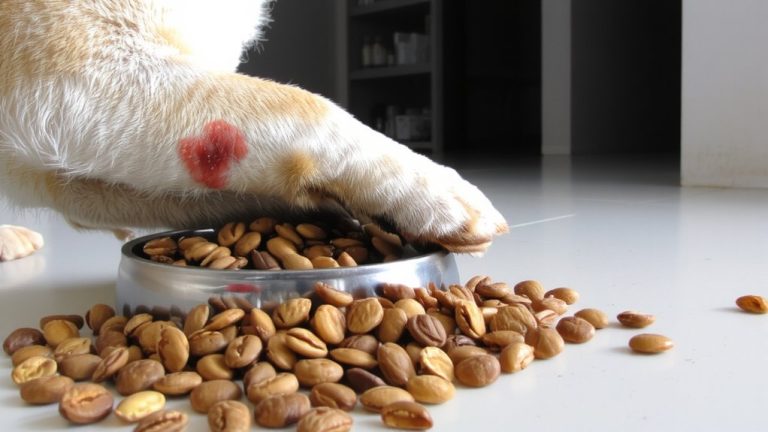
Feeding a high-protein diet isn’t just about filling your cat’s bowl-it’s about fighting muscle loss head-on, especially when hyperthyroidism revs their metabolism into overdrive. As obligate carnivores, your cat needs high-quality animal protein to maintain muscle mass. Hyperthyroidism in cats accelerates protein breakdown, so skimping on protein means losing lean tissue fast. Opt for canned food with real meat, not meat by-products, as the primary ingredient. High protein levels (40–50% on a dry matter basis) support hyperthyroid cats best, while dry cat food often packs too many carbs-over 20%-which can worsen muscle loss.
| Food Type | Protein Source | Carb Level |
|---|---|---|
| Pâté canned | Chicken, liver | Low |
| Gravy canned | Meat by-products | Medium |
| Dry cat food | Corn, soy, meat meal | High |
Choose Canned Food to Fight Dehydration and High Carbs
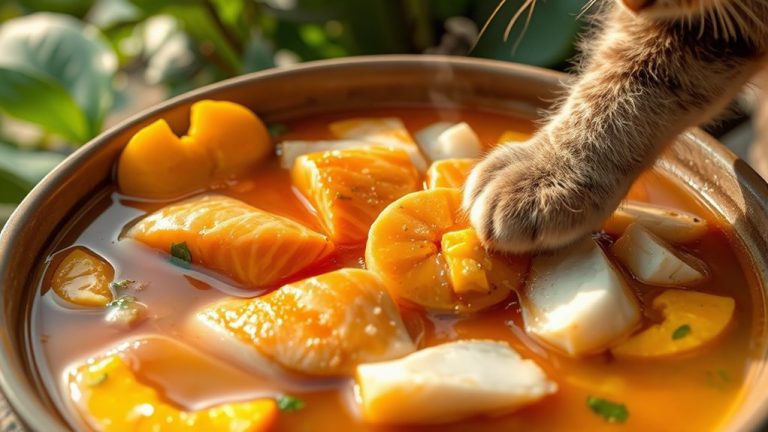
Moisture matters when it comes to managing hyperthyroidism, and canned food delivers where it counts-helping your cat stay hydrated without needing to drink more water. The high water content in canned food combats dehydration caused by increased urine output and elevated metabolism. Since cats are obligate carnivores, wet pâté formulas offer a low-carbohydrate profile, typically under 10% on a dry matter basis, versus dry foods that often contain high carbs-sometimes over 30%. Feeding low-carbohydrate, high-moisture meals supports hydration and metabolic stability, reducing strain on already taxed systems. High carbs from dry food can disrupt glucose metabolism, raising diabetes risk, especially in cats with thyroid issues. You’ll find wet pâté easier to portion and less reliant on plant-based fillers, making it a practical, species-appropriate choice. Stick with canned food for better hydration and long-term thyroid health.
Feed Only Iodine-Restricted Food for Thyroid Control
Canned food sets the foundation for hydration and low-carb intake, but managing hyperthyroidism effectively takes one step further-an iodine-restricted diet. For cats with hyperthyroidism, controlling thyroid production means feeding a prescription diet strictly limited to 0.32 parts per million iodine. Hill’s Prescription Diet y/d is formulated to meet this standard in both canned and dry forms, helping to normalize thyroid levels. When your cat is strictly fed this iodine-restricted diet, T4 thyroid hormones typically begin dropping within three weeks, with high thyroid hormone levels resolving over months. No other foods, treats, or prey can be allowed-anything outside the diet may disrupt progress. Many cats on this plan avoid methimazole or radioactive iodine therapy altogether. Stick to the prescription diet, and you give your cat the best shot at long-term thyroid control.
Skip Fish, Soy, and Plastic Bowls: Harmful Ingredients to Avoid
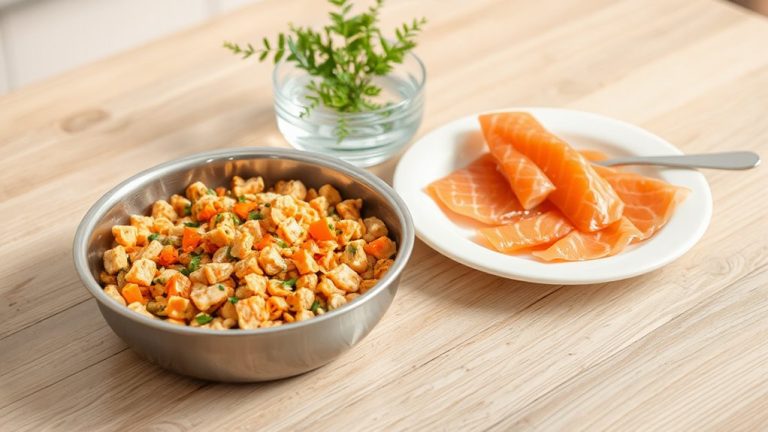
While managing your cat’s thyroid health starts with the right prescription diet, what you leave out matters just as much as what you put in-so skip fish-based foods entirely, since even small amounts of fish or fish by-products can deliver excessive iodine, sometimes exceeding 1,000 ppm in popular brands, which fuels overactive thyroid production. You should also avoid soy, as it interferes with thyroid hormones and can worsen hyperthyroidism. Ditch plastic bowls, too; they may leach endocrine-disrupting chemicals like BPA and phthalates that mimic hormones and disrupt function. Even storing your cat’s iodine-restricted food in plastic containers risks contamination. Choose BPA-free canned food instead, and never serve meals in plastic bowls. While organ meats are often nutritious, they’re best limited in thyroid disease. Stick to vet-approved options for stable, lasting health.
Feed Just One Diet to Stabilize Hormone Levels
If you’re aiming to bring your cat’s hyperthyroidism under control, sticking to a single, consistent diet is non-negotiable-your cat needs to eat only an iodine-restricted prescription diet with 0.32 ppm iodine or less to effectively curb excess thyroid hormone production. Exclusive feeding of Hill’s Prescription Diet y/d can normalize T4 thyroid hormones in just three weeks. Even small treats or outdoor prey can disrupt iodine balance, so consistency is key. A canned diet is preferred over dry food for added hydration, supporting kidney function. Within the canned options, pâté-style food is better than gravy varieties due to lower carbohydrate content, promoting stable metabolism.
| Form | Why It Matters |
|---|---|
| Prescription diet | Required for precise iodine control |
| Canned diet | Boosts moisture intake |
| Pâté-style food | Lower carbohydrate content |
| Exclusive feeding | Guarantees effective T4 reduction |
Get Veterinary Approval Before Starting a Thyroid Diet
Before diving into an iodine-restricted diet for your cat, you’ll need a vet’s okay-it’s not just a suggestion, but a critical step to confirm hyperthyroidism through a T4 blood test and guarantee your cat’s overall health can handle the change. A veterinary diagnosis based on elevated T4 levels is essential, and your vet will check for concurrent diseases like diabetes or kidney disease using a CBC, chemistry panel, and urinalysis. Only under veterinary supervision should you start an iodine-restricted diet like Hill’s y/d, which contains 0.32 ppm iodine or less. Without proper screening, you risk masking symptoms while serious conditions progress unchecked. Your vet assures the diet safely manages thyroid hormone balance without harming other organs. This isn’t just about food-it’s about accurate testing, expert guidance, and long-term wellness.
On a final note
You’re giving your cat the best shot at feeling good by choosing a high-protein, iodine-restricted canned food like Hill’s y/d or Royal Canin Veterinary Diet, which vets recommend for thyroid control. Skip fish-based diets and plastic bowls to avoid endocrine disruptors. Stick to one consistent food to stabilize T4 levels, help maintain muscle, and prevent dehydration-critical when managing hyperthyroidism. Always confirm with your vet, because proper testing and supervision guarantee real progress.