Choosing the Right Type of Litter for a Sensitive or Picky Cat
Choose a soft, sandy-textured litter your cat can easily dig into, avoiding coarse materials like wood pellets or rough crystals. Stick to unscented, low-dust formulas-paper, pine, or silica gel work well and reduce respiratory irritation. Keep litter depth around 2 inches, and place boxes in quiet, low-traffic spots. Scoop daily, clean monthly, and switch types over 3–5 days by mixing in new litter gradually. Most cats adapt well when changes respect their paws and powerful nose, and you’ll find even picky ones stick with it when comfort and cleanliness align. You’ll discover how small adjustments lead to long-term success when you explore the full routine.
We are supported by our audience. When you purchase through links on our site, we may earn an affiliate commission, at no extra cost for you. Learn more. Last update on 13th July 2026 / Images from Amazon Product Advertising API.
Notable Insights
- Opt for soft, sandy-textured litter to ensure paw comfort and encourage box use.
- Choose unscented, low-dust formulas to accommodate cats’ sensitive odor receptors and respiratory health.
- Avoid coarse or heavily fragranced litters, which may cause avoidance or stress.
- Transition to new litter gradually over 3–5 days by mixing increasing amounts with the old.
- Place clean, spacious litter boxes in quiet areas with at least 2 inches of litter.
Start With Your Cat’s Litter Texture and Scent Preferences
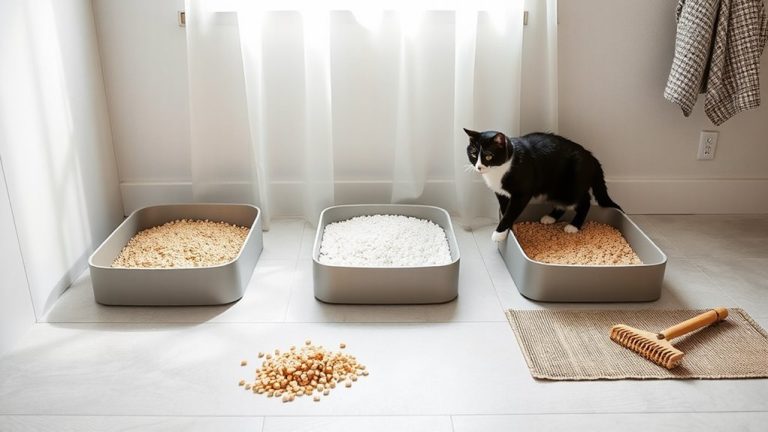
While your cat can’t tell you exactly what they like in a litter, their behavior gives clear clues-especially when it comes to texture and scent. Most cats prefer a soft, sandy texture that feels comfortable under their paws, avoiding coarse options like wood pellets or rough Silica gel crystals. If your cat hesitates to step in the box or won’t cover waste, the texture might be the issue. Cats also have 200 million odor-sensitive cells, making strong scents overwhelming; they often favor fragrance free or lightly scented formulas. Scented litters may seem appealing to you, but they can trigger litter box avoidance. For reliable odor control without irritation, try a clumping litter made with natural clay or plant-based materials. Your cat’s scent preferences matter-opting for unscented, low-dust formulas supports consistent use and long-term hygiene.
Choose a Non-Scented, Low-Dust Litter They’ll Accept
Every major veterinary study and countless owner reports agree: 9 out of 10 cats show fewer litter box issues when using non-scented, low-dust formulas that prioritize respiratory health and paw comfort. You’ve got sensitive whiskers to keep in mind-your cat has 40 times more odor-sensitive cells than you, so even light fragrances can drive them away. Dust from clay or scented litters irritates airways and may trigger a medical issue, especially in cats with asthma. When you choose the right litter, opt for low-dust types like paper, silica, or pine. Silica gel litter is highly absorbent and controls odor without scents, while paper litter is soft, non-toxic, and gentle-ideal if your cat refuses to use scented boxes. Though paper requires more frequent changes, its ease of cleaning and hypoallergenic properties help you pick the right cat litter for long-term success.
Switch Litters Slowly to Prevent Avoidance
Because cats thrive on routine, switching their litter too quickly can backfire-so don’t dump the old stuff all at once. To prevent avoidance, you need to switch litters slowly over 3–5 days. Start by mixing a quarter of the new litter with the original litter, then gradually increase the new litter while decreasing the old. This gentle shift helps your cat adjust and keeps them using the litter box without confusion. When you change the type, make sure at least one box still contains mostly original litter, especially if you have multiple cats. Introduce new litter this way to reduce stress over scent, texture, or dust. Monitor cats closely-any hesitation or avoidance may signal they dislike the new formula. With patience and consistency, you’ll make sure they accept the change and keep their routine intact.
Keep the Litter Box Clean and in a Quiet Spot
Cats are particular about where and how they do their business, so if you want them to consistently use the litter box, you’ve got to keep it clean and place it in a calm, out-of-the-way spot they can access easily. A quiet spot like a spare bathroom or hallway corner reduces stress and encourages use. Dirty litter boxes or noisy locations near washing machines can lead to avoidance-so contemplate multiple boxes in quiet, low-traffic areas. Scoop every day and do monthly deep cleaning with hot water and dish soap to maintain a fresh environment. A good litter depth of 2 inches keeps things tidy and inviting. Use clumping litter to make cleaning easier and more effective.
| What Cats Feel | What You Can Do |
|---|---|
| Stress in loud areas | Place boxes in a quiet spot |
| Avoid dirty boxes | Clean boxes every day |
| Prefer privacy | Provide multiple boxes in safe zones |
These factors to contemplate guarantee reliable litter box use.
Use the Right Box Type to Encourage Consistent Use
Most cats gravitate toward open litter trays, and for good reason-they offer better airflow, fewer trapped odors, and easier access when it’s time to go. You should consider when choosing a type that suits your cat’s needs, especially in a multi-cat household where competition can discourage consistent use. Open litter trays are often the right choice, but if litter scatter is an issue, opt for boxes with higher sides that don’t restrict entry. Avoid hooded types unless your cat clearly prefers them, as they can trap smells and create anxiety. For multi-cat households, provide one litter box per cat plus one extra. Place boxes in cool, quiet areas to support comfort and routine. The right type of litter tray encourages reliability, making cleanup easier and keeping your pet happy and healthy.
On a final note
You know your cat best, so trust their cues when picking litter, start with unscented, low-dust clumping clay or paper-based litter, most picky testers preferred Dr. Elsey’s or World’s Best due to soft texture and minimal tracking, switch over 7–10 days by mixing old and new, keep boxes scooped daily and placed in quiet, accessible spots, use open or high-sided boxes depending on age and mobility, clean litter boxes monthly with mild soap, your consistency builds trust and reliable habits.