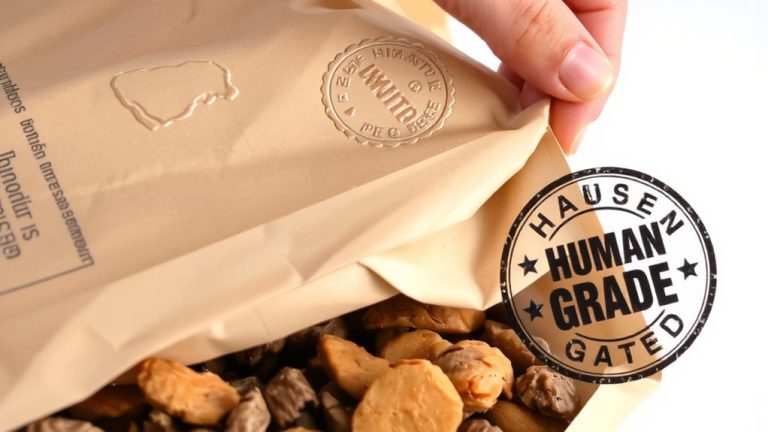
What Species-Appropriate Means for Raw Dog Food Labeling
“Species-appropriate” on raw dog food labels means the diet is made to mimic what dogs evolved to eat-think 80% or more raw meat, bones, and organs, with no grains, legumes, or synthetic additives. It highlights high animal protein and natural ingredients, but isn’t regulated by the FDA or AAFCO, so claims aren’t verified. While it sounds logical, it often relies on outdated ideas of canine ancestry. Modern dogs can thrive on varied diets, including digestible carbs. Look for foods labeled as meeting AAFCO nutrient profiles for complete nutrition, especially if feeding long-term-there’s more to weigh for balanced meals.
We are supported by our audience. When you purchase through links on our site, we may earn an affiliate commission, at no extra cost for you. Learn more. Last update on 19th July 2026 / Images from Amazon Product Advertising API.
Notable Insights
- “Species-appropriate” suggests raw dog food mimics ancestral diets with high animal protein, bones, and organs.
- The term is unregulated by FDA or AAFCO and lacks a standardized legal or scientific definition.
- It often implies biologically natural feeding but relies on outdated assumptions about canine evolution.
- Use of “species-appropriate” on labels does not guarantee nutritional completeness or safety.
- To ensure adequacy, look for an AAFCO nutritional adequacy statement, not just marketing terms.
What Does “Species-Appropriate” Mean on Raw Dog Food Labels?
When you see “species-appropriate” on a raw dog food label, it’s meant to tell you the food follows what dogs are naturally built to eat-think raw meat, bones, and organs, just like their ancestors thrived on. This term suggests a biologically appropriate diet high in animal protein, typically 80% or more from raw sources, and low in carbohydrates. You’ll find whole foods like muscle meat, organ meat, and ground bone in commercially prepared raw diets such as Primal or Stella & Chewy’s. These raw food options avoid grains, legumes, and synthetics, aiming to mirror a natural canine diet. While labeled Species Appropriate, these diets aren’t required to meet AAFCO feeding trials or prove they’re nutritionally balanced. That means you still need to verify if the food meets AAFCO nutrient profiles to guarantee complete, balanced nutrition for long-term feeding.
Is “Species-Appropriate” a Regulated or Scientific Term?
So, is “species-appropriate” a label you can trust, or just clever marketing? The truth is, “species-appropriate” isn’t a regulated term-neither the FDA nor AAFCO defines or enforces it in pet food labeling. That means brands can use it freely, without scientific proof or adherence to nutrient profiles. Unlike diets tested in feeding trials, those labeled species-appropriate aren’t required to meet your dog’s biological needs through research. It’s mostly marketing language suggesting a diet resembles what dogs evolved to eat, but there’s no standard behind it. AAFCO doesn’t include the phrase in official guidelines, and no required tests verify its claims. You’re trusting the brand, not science. Always check if a raw diet meets AAFCO nutrient profiles through testing, not just appealing terms. Your dog’s health depends on real nutrition, not buzzwords.
Do Raw Diet Claims Rely on Outdated Canine Myths?
You can’t trust every label that claims to know what your dog “naturally” needs, especially when those claims lean on the idea that dogs should eat like wolves. That outdated view ignores canine evolution and domestication, which shaped dogs to digest starch digestion far better than their wolf ancestors. Today’s diet demands reflect omnivorous adaptation, not obligate carnivory. Yet many raw brands use “species-appropriate” or “biologically appropriate” to market prey-model meals high in crude protein and crude fat, despite AAFCO not defining those terms. These labels often rely on myth, not science. While raw feeding can be balanced, it’s not inherently superior. Evolution has changed dogs’ nutritional needs, and modern nutrition must keep pace. Don’t assume raw means right-check for AAFCO nutrient profiles, not just storytelling about ancestry.
How to Identify a Nutritionally Complete Raw Food?
While not all raw diets are created equal, you can spot a nutritionally complete one by checking for a clear AAFCO statement on the label-specifically, “formulated to meet the nutritional levels established by AAFCO” for a defined life stage like growth, reproduction, or adult maintenance. If the label states it’s a complete and balanced diet, it must include essential nutrients tailored to your pet’s nutritional needs. Look for added vitamins and minerals, since raw ingredients alone often lack balance. The guaranteed analysis will list protein, fat, fiber, and moisture levels, plus key nutrients. Always follow feeding directions to meet daily requirements.
| Feature | What to Check | Why It Matters |
|---|---|---|
| AAFCO Statement | “Formulated to meet AAFCO” | Confirms nutritionally complete profile |
| Guaranteed Analysis | Protein, fat, fiber, moisture | Guarantees essential nutrients meet minimums |
| Vitamins and Minerals | Added supplements | Prevents deficiencies |
| Feeding Directions | Amount per weight/life stage | Supports proper daily intake |
| Label States Life Stage | Growth, adult, etc. | Matches diet to pet’s needs |
Do ‘Complete’ Raw Diets Meet AAFCO Standards?
Ever wonder what really makes a raw diet “complete”? Not all raw diets meet AAFCO standards, even if labeled that way. For a raw diet to be truly balanced and complete, it must either meet AAFCO nutrient profiles or pass feeding trials. Commercial raw diets claiming to be “complete and balanced” must include a nutritional adequacy statement based on one of these methods. Many rely on nutrient analysis instead of feeding trials, which is allowed under AAFCO guidelines. That said, formulation validation is key-without it, the diet’s claims aren’t backed. Homemade raw diets, even if called complete, usually fall short because they lack proper analysis and peer-reviewed oversight. You’re better off choosing a commercial raw diet with a clear nutritional adequacy statement referencing AAFCO standards. It’s the surest way to guarantee your dog gets the right nutrients.
On a final note
You can trust “species-appropriate” claims only if backed by AAFCO nutrient profiles, not marketing buzz, so always check the label for “complete and balanced” wording, feeding trials, or laboratory analysis, because raw diets often lack calcium, vitamin D, or essential fatty acids, and real-world testers report picky eaters thrive only when formulas hit precise ratios-like 80% muscle meat, 10% bone, 10% organs-consistent with canine biology and nutritional science.