Creating a Quiet Retreat Space for a Skittish New Kitten
Pick a small, quiet room under 100 square feet-like a bathroom or spare bedroom-for your skittish kitten. Set up covered beds, a cardboard box, or a carrier with the door open every 10 feet, plus a fabric tunnel for quick escapes. Place food and water at least 6 feet from the litter box, in separate corners. Use a Feliway diffuser continuously-it cuts stress in 90% of cats within a week. Play soft classical music for 30–60 minutes daily to ease fear of household sounds. Drape a towel over part of a dog crate for a cozy, non-trapping hideout. Avoid deep, hard-to-reach spaces where accidents might happen. Keep essentials in one corner to build routine. Once your kitten shows forward ears, slow blinks, and a high tail consistently for three days, you’ll know they’re ready to safely experience more of your home.
We are supported by our audience. When you purchase through links on our site, we may earn an affiliate commission, at no extra cost for you. Learn more. Last update on 19th July 2026 / Images from Amazon Product Advertising API.
Notable Insights
- Choose a small, quiet room under 100 sq ft, like a bathroom or spare bedroom, to minimize overstimulation.
- Provide enclosed hiding spots such as cardboard boxes, covered beds, or accessible carriers for security and retreat.
- Place food, water, and litter box in separate areas at least 6 feet apart to match natural feline habits.
- Use soft background sounds and a feline pheromone diffuser like Feliway to reduce stress and build comfort.
- Gradually expand space only after observing confident behaviors like slow blinks and forward ears for three days.
Pick a Quiet Room for Your Fearful Kitten
Start by choosing a small, quiet room-like a bathroom or spare bedroom-that’s under 100 square feet, since tight, calm spaces help skittish kittens feel safer and reduce overstimulation. This small room becomes a safe space where your fearful kitten can slowly adjust without stress. Keep the quiet room free of heavy furniture and deep hiding spots to prevent accidents and make access easy. Position the litter box away from food and water-ideally 3 feet apart-to encourage cleanliness and exploration. Place essentials in a corner to create a predictable routine. A large dog crate inside can double as a secure safe place, giving structure while protecting the kitten. Spend time nearby daily, talking softly. Scared kittens learn fastest when they associate the quiet room with calm, consistent care. This quiet room setup lays the foundation for trust.
Set Up Hiding Spots and a Safe Retreat
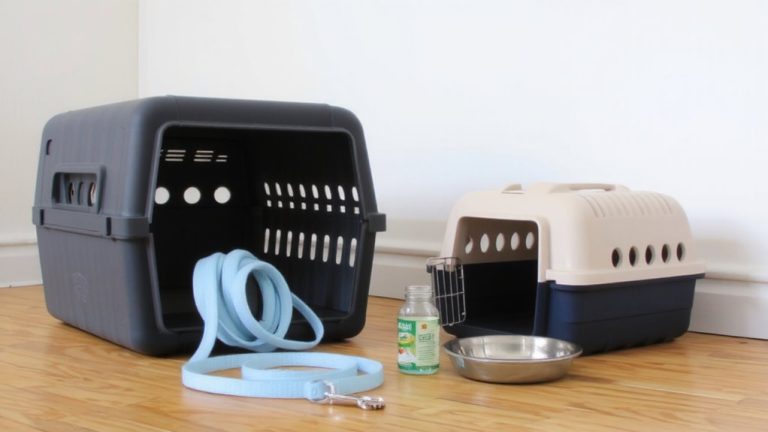
Den-like security is key for a skittish kitten to feel safe, so set up enclosed hiding spots the moment you prepare the quiet room. Place a covered bed, cardboard box, or carrier in your safe room every 10 feet to provide secure hiding spaces. Leave the carrier door open and zip-tied back so your kitten can enter freely and retreat without risk. Add a fabric tunnel for quick access to safety and low-exposure observation. Drape a towel or blanket over part of a dog crate to create a dim, sheltered retreat that reduces stress from visual stimuli. These enclosed, den-like zones help your kitten feel safe during early acclimation. Every hiding space should be easily accessible, non-trapping, and comfortable. With multiple secure options, your kitten will gradually relax and begin exploring with confidence.
Stock Food, Water, and Litter Away From Each Other
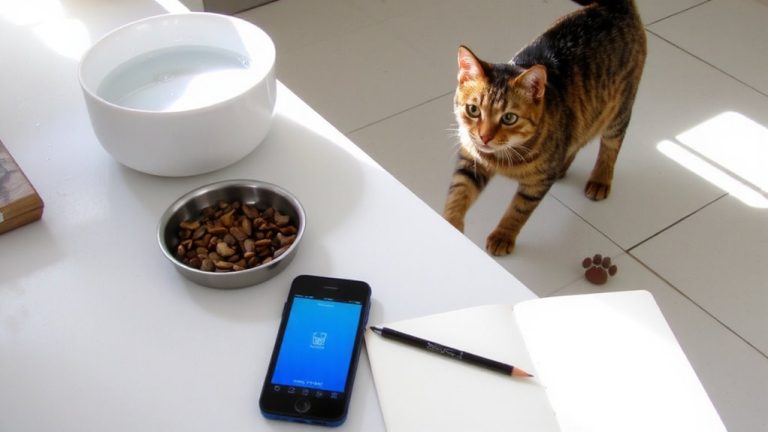
When setting up your kitten’s safe room, keep food, water, and litter well separated-position the food and water bowls on one side of the space and the litter box at least 6 feet away on the opposite side, ideally in a quiet corner. This spatial separation mimics natural feline behavior, as cats avoid eating near waste. In your confined space, guarantee visual separation by using furniture or baby gates to create distinct zones. Choose a kitten-proofed bathroom or bedroom for easy control. The separation reduces stress and supports a consistent daily routine. Fresh food and water should be refilled daily, and the litter box scooped each morning to maintain hygiene. Over time, this clear division strengthens your kitten’s sense of security, helping them adjust faster. Even when expanding their area, maintain these zones-cats rely on routine and clean, separated resources to thrive.
Use Soft Sounds and Pheromones to Calm Your Kitten
While your kitten settles into their new space, soft sounds and calming scents can make a real difference in reducing stress and building confidence. A fearful kitten is generally overwhelmed by silence or sudden noise, so make sure background household sounds play at low volume-try leaving a TV or radio on for several hours daily. This helps kittens learn that everyday noises aren’t threats. Add classical music for 30–60 minutes to encourage relaxation; studies show it lowers heart rate in anxious pets. For scent, use a feline pheromone diffuser like Feliway, plugged in continuously. Clinical trials found 90% of cats show less stress within a week. Spray pheromone products on bedding or in hiding spots to help your new kitten feel secure. These steps create a calming environment, so your kitten isn’t just hiding-they’re learning to feel safe.
Expand Access as Your Kitten Gains Confidence
How do you know when it’s time to let your kitten explore beyond their safe room? You’ll know your kitten gains confidence when you see consistent behavior and relaxed body language-forward ears, slow blinks, tail held high-for three days straight. Then it’s time to expand access. Start by introducing one new room at a time, always including a safe space, litter box, food, and water. Use treat trails or wand toys to encourage gentle exploration, especially during low-traffic times like early morning or late evening. Watch their exploration patterns closely-if they freeze or hide more than 20 minutes, return them to their safe room. Let them move freely, never forcing or blocking escape routes. This supports natural curiosity while building trust, one calm, confident step at a time.
On a final note
You’ve got this. Keep the room quiet, with a litter box, food, and water spaced apart-ideally 3 feet between each. Add a cozy hide like the K&H EZ Retreat, and plug in a Feliway diffuser to ease stress. Speak softly, avoid sudden movements. Most skittish kittens settle in 3–5 days with consistent, gentle handling. Once confident, let them explore more space gradually, one room at a time.