Best Homemade Food for Dogs With Bladder Stones
Know your dog’s stone type first-struvite, calcium oxalate, or cystine-because the right homemade food depends on it. Mix in 25ml water per 100g food to hit a urine specific gravity below 1.020, and use low-oxalate veggies like zucchini and green beans. Pick lean turkey or chicken, and add bone broth up to four times weekly. Avoid corn, rice, and carrots. Include plain organic yogurt 2–3 times weekly, and keep urine pH in check-then see how small tweaks can make a big difference.
We are supported by our audience. When you purchase through links on our site, we may earn an affiliate commission, at no extra cost for you. Learn more. Last update on 19th July 2026 / Images from Amazon Product Advertising API.
Notable Insights
- Always confirm bladder stone type through veterinary lab analysis before selecting a homemade diet to avoid worsening the condition.
- Formulate high-moisture meals with at least 80% water or broth to dilute urine and reduce stone formation risk.
- Choose appropriate proteins like chicken, turkey, or fish based on stone type, avoiding red meat and dairy for cystine cases.
- Include low-oxalate vegetables such as zucchini and green beans while excluding high-oxalate options like carrots and potatoes.
- Support urinary health with bone broth and probiotic-rich foods like organic yogurt or kefir 2–3 times weekly.
Know Your Dog’s Bladder Stone Type
While you might be keen to start adjusting your dog’s meals right away, knowing the exact type of bladder stone they’re dealing with is the vital first step-because feeding the wrong diet can actually make things worse. Your dog’s urinary health hinges on identifying whether they have struvite stones, calcium oxalate stones, or less common types like cystine or urate stones. Struvite stones often dissolve with prescription diets that acidify urine and restrict magnesium, phosphorus, and protein. But calcium oxalate stones won’t dissolve with food-surgery or urohydropropulsion is needed. Cystine stones require low-sodium, low-protein meals to prevent bladder stones from recurring. Accurate diagnosis through veterinary lab analysis is essential. You can’t rely on symptoms alone. Matching your dog’s homemade food to their specific stone type is vital-otherwise, you could accidentally fuel stone growth instead of fighting it.
Hydrate to Dilute Urine and Prevent Stones
Diluting your dog’s urine is one of the most effective ways to prevent bladder stones, and increasing hydration starts with what you feed and how you serve it. You’ll want to hydrate your dog from the inside out by boosting water intake, especially if they eat kibble, which has just 9%–11% moisture. Add 25ml of water per 100g of food to help dilute urine and keep urine specific gravity below 1.020. This reduces mineral concentration and lowers the risk of calcium oxalate, cystine, and struvite stones. Serve bone broth-25ml per 10kg up to four times weekly-to encourage drinking and support urinary tract health. While bone broth won’t directly alter urine pH, it adds appealing moisture. Use water fountains or multiple bowls to promote consistent hydration, helping maintain dilute urine and protect against stone recurrence.
Feed Low-Oxalate, High-Moisture Fresh Foods
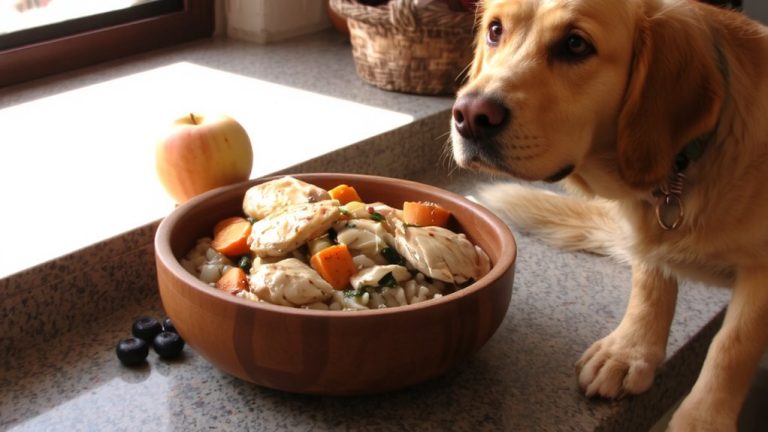
A fresh, high-moisture diet is your best tool for keeping your dog’s urine diluted and reducing the risk of bladder stones, especially calcium oxalate and struvite crystals. When preparing homemade dog food, aim for at least 80% moisture by adding 25ml water per 100g of food-this simple step helps prevent stone formation in dogs. Choose low oxalate veggies like zucchini, cucumbers, and green beans, and skip high-oxalate options such as carrots and potatoes. Your dog food for bladder health should also include hydrating bone broth-25ml per 10kg body weight, up to four times weekly. This supports urinary health without raising stone risk. Avoid corn, wheat, and rice, which can disrupt urine pH and gut balance. A high moisture, low oxalate homemade diet gives your dog the best chance to stay stone-free.
Choose the Best Protein for Your Dog’s Bladder Stones
You’ve already taken a big step by focusing on high-moisture, low-oxalate foods to keep your dog’s urine dilute and reduce crystal formation, and now it’s time to fine-tune the protein choices in their diet based on the type of bladder stone they’re prone to. For struvite and calcium oxalate uroliths in dogs, feeding animal-based proteins like turkey, chicken, or fish supports treatment and prevention-struvite cases benefit from acidic urine, so raw ground turkey helps maintain a pH of 6.0–6.5. For calcium oxalate stones, include small amounts of organ meat like liver to balance calcium-to-phosphorus ratios. Avoid high-purine organ meats and seafood for urate-prone dogs-stick to low purine diets using eggs or yogurt. Never feed your dog red meat or dairy if they form cystine stones. Canned sardines or 25ml bone broth per 10kg (up to four times weekly) boost hydration, critical in any stone-forming dog’s diet.
Control Minerals That Cause Crystals
Since mineral imbalances can tip the scales toward crystal formation, keeping a close eye on what’s in your dog’s bowl is essential for managing bladder stones. Your dog’s diet directly affects urinary care and the prevention of uroliths. Tailor their food to combat specific Risk Factors: struvite crystals thrive in alkaline urine, so include acidifying foods like raw meat to keep your dog’s urine pH between 6.0 and 6.5. Avoid high-silica ingredients such as corn gluten. Dilute urine reduces crystal growth-add 25ml water per 100g food. For cystine stones, limit methionine-rich veggies like broccoli and mushrooms.
| Stone Type | Key Dietary Fix | Urine Goal |
|---|---|---|
| Calcium Oxalate | Limit vitamin C, increase water | SG <1.020 |
| Struvite | Acidifying proteins | pH 6.0–6.5 |
| Cystine | Avoid certain veggies | Dilute urine |
| Silica | Skip corn gluten | Alkaline, diluted |
Support the Urinary Microbiome With Probiotics
Managing your dog’s mineral intake sets the stage for healthy urine composition, but what you feed your dog also plays a direct role in shaping the microbial environment of the urinary tract. Supporting the urinary microbiome with probiotics helps maintain a balanced gut microbiota, which in turn reduces risks of bacterial infections that contribute to bladder stones. Struvite stone formation often starts with UTIs, so feeding natural sources like organic yogurt, kefir, or goat’s milk 2–3 times weekly can promote beneficial flora. These foods support microbial diversity, helping limit pathogenic overgrowth, especially after antibiotic use, which can disrupt normal gut function and increase resistant E. coli. A healthy urinary microbiome influences metabolites that aid siderocalin’s role in blocking bacterial growth. Consistent, real-food probiotic support is a practical step you can take to protect your dog’s urinary health long-term.
Partner With Your Vet for a Custom Plan
While every dog’s case is unique, working closely with your vet guarantees you’re building a plan tailored to your pet’s specific stone type and health needs-because what works for struvite stones could worsen calcium oxalate issues. Always consult a veterinarian to confirm stone type via urinalysis or stone analysis, especially since struvite stones often stem from a urinary tract infection. To create a safe, effective custom plan, partner with your vet and work with a veterinary nutritionist to balance calcium, phosphorus, and protein. You’ll also need to monitor urine pH regularly using VetStixTM strips, adjusting the diet as needed.
| Stone Type | Target pH | Key Action |
|---|---|---|
| Struvite | 6.0–6.5 | Acidify urine, treat infection |
| Calcium Oxalate | 6.5–7.0 | Limit oxalates, surgery often needed |
| Cystine | 6.5–6.75 | Alkalinize slightly, hydrate well |
| Urate | 6.8–7.2 | Low-purine diet, manage liver |
Adjust based on your dog’s condition and test results.
On a final note
You’ve got this-start with a vet-confirmed stone type, then shift to a high-moisture, low-oxalate diet using lean meats like turkey or chicken, 4–6 oz per 10 lbs of body weight daily. Dilute urine with water, add probiotics like Purina Pro Plan Veterinary Diets FortiFlora, and limit calcium oxalate promoters. Always pair homemade meals with vet guidance for balanced nutrition and progress tracking. Consistency, hydration, and smart protein choices make the real difference.