How to Build a DIY Habitat for Syrian Hamsters With Tunnels and Exercise Wheels
Use a 200-quart bin or 75-gallon breeder tank for at least 650 square inches of floor space, then add 10 inches of frozen, paper-based bedding like Small Pet Select for safe digging. Install a 12-inch solid wheel, like the Niteangel Wooden Wheel, mounted low to prevent falls. Include a partially buried 6-room hide and cork tunnels propped on stilts for stable burrowing. Place ceramic food and water dishes in quiet zones, and set up a sand bath in an iDesign drawer, and there’s more to get right with layout and safety.
We are supported by our audience. When you purchase through links on our site, we may earn an affiliate commission, at no extra cost for you. Learn more. Last update on 19th July 2026 / Images from Amazon Product Advertising API.
Notable Insights
- Provide at least 650 sq in of floor space using a 200-quart bin or 75-gallon breeder tank for ample room.
- Use 10 inches of frozen, paper-based bedding like Small Pet Select to support digging and prevent mites.
- Install a 12-inch solid-surface wheel, such as the Niteangel Wooden Wheel, mounted low to prevent falls.
- Arrange multi-chamber hides and cork tubes partially buried to create safe, stable tunnel systems.
- Place ceramic food and water dishes in low-traffic areas and include a raised sand bath for enrichment.
Choose a Spacious Hamster Enclosure (650+ Sq In)
While plenty of standard cages look spacious at first glance, they often fall short when it comes to meeting a Syrian hamster’s real needs, so your best bet is to go with an enclosure that offers at least 650 square inches of unbroken floor space. An appropriately sized hamster enclosure supports natural behaviors like running, digging, and exploring-critical for health and happiness. A 200-quart bin cage hits the minimum at roughly 650 sq in, but larger options like a 75-gallon breeder tank (~930 sq in) or Niteangel Size L (~940 sq in) offer more room for tunnels, deep bedding, and a 12-inch solid-wheel. Avoid 100-quart bins (~450 sq in) or typical pet store cages-they’re too cramped. Your hamster enclosure should also be tall (14–17 inches) for vertical enrichment and compatible with Critter Trail accessories for flexible setup.
Use 10 Inches of Paper-Based Bedding for Burrowing
You’ve picked a roomy enclosure with enough floor space for your Syrian hamster to thrive, and now it’s time to focus on what goes inside-starting with bedding that supports their instinct to dig and tunnel. Use at least 10 inches (25 cm) of paper bedding, like Small Pet Select Unbleached White or Kaytee Clean & Cozy, to allow proper burrowing. This depth helps form stable tunnels, mimicking natural burrow systems and supporting your Syrian hamster’s mental well-being. Always freeze the paper bedding for 48 hours before use to kill mites, eggs, or contaminants. Avoid pine or cedar shavings-they release aromatic oils that can harm your hamster’s respiratory system and irritate their skin. Keep the bedding level consistent across the enclosure, but guarantee food, water, and the wheel remain accessible. Deep, safe paper bedding lets your hamster dig, hide, and sleep the way nature intended.
Install a 12-Inch Solid Wheel in Your Hamster Cage
A 12-inch solid-surface wheel isn’t just a nice-to-have-it’s essential for your Syrian hamster’s spinal health and daily exercise needs. Syrian hamsters need a 12-inch solid wheel to run safely, fully stretching their bodies without arching their backs. Use solid plastic or wooden wheels only-no barred or mesh surfaces, which can cause bumblefoot. The Niteangel Wooden Wheel (size M, 32 cm or ~12.6 inches) is a top pick: it’s silent, durable, and allows smooth 360-degree spinning. Mount it low in your hamster cage or add a guard to prevent falls if your pet slips mid-run. Place the wheel on a flat, stable area so it doesn’t wobble. A properly installed 12-inch solid wheel supports natural movement, reduces injury risk, and keeps your hamster active, healthy, and content.
Set Up Safe Tunnels and Multi-Chamber Hides
Since Syrian hamsters are natural diggers and need space to explore, setting up safe tunnels and multi-chamber hides is key to supporting their instinctual behaviors. Use a large multi-chamber hide like the Niteangel 6-room house, partially buried in bedding but not touching the floor, so your hamster can dig and expand freely. Position cork tubes horizontally and half-submerged-they’re durable, safe, and perfect for burrowing starts or quick escapes. Avoid vertical placement of any bendy bridge to prevent toe injuries; keep them ground-level or slightly angled instead. Connect tunnels directly to the hide’s entrance using cork stilts or weights to secure them and prevent collapse. Choose cork or ceramic hides in XL or L sizes to accommodate your Syrian’s full size and active digging habits, ensuring long-term comfort, safety, and mental stimulation.
Include Food, Water, and Enrichment Stations Strategically
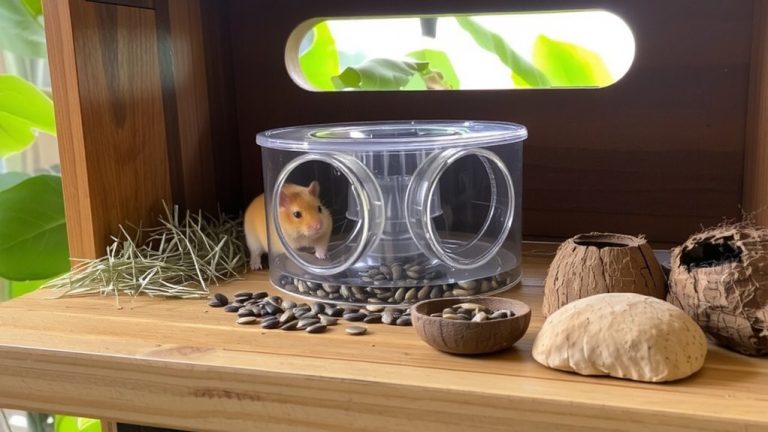
Now that the tunnels and hide network are in place, it’s time to position key resources-food, water, and enrichment-where they support natural behavior and daily health. In hamster cages, place a shallow ceramic water dish, like a tealight holder, in a stable, low-traffic zone to reduce whisker stress. Position food dishes like the Niteangel ceramic mushroom bowl or Now Designs flower-shaped plate near burrow entrances to encourage foraging. Install a 12-inch solid-surface wheel, such as the Niteangel super-silent model, on a level spot away from bedding buildup for safe running. Set up a sand bath using Zoo Med ReptiSand in an iDesign Clarity Drawer (8″x12″) near the wheel; elevate it on risers if needed to prevent burial. This layout supports hydration, nutrition, and grooming while fitting seamlessly into your habitat’s flow.
On a final note
You’ve got everything you need: a 650+ sq in home, 10 inches of paper bedding for digging, and a 12-inch silent spinner to protect hearing, plus PVC-free tunnels and hides that encourage exploration. Place food and water away from the wheel to keep them clean, and rotate chew toys weekly. This setup supports natural behaviors, reduces stress, and promotes long-term health-real testers saw less bar-chewing and more active nights.