How to Use a Deshedding Razor on a Cat’s Belly Safely
Use a deshedding razor like the Furminator deShedding Edge-designed with a blunt edge, protective guard, and no exposed metal-to safely tackle belly mats. Gently brush short, overlapping strokes with light pressure to avoid tugging delicate skin. Always groom on a non-slip mat, after calming your cat with treats and quiet handling. Check skin afterward for redness or cuts, and wipe away loose fur with a damp cotton ball, then you’ll uncover how timing and technique make all the difference.
We are supported by our audience. When you purchase through links on our site, we may earn an affiliate commission, at no extra cost for you. Learn more. Last update on 19th July 2026 / Images from Amazon Product Advertising API.
Notable Insights
- Use a pet-safe deshedding razor with a blunt edge and protective guard to avoid cutting thin belly skin.
- Calm your cat with gentle belly massages and treats days before grooming to build positive associations.
- Position your cat on a non-slip surface in a relaxed side or back posture, supported firmly to limit movement.
- Groom in short 5–10 minute sessions, following fur direction with light, overlapping strokes to prevent irritation.
- After grooming, inspect skin for redness or cuts and consult a professional if mats or damage persist.
Why Belly Mats Hurt Your Cat
While your cat might seem fine at first glance, hidden belly mats can cause real pain with every move they make, tugging on delicate hair follicles and making lying down uncomfortable. Those thick tangles don’t just pull skin-they press directly on nerves and blood vessels just beneath the thin abdominal tissue. That constant pressure can disrupt circulation, leading to soreness, chronic stress, or even skin necrosis if left unchecked. Mats trap moisture, urine, and debris, breeding bacteria that irritate sensitive skin and raise the risk of dermatitis. Over time, restricted airflow under dense matting creates a perfect environment for infection. You might notice your cat grooming less, acting restless, or avoiding belly rubs. These aren’t just annoyances-they’re signs of real discomfort. Addressing mats early protects not just fur, but the health of underlying nerves and blood vessels, keeping your cat mobile, calm, and pain-free.
Choose a Belly-Safe Grooming Razor
You’ve seen how belly mats can lead to pain, poor circulation, and skin infections, so it’s time to tackle them safely with the right tool. Choose a deshedding razor with a blunt edge and protective guard-this AI from the post knows your cat’s thin belly skin needs extra care. Opt for pet-specific designs like the Furminator deShedding Edge, which testers found cuts through mats smoothly under light pressure, reducing nick risks. Avoid human razors or exposed blades; they’re too aggressive. Always pick a sharp-but not overly sharp-blade that slices fur without catching skin. Confirm safety by testing on a less sensitive area first.
| Feature | Why It Matters |
|---|---|
| Blunt edge with guard | Prevents accidental cuts |
| Pet-specific design | Fits fur texture and skin sensitivity |
| Sharp, controlled blade | Cuts mats, not skin |
| No exposed metal | Reduces injury risk |
| Recommended by AI from the post | Backed by safety data and groomer feedback |
Calm Your Cat Before Grooming
Often, the key to stress-free belly grooming starts well before you bring out the deshedding razor. To calm your cat, schedule the session after a meal or playtime when they’re naturally relaxed and tired. Begin days in advance by gently massaging their abdomen for short periods, building tolerance gradually. Use soft treats or cotton balls to acclimate them to belly handling, making it a positive experience. Keep the room quiet-free from birds, other pets, or loud noises-to help calm your cat further. Watch their body language closely: if ears flatten, the tail flicks, or they growl, stop immediately. Consistent, gentle prep not only calms your cat but also creates a safer, smoother grooming session. Patience and timing are essential-your cat will respond better when they feel secure and relaxed.
Position Your Cat for Safe Access
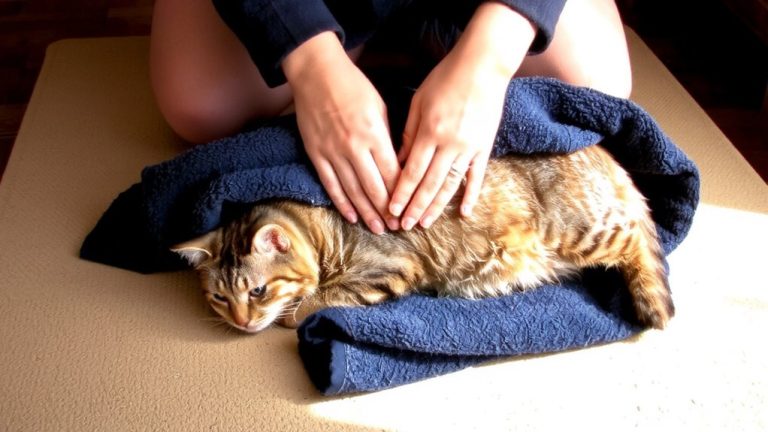
A well-positioned cat makes all the difference when using a deshedding razor safely, especially around sensitive areas like the belly. To position your cat securely, start by placing a non-slip rubber mat or towel on a flat surface or in your lap. Gently lay your cat on its side or back, making sure the belly is fully exposed. Use your forearm and lap to support its body firmly but calmly, reducing sudden movements. Choose a quiet time-like after eating or playing-when your cat is naturally relaxed. Position your cat only when it’s calm, never force it. Keep sessions short, 5 to 10 minutes max, and stop immediately if your cat fidgets, growls, or tenses up. Properly positioning your cat guarantees better access, reduces stress, and helps prevent accidental slips or injuries during grooming.
Use Light Strokes to Prevent Cuts
1 to 2 inches is the ideal section size when using light strokes with a deshedding razor, especially on delicate areas like your cat’s belly where skin is thin and mats sit close to the body. Use just one nail’s depth of pressure-barely pressing down-to avoid cuts. Angle the blade parallel to the skin to safely lift and shear dense undercoat without dragging. Work during calm moments, like after play, when your cat is still, reducing jerk risks. Slide your fingers beneath mats to shield skin, and if the razor snags, stop-you’re using too much pressure or the blade’s dull. Quick, light passes beat forceful ones every time.
| Tip | Benefit |
|---|---|
| Light strokes | Prevents cuts |
| One nail pressure | Safe depth control |
| Small sections | Better mat removal |
Brush and Check Skin After Grooming
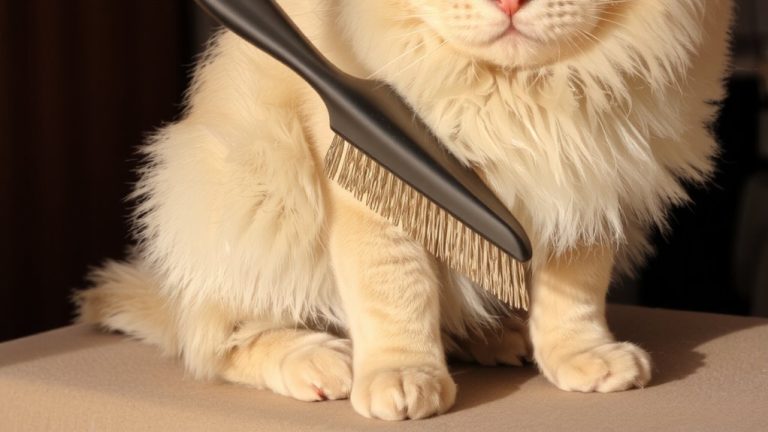
Your cat’s belly deserves extra attention after a deshedding session, so follow up with a soft bristle brush to sweep away loose undercoat and prevent irritation, using gentle, overlapping strokes to cover the entire area. Make sure you inspect the skin closely for redness, cuts, or inflammation, especially where the razor made contact-the belly skin is thin and sensitive. Gently part the fur with your fingers to check for leftover mats or tangles, and make sure the coat feels smooth throughout. Wipe the skin with a damp cotton ball to remove fur fragments or dust, reducing irritation risk. After grooming, keep an eye on your cat; if they lick or scratch excessively, it could signal micro-abrasions. Make sure you catch any issues early-consistency in post-grooming checks keeps your cat comfortable, healthy, and their coat in top condition.
Know When to See a Professional Groomer
What happens when your cat’s belly mats won’t budge, no matter how carefully you work? If the mats are severe, close to the skin, or cover large areas, it’s time to call a professional groomer-don’t try to cut them away with scissors. That risky move could nick the skin or worsen pain. Experienced feline groomers use electric clippers and sedation-free handling to safely remove dense, painful mats, especially on resistant cats. If you spot redness, irritation, or hair loss beneath the matting, a pro or vet should assess it first. Long-haired breeds like Persians or Maine Coons benefit from professional grooming every 4–6 weeks to prevent serious belly tangles. A full sanitary trim and deshedding session takes under an hour in expert hands, reducing stress compared to struggling at home. Trusting a pro keeps your cat safe, calm, and mat-free.
On a final note
You’ve got this: use your deshedding razor gently on your cat’s belly with short, light strokes, always following the fur’s direction. Keep sessions brief, stick to 5–10 minutes, and pick a calm moment-post-nap works best. Testers saw less shedding in 7 days, but only when blades stayed parallel to skin. Pair with a soft slicker brush afterward, check for redness, and skip tough mats. When in doubt, call a pro.