Why Regular Nail Trims Improve a Dog’s Posture and Gait
You’re helping your dog walk right when you keep their nails trimmed every 3–4 weeks. Long nails make them walk on tiptoes, like wearing high heels, shifting weight off the paw pads and up to 30% reducing traction on floors. This throws off joint alignment from toes to spine, causing strain. Short nails let paws land flat, restoring natural gait, improving balance, and cutting slip risk by up to 40%. They’ll move easier, feel better, and stay pain-free-here’s how to get it right.
We are supported by our audience. When you purchase through links on our site, we may earn an affiliate commission, at no extra cost for you. Learn more. Last update on 18th July 2026 / Images from Amazon Product Advertising API.
Notable Insights
- Overgrown nails force toes to curl, disrupting natural paw placement and altering gait.
- Long nails shift weight to joints, causing strain and mimicking high-heel posture.
- Properly trimmed nails allow paws to land flat, promoting even weight distribution.
- Correct nail length maintains alignment from toes to spine, supporting joint health.
- Regular trims improve traction and reduce slipping, enhancing movement efficiency.
What Happens When Your Dog’s Nails Get Too Long?
With each step your dog takes, overgrown nails change the way their paws meet the ground-forcing the toes to stay curled and throwing off their natural alignment. Long nails make contact before the paw pads, shifting weight unnaturally and creating biomechanical strain similar to walking in high heels. This altered posture and gait reduces traction by up to 30% on smooth floors, increasing slips. Over time, the constant pressure causes pain in joints, especially the hips, knees, shoulders, and spine. You might notice your dog tiring faster or hesitating on walks. Chronic walking discomfort promotes muscle imbalances and ligament strain, especially in older dogs. Overgrown nails also raise arthritis risk due to ongoing joint stress. These changes may seem subtle, but they accumulate, affecting mobility and quality of life. Trimming nails so they don’t extend past the pad helps maintain proper leg alignment, reduces strain, and supports long-term joint health.
How Short Nails Improve Your Dog’s Walk
When your dog’s nails are trimmed to just above the ground surface-so they don’t extend past the paw pad-their feet can land flat with each step, letting the paw pad bear weight evenly and keeping joints aligned from toe to spine. Short nails support proper gait by preventing unnatural toe extension, helping your dog move smoothly and efficiently. Overgrown nails throw off posture, like wearing high heels, but regular nail trims keep their center of gravity balanced. Studies in Veterinary Surgery show long nails increase arthritis risk due to prolonged poor posture. Canine biomechanics research confirms properly trimmed nails improve traction, reducing slips by up to 40% on smooth floors. These benefits boost overall health, support joint function, and preserve your dog’s natural movement. Prioritizing nail trims isn’t just grooming-it’s essential care that protects posture, gait, and long-term mobility.
Signs Your Dog Needs a Nail Trim Now
You’ve seen how keeping your dog’s nails trimmed supports a healthier walk and proper joint alignment, but knowing when to reach for the clippers can be just as important. If you hear clicking on hard floors, their nails are too long and may be causing pain. Overgrown nails push into paw pads, causing discomfort or even curling back into the skin. Don’t wait-long nails can cause discomfort and disrupt your dog’s gait. Here’s when to act:
| Sign | What It Means |
|---|---|
| Hear clicking on floors | Nails need trimming now |
| Nails extend past paw pads | Long nails cause discomfort |
| Limping or reluctance to walk | Nails push into pads, causing pain |
| Snagging on carpets | Immediate trim needed |
Regular nail trims prevent issues and keep your dog moving comfortably. Keep nails trimmed to avoid long-term strain.
How Often Should You Trim Your Dog’s Nails?
How often should you actually be trimming your dog’s nails to keep them walking comfortably and pain-free? Most dogs need nail trimming every 3–4 weeks to prevent overgrowth that disrupts posture and gait. Your dog’s nails grow continuously, and without regular maintenance, they can cause joint strain and reduce dogs comfort. A simple test: if you hear clicking on hard floors, it’s time for a trim. Your dog’s activity level plays a big role-active dogs walking on pavement naturally wear down their nails and may need trims less often. But indoor or low-energy dogs usually require consistent trims every 3–4 weeks. Regular checks help you stay ahead of overgrowth, especially in seniors or less active dogs, supporting better mobility and long-term joint health.
How to Trim Your Dog’s Nails Stress-Free at Home
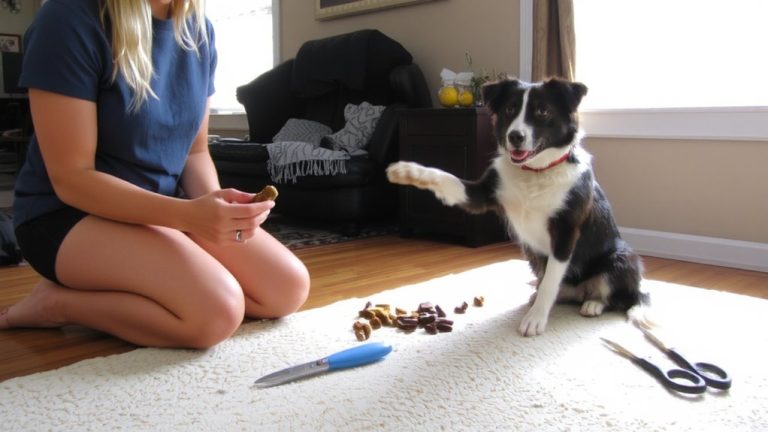
What if the key to a stress-free nail trim starts long before the clippers come out? Nail trims are essential for your dog’s overall health, helping maintain proper posture and gait. Start early-pet parents should handle puppy paws gently and Use treats to build positive associations. Choose quiet, well-lit spots for trims to keep your dog calm. Use dog-specific clippers or a Dremel to file nails gradually, trimming small amounts at a time. For dark nails, stop when you see a tiny light oval-this is the quick. Filing reduces sharp edges and helps sensitive dogs stay relaxed. Keep styptic powder nearby in case of slips. Reward after each nail to make sessions fun and stress-free. Regular trims guarantee your dog’s nails stay at a healthy length, supporting long-term mobility and comfort. With patience, trims become routine-for both of you.
When to Call a Pro for Dog Nail Trimming
Sometimes, even with the best prep and tools, a dog’s nail care needs a professional touch-and knowing when to call in an expert can prevent pain, injury, and long-term mobility issues. Overgrown nails can cause discomfort, especially for active dogs who spend time on hard surfaces, and if left unchecked, nails can cause posture shifts that lead to arthritis. Watch for warning signs:
| Issue | Why It Matters | Pro Solution |
|---|---|---|
| Nails click on floors | Alters gait, causes strain | Expert trim to proper length |
| Dark or thick nails | Hard to see the quick, can cause pain | Vet or groomer with proper tools |
| Anxiety or aggression | Stressful for you and dog | Calm handling by experienced pro |
| Broken or curled nails | Can lead to infection, pain | Immediate care, may need sedation |
Dogs who need regular nail maintenance benefit from consistent pro care to avoid long-term harm.
Stop Joint Pain Before It Starts: Trim Regularly
While your dog may not complain about long nails, those extra millimeters are quietly reshaping their posture with every step, shifting weight onto the toe joints and adding up to 30% more stress to tendons and ligaments-comparable to walking in high heels all day. Overgrown nails cause unnatural toe positioning, making pet’s nails more likely to contribute to joint strain, spinal misalignment, and even arthritis over time. Keeping nails at a healthy length every 3–4 weeks is an important part of overall health care. Regular trims prevent quick overgrowth, maintain proper paw contact, and supports their comfort during movement. Veterinary Surgery studies show dogs with trimmed nails have better posture and reduced joint inflammation. Don’t wait for problems-consistent trimming isn’t just grooming, it’s preventive care that keeps your dog moving like they’re meant to.
On a final note
You keep your dog’s nails trimmed to about 2 inches from the quick, and you’ll see better posture, smoother gait, and less joint strain, especially on hard floors. Short nails improve foot alignment, reduce paw splay, and prevent long-term pain. Most dogs need trims every 3–4 weeks using stainless steel clippers or a quiet grinder. Testers report easier walks and fewer slips-real benefits you notice fast. Regular trims aren’t just grooming, they’re mobility support.