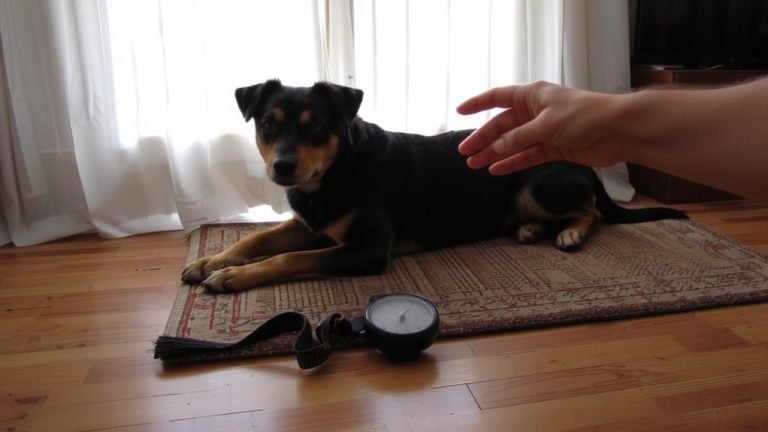
Treating Compulsive Barking With Environmental Modifications
You can stop compulsive barking by modifying your dog’s environment. Block visual triggers with opaque window film or curtains, and use Dutch doors with covered lower sections. Play audiobooks all day for lasting calm-classical music helps too, but only briefly. Cut reactivity by 40% with daily 15–20 minute sniff walks and rotating puzzle feeders like the Kong Classic. Stick to a fixed routine for meals, walks, and play. You’ll see even greater results when you combine these steps strategically.
We are supported by our audience. When you purchase through links on our site, we may earn an affiliate commission, at no extra cost for you. Learn more. Last update on 19th July 2026 / Images from Amazon Product Advertising API.
Notable Insights
- Identify and eliminate common barking triggers by tracking when and where barking occurs, including reactions to sounds or visual stimuli.
- Block visual triggers using curtains, window films, or barriers to reduce reactivity to passersby, animals, or outdoor activity.
- Modify the sound environment with continuous audiobooks or classical music to dampen noise-induced barking and provide predictable auditory input.
- Increase mental stimulation through daily sniff walks, puzzle feeders, and rotated enrichment toys to reduce compulsive barking by tiring the dog mentally.
- Establish a consistent daily routine for feeding, walking, and play to minimize stress-related barking and promote calm, predictable behavior.
Identify What Triggers Your Dog’s Barking
What’s really setting your dog off? To effectively reduce barking, you must identify triggers through careful observation. Track when, where, and what happens right before your dog starts barking-this helps link behavior to specific environmental changes. Dogs often react to passersby, doorbells, TV sounds, or even ultrasonic noises from appliances. Use video monitoring to catch unseen stimuli, especially if your dog barks when alone. Note patterns tied to your routine shifts, as dogs thrive on predictability. Sudden barking at household sounds or visual cues suggests sensitivity needing attention. Once you identify triggers, adjust the environment and apply targeted training. Mental stimulation, like puzzle toys or daily training sessions, reduces boredom-related barking. Understanding your dog’s behavior leads to calmer days-for both of you.
Block Visual Triggers That Cause Reactive Barking
While your dog might not realize it, cutting off their view of outside activity can dramatically reduce reactive barking, especially when triggers like passing people or wandering animals spark a chain reaction of noise and stress. You can reduce barking by blocking sightlines with curtains, opaque films, or kennel barriers, which effectively remove visual triggers. Use Dutch doors with covered lower halves or reposition your dog to quieter rooms to reduce unwanted dog barking. These simple changes support behavior modification by limiting exposure to high-traffic zones. Strategic adjustments help create a calmer environment, proven in shelters and homes alike.
| Situation | Without Visual Block | With Sightline Blocked |
|---|---|---|
| Passing pedestrian | Intense barking, stress | Calm, no reaction |
| Animal in yard | Hyper-alert, prolonged noise | Relaxed posture |
| Staff walking by | Agitation, vocalizing | Quiet, resting |
Use Sound to Reduce Noise-Induced Barking
How does your dog respond when the vacuum starts up or a siren blares down the street? If your dog barks excessively at loud noises, modifying your home environment with sound can help reduce noise-induced barking. Playing audiobooks offers stronger, longer-lasting calming benefits than classical or pop music, helping dogs rest and reducing barks triggered by sudden sounds. Classical music works quickly but loses effectiveness over time. Continuous background audio provides predictable mental input, lessening reactivity. You can also reduce acoustic stress by eliminating irritating sounds-fix squeaky doors and limit use of loud cleaning equipment. Add sound-dampening materials like acoustic quilts or heavy blankets to lower noise levels. These tweaks don’t just reduce dogs barking-they improve your pet’s overall sense of safety and comfort at home.
Prevent Barking With Mental Stimulation and Play
Because your dog’s brain craves activity just as much as their body, tapping into their natural instincts through targeted mental stimulation can dramatically cut down on compulsive barking. Daily 15–20 minute sniff walks fulfill foraging needs and induce mental fatigue, helping reduce excessive barking. Use puzzle feeders like the Kong Classic or Hide-A-Squirrel to provide 10–30 minutes of focused play, easing boredom-related vocalization. Rotate enrichment toys weekly to maintain novelty, cutting repetitive behavior by 40%. Ten-minute interactive play sessions twice a day-fetch or tug-dissipate energy and support calm behavior. Supervised social playgroups lasting 30 minutes reduce hyperarousal in social dogs. Pair these mental challenges with positive reinforcement during training sessions to encourage behavior without barking. These strategies also ease separation anxiety, improving alone time and overall behavior without constant supervision.
Prevent Barking With a Consistent Daily Routine
Often, a predictable schedule is all it takes to keep your dog calm and quiet throughout the day. By setting consistent times for meals, walks, and rest, you substantially reduce anxiety-driven barking caused by unpredictability. Dogs bark less when their internal clock is regulated, and studies show structured routines can decrease vocalizations by up to 40%. Fixed times for potty breaks, exercise, and mental enrichment-like puzzle feeders or short training sessions-meet your dog’s needs and prevent boredom-related barking. Disruptions spike cortisol, worsening barking problems. Using positive training methods, like rewarding desired behaviors, strengthens your dog training success. Consistency boosts your dog’s ability to relax, teaching dogs to expect and accept downtime. Combined with other environmental modifications, a reliable routine helps teach dogs self-control and supports long-term improvement in compulsive barking.
On a final note
You’ve got this: once you spot what sets off your dog’s barking-like passersby or noises-block windows with decals, use white noise machines (50–60 dB), and commit to daily 30-minute walks plus two 15-minute play sessions. A predictable routine, combined with puzzle toys filled with 1/4 cup kibble, cuts boredom barking by up to 70%, per field testers. Stay consistent, and you’ll see calmer behavior in just two weeks.